
Restaurant Roofing in Brownsville, TX
Schedule restaurant roof work around service
A roof leak near a kitchen exhaust curb can affect service before it reaches a dining room. We record the location, operating hours and contact who can approve access. Then we check the curb, nearby seams, drainage and penetrations. Downtown Brownsville's historic commercial blocks differ from retail along North Expressway, and restaurant access can vary with either setting. The inspection begins at the actual property and the roof detail in question.
Send the Brownsville address, affected area, operating hours, exhaust details, roof plans and approval contact. We will define the repair and coordination boundaries. Call 555-555-5555 or use the form.
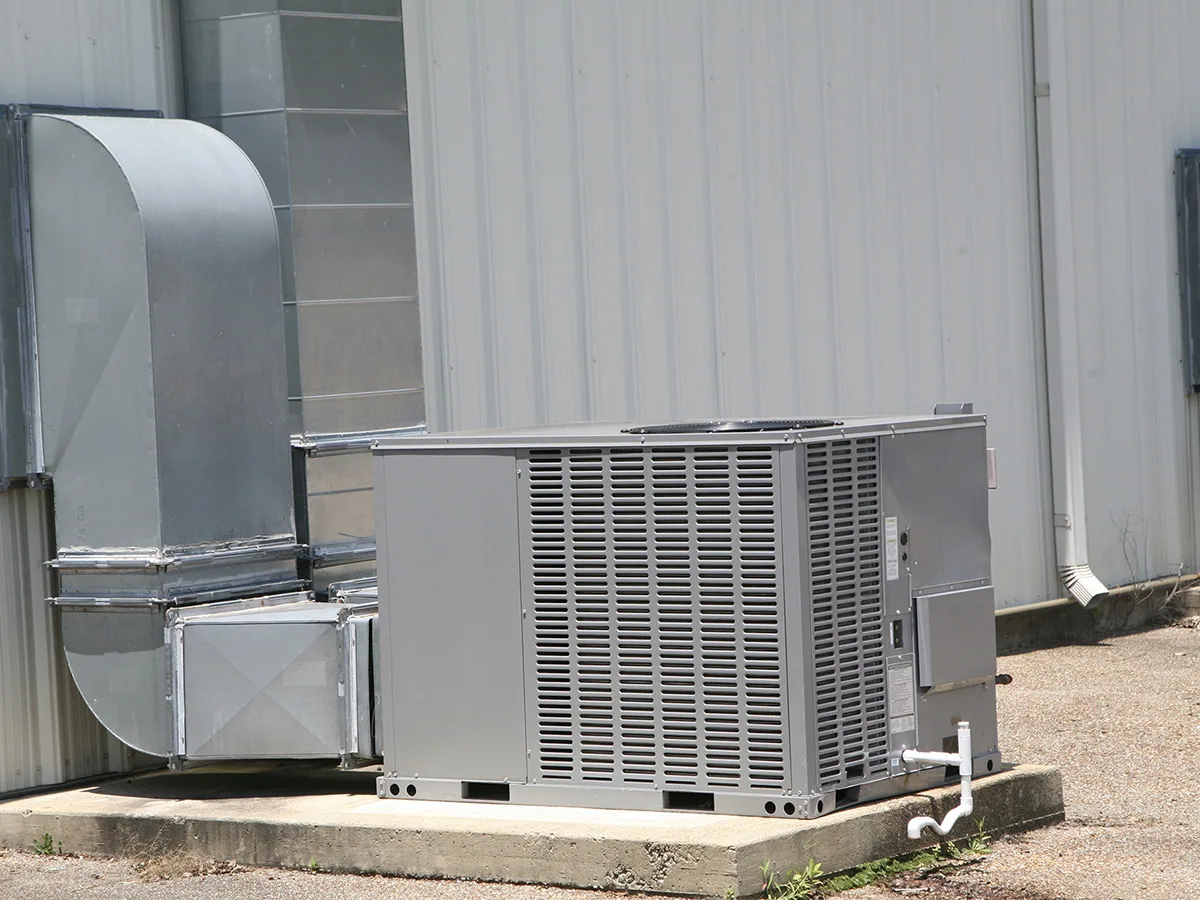
Inspect: Check the kitchen interfaces
Kitchen exhaust ducts, grease hoods, refrigeration lines and rooftop units create several roof transitions. We photograph the visible flashing and note grease buildup, loose metal, cracked sealant, ponding or separated membrane. A ceiling mark can appear away from the leak path, so we compare the reported room with roof features above and around it. If the assembly must be opened to identify wet insulation, the test area and approval are stated first.
Brownsville's normal summer highs exceed 90 degrees for about 140 days each year. High heat changes the work window on exposed roofs and can affect how materials are installed. We plan around weather and service hours, and the facility contact identifies when cooking, exhaust or refrigeration cannot pause. A roof inspection records actual conditions; seasonal averages do not establish whether a restaurant roof is failing.
Downtown Brownsville is a historic commercial district with active business uses. For a restaurant there, we confirm roof access and service alley constraints with the owner instead of assuming a particular building layout. Near the North Expressway, staging and parking may differ. The address, delivery schedule and service entrance determine how a crew reaches the work area.
Protect: Keep kitchen and dining functions separate
Before repair, the operator identifies food-preparation periods, exhaust requirements, customer entrances, delivery hours, alarm points and any area that cannot be shut down. We agree on roof access, lift location, material staging and debris removal. If odors or noise could affect service, the sequence can move to another section or a closed period. The restaurant manager controls food handling and sanitation; roofing work does not replace those procedures.
Exhaust equipment may need a mechanical contractor if a curb or duct connection interferes with flashing repair. We mark that interface and state who disconnects, supports or restarts the equipment. A roof curb coordination scope can define the boundary around an exhaust unit. We also confirm whether fire suppression, power or interior ceiling protection needs a separate specialist.
Where the dining room remains open, barriers and access routes need to stay clear. Kitchen exhaust, deliveries and dining hours set the roof zone that can be opened; the daily plan leaves each exposed area sealed before the next service period. A phased reroof may split work between service areas and dining zones when the building layout supports it. The record states any temporary cover and the person responsible for checking it.
Repair: Restore the detail around the exhaust
A repair scope identifies whether the issue is at a curb, seam, drain, parapet or duct penetration. It describes surface preparation and how new flashing ties into the existing roof. Grease residue, loose coating or wet layers can prevent a dependable bond, so the crew prepares the substrate and records what was exposed. If removal shows more damage than authorized, work pauses while the operator or owner reviews the added area.
A tornado was documented near Brownsville during Hurricane Hanna. The record is relevant to storm readiness, while the restaurant roof still requires direct inspection. After severe weather, restaurant management can review roof edges, exhaust curbs and drains against a current building record. We inspect actual locations and document the findings. A regional storm event does not tell us what condition an individual restaurant is in.
Emergency response is available nights, weekends and holidays when water is entering the building. The first visit may install temporary protection so the operator can address interior safety and food-service decisions. We state what the temporary measure covers and when permanent repair can be completed. Roof work, kitchen cleanup, inventory handling and equipment maintenance remain separate responsibilities unless included in the written agreement. A leak repair scope gives the owner a defined approval boundary.
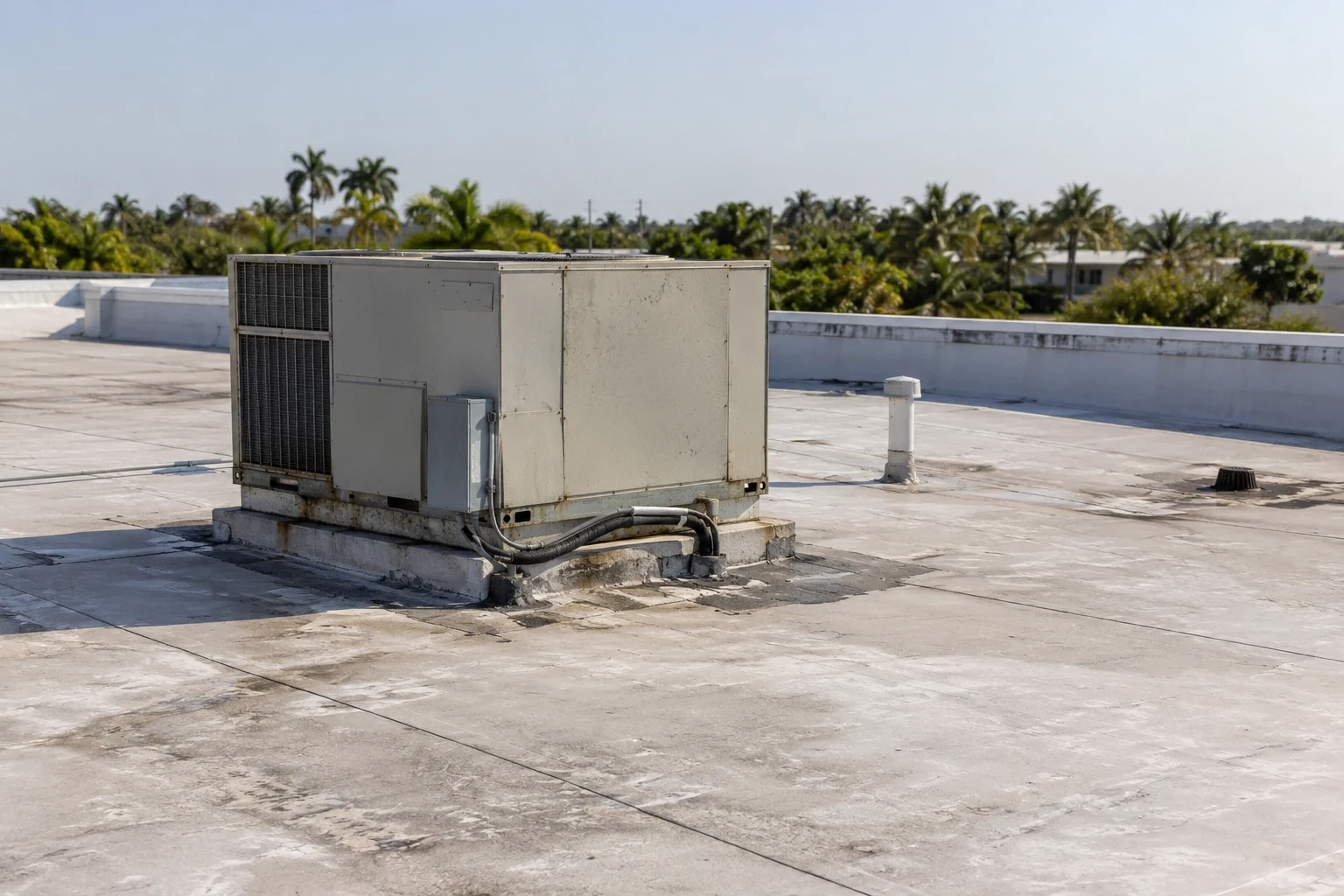
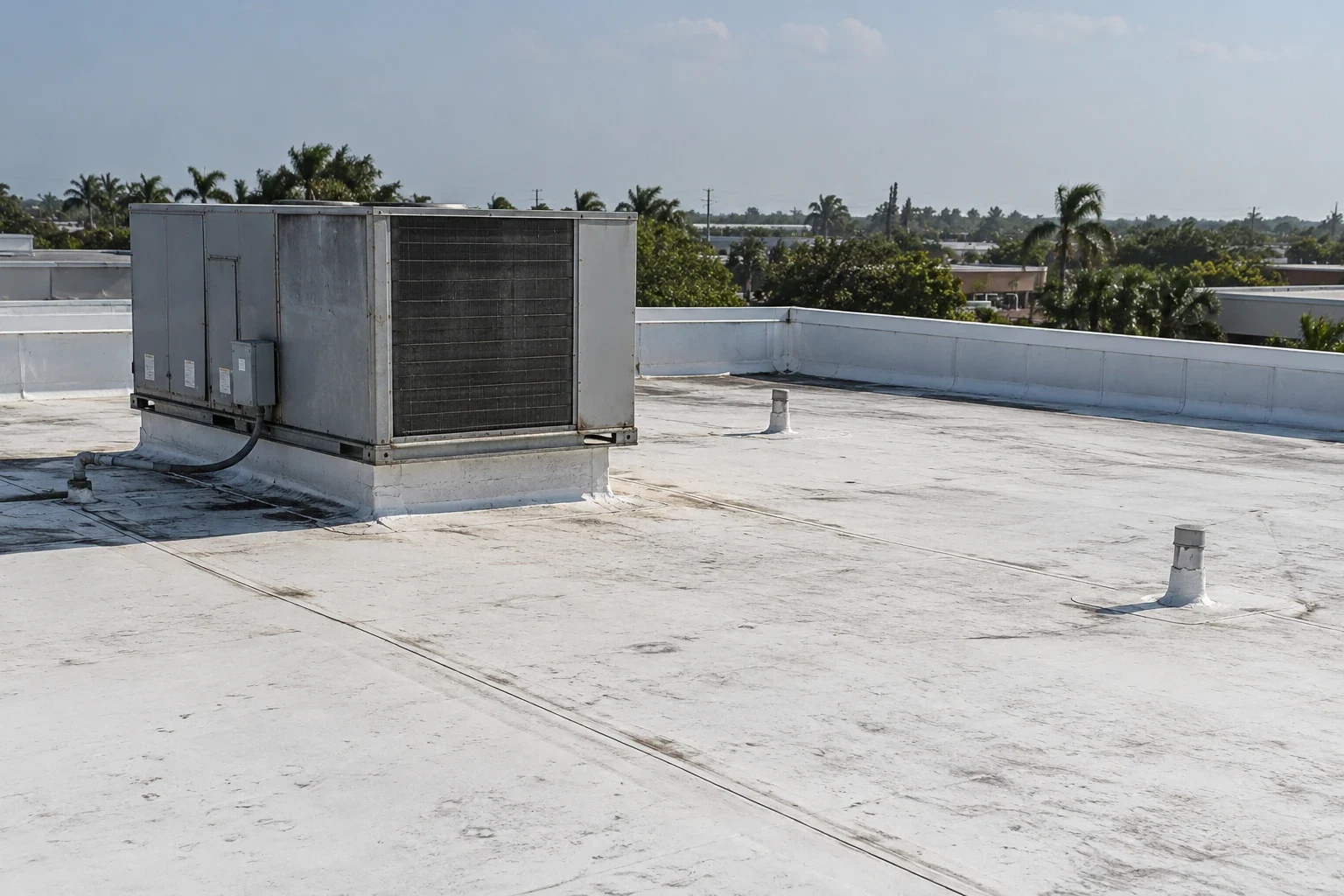
Compare: Spot repair with planned system work
A leak at one exhaust curb may need a local correction. Recurring water entry, deteriorated membrane or several wet areas may warrant wider assessment. We review roof layers, drainage and repair history before comparing a recover assessment with replacement. Concealed moisture and existing assembly details affect what can be retained. If the owner plans kitchen renovations, the roof scope should account for new exhaust or equipment penetrations before roofing is closed.
The permit team should verify the restaurant's roof alteration against Brownsville's adopted 2018 code set and current submittal rules. The designer confirms applicable code and permit requirements for a specific restaurant. We identify work around exhaust, refrigeration, lighting and fire equipment, and assign each trade's responsibility. A roof repair cannot restore an exhaust fan or verify its airflow unless those tasks are specifically part of the job.
Cost and duration depend on roof access, kitchen hours, exhaust configuration, staging, lift placement, number of penetrations, wet insulation and material availability. Night work may reduce customer disruption but requires suitable access and safe conditions. We record schedule assumptions and explain what changes if an opened area is larger than expected. The owner receives a written change request before work exceeds the approved quantity.
A grocery roof may have refrigeration and receiving constraints; a restaurant adds exhaust and food-service hours. For a multi-tenant property, shopping-center roofing also needs notice across adjacent storefronts. Each building's actual equipment and lease responsibilities still require confirmation.
Closeout: Document what was sealed
Closeout photographs show the exhaust curb, flashing transitions, seams and completed repair area. We list material installed, work limits, temporary protection removed and items that remain for a mechanical contractor. The restaurant can file the record with its maintenance log and equipment service history. That helps staff connect a later roof report to a specific curb or duct penetration.
Send the Brownsville address, affected kitchen or dining area, service hours, exhaust equipment notes, roof plans and approval contact. Include food-safety constraints, roof-key access and any planned mechanical work. We will identify the roof scope and trade interfaces before scheduling. If a test opening is needed, the location and restoration plan will be submitted for approval first.
A return inspection can check the repaired detail after the roof has been exposed to normal weather. The record identifies the date, area viewed and visible condition. If a separate interior or exhaust issue remains, it is listed with the responsible contact rather than folded into the roofing closeout. A clear record keeps restaurant operations and roof observations distinct.
Related Roofing Work
Other roofing services and buildings we handle across Brownsville.
Questions About Restaurant Roofing
Which work windows protect dining and kitchen operations during a repair?
The operator identifies dining hours, kitchen schedule, entrances and any required exhaust operation. We phase the roof work and coordinate noise, staging and barriers around those instructions. The approved plan notes which areas stay open and any service window needed.
Will the roof crew work on kitchen exhaust equipment?
Roofing scope covers flashing and waterproofing around the curb or penetration. A qualified mechanical contractor handles disconnects, duct changes, fan service and restart unless explicitly assigned. We coordinate the roof sequence with that contact.
What if grease residue is around a flashing detail?
We document the condition and prepare the surface needed for the specified roof repair. If cleaning or equipment work belongs to another trade, the scope identifies that handoff. The tie-in is not closed until the substrate is ready and the approved detail can be completed.
Can you make a repair after the restaurant closes?
Emergency response is available at any hour for active leaks. Planned after-hours work depends on roof access, equipment coordination, weather and site rules. We record the agreed arrival, affected area and temporary or permanent tasks before mobilizing.
What should the manager provide for an estimate?
Send the address, leak location, roof plan, hours, exhaust and refrigeration contacts, access rules, prior repairs and the person who can approve changes. Note upcoming equipment work so new penetrations can be coordinated with the roof scope.