
Commercial Rooftop Equipment Curbs and Supports in Brownsville, TX
Record the curb repair before equipment moves
A reported leak beside an HVAC curb needs a field record before a repair boundary is approved. In Brownsville, TX, we photograph the opening, identify the roof surface and check how flashing meets the curb. Then we mark what must be removed to reach a secure tie-in. The Port of Brownsville's industrial and freight activity and the Paredes Line industrial building illustrate different operating settings. Neither tells us what is installed at another property, so the address and roof remain the basis of the scope.
Send the Brownsville address, reported condition, roof photos, equipment schedule and building contact. We will define the repair boundary and trade coordination needed for approval. Call 555-555-5555 or use the form.
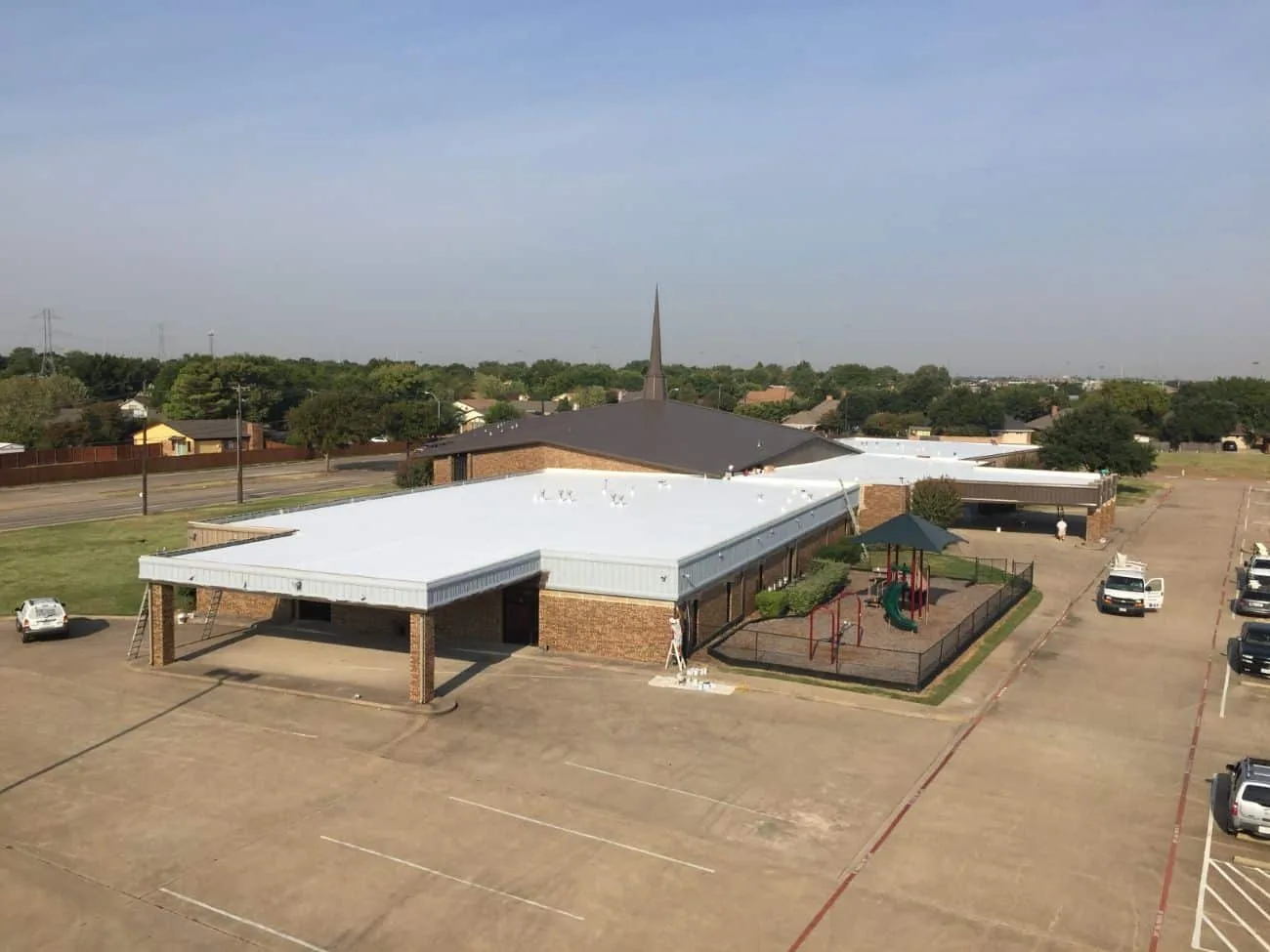
Trace the water path at the transition
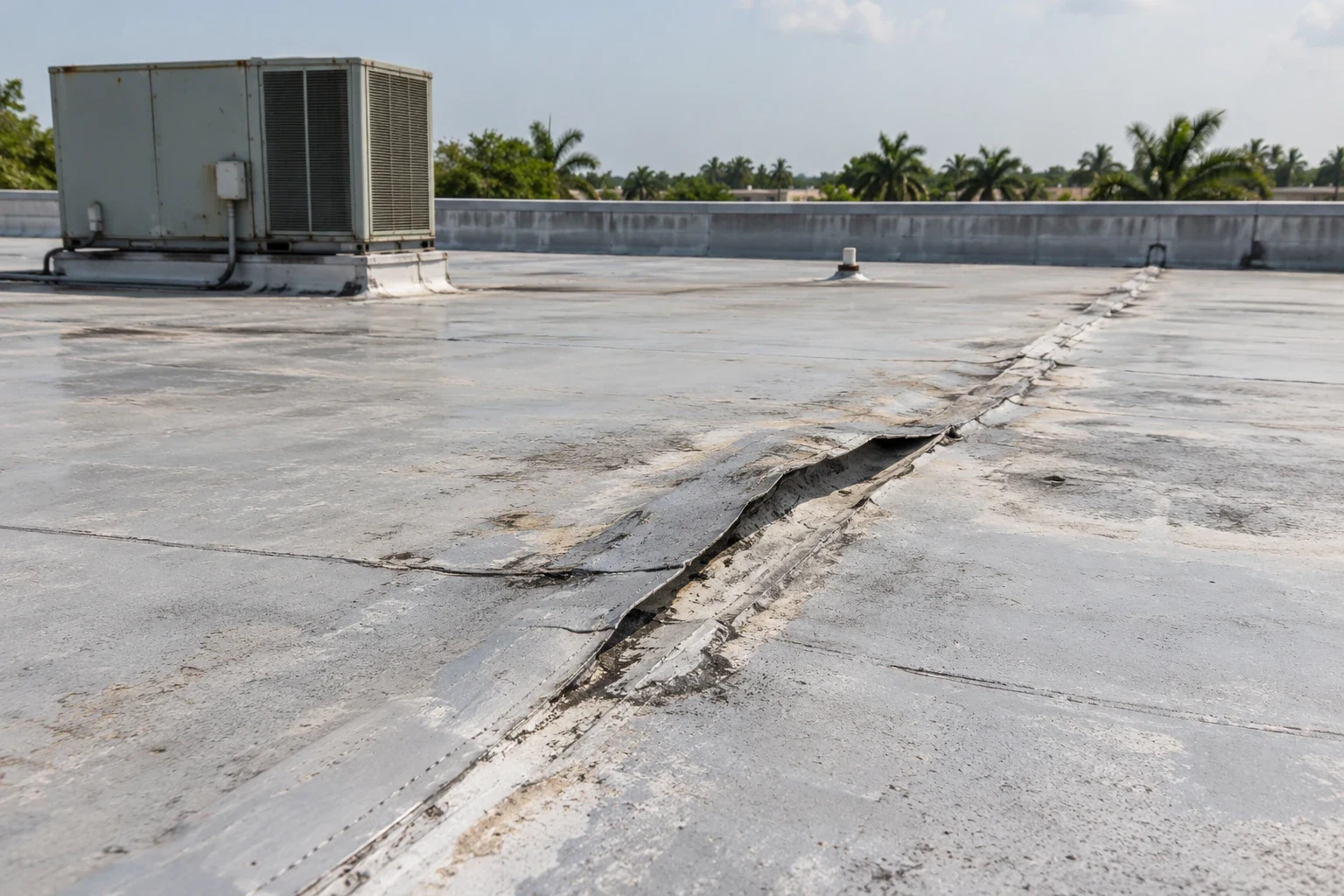
We begin with the reported room or equipment area, then inspect the roof above and around it. Curb corners, membrane laps, counterflashing, pitch pockets, nearby drains and previous patches all matter. Water can move through insulation or along deck flutes before appearing indoors. The field record separates the observed opening from the reported interior effect. If concealed moisture could change the quantity, we identify an appropriate test opening and request approval before cutting.
A curb repair may require removing failed flashing, cleaning and preparing the membrane, rebuilding corners and securing a compatible termination. Loose metal, corrosion, movement or damage at fasteners can change the detail. Surface sealant alone does not resolve a separated curb or an unstable edge. We list materials and preparation in the repair scope, and separate adjoining penetration flashing from the equipment curb when the two are distinct conditions.
We trace runoff from low points to the outlets and verify the drainage detail before closing work around a curb. A blocked outlet can keep water against a curb, while a low area may require more than clearing debris. We note the route to the nearest drain or scupper and whether water is standing at the time of inspection. If the outlet or overflow path needs work, drain and scupper service can be scoped with the curb repair. Each condition receives its own tagged photograph and location.
Coordinate roofing with equipment work
Before a rooftop unit is lifted, we need the equipment change date, curb dimensions if known, lift route, staging location and the contact responsible for the mechanical work. The replacement unit may not fit the old curb. If dimensions or supply connections change, the opening and transition need a reviewed detail before removal. We protect the roof along the travel path where practical and coordinate membrane tie-in after the equipment is set.
Pipe stands, conduit rails, vibration supports and service platforms can concentrate load or abrade the membrane. We inspect pads, fasteners, support spacing, wear marks and any roof penetrations. A shifted support may expose a puncture; an added fastener can create a new water path. We record the visible condition and identify which work belongs to the mechanical contractor. Roofing work ends at the approved interface unless the project scope assigns more.
At industrial properties, a crane or lift plan may conflict with loading windows, vehicle movements or other work. The facility contact should confirm the route and restricted areas. At an office or clinic, interior access and operating schedules may set the window. A short pre-work check with security and facilities can also prevent a lift arrival before gate clearance or roof access is ready. The plan identifies crew access, equipment staging, protection for the exposed roof, and the point at which the site contact reviews the finished detail. Those controls avoid leaving a curb open while another trade's work is delayed.
Protect exposed layers in Brownsville conditions
Heat is persistent here: yearly normals count roughly 140 days with temperatures of 90°F or hotter. Heat affects safe work periods, material handling and the time available to prepare and close a detail. We follow the product requirements and stop when conditions do not support reliable work. The work plan identifies the exposed layer, temporary cover and closeout for each shift.
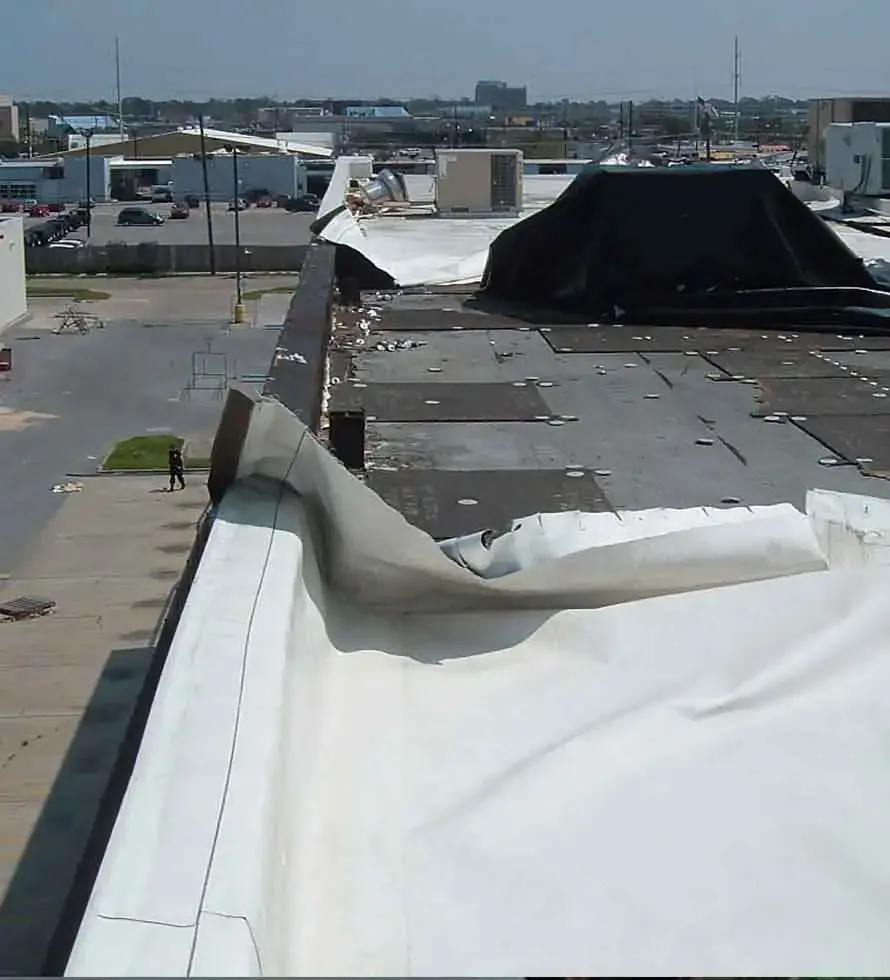
During the 2020 Hanna event, a small tornado was recorded near Brownsville while wind, flooding rain and roof damage affected the wider Valley. That regional history informs readiness, but it does not establish damage at a particular roof. We inspect current seams, curb corners and attachments after a reported event and document each observed condition. The return visit record distinguishes temporary protection from permanent flashing work.
Humidity and sun exposure can affect surface preparation and drying. We confirm the roof is suitable for the selected materials and record any delay caused by moisture or heat. If active water entry requires immediate action, emergency response is available day and night, weekends and holidays. Site access rules and safe conditions still apply. A temporary cover receives a location, date and follow-up task, so the facility contact knows what remains to be completed.
Close the detail with a tagged record
Closeout photographs show curb sides, corners, terminations and the surrounding roof surface. We record material installed, the repair location, limits and any condition left outside the approved scope. If the equipment contractor still needs to connect piping or remove temporary supports, that work remains open in the handoff. A completed roofing invoice should not be mistaken for completion of a separate mechanical task.
For a property record, we tie every finding to a roof section and address. A condition report can preserve tagged photos, access limits and return items. Owners near Port of Brownsville Business Park or Paredes Line Road still need their own inspection and scope. Send the address, leak location, photos, roof plan, equipment schedule and approval contact. We will identify the roof task, the mechanical interface and the next approval.
Related Roofing Work
Other roofing services and buildings we handle across Brownsville.
Questions About Commercial Rooftop Equipment Curbs and Supports
Can you reflash a curb without changing the unit?
A stable curb with compatible equipment may allow a roofing repair. We inspect metal condition, dimensions, attachment and the membrane transition first. Corrosion, movement or a planned unit replacement can change the scope and requires coordination before the detail is closed.
Which contractor handles the opening when an HVAC unit is removed?
The approved project scope should assign the opening and roof tie-in. Mechanical disconnection and equipment lifting belong to the responsible mechanical contractor. We coordinate protection and flashing work at the roof interface, then document the boundary and handoff.
What changes the cost of a curb repair?
Curb size, roof assembly, access, lift timing, number of corners, wet materials and the condition of adjacent seams affect labor and material. We record those factors and state whether mechanical removal or concealed deck work is excluded.
Can a support pad be added without opening the roof?
Sometimes, if the support can be adjusted safely and the surface below is sound. We check wear, movement, fastening and nearby penetrations. If water has reached the insulation or a fastener passes through the membrane, the affected detail needs a separate repair scope.
What should I send before a rooftop unit change?
Send the property address, unit schedule, lift route, curb information, leak history, roof plan and site contact. We can identify the roof protection and flashing work before the unit is lifted.