Commercial Distribution Center Roofing in Brownsville, TX
Set the roof phase around freight activity
A conveyor shutdown can cost more than the roof repair if the work window is wrong. We record active equipment, dock turnover, leak locations and roof access before defining a phase. Brownsville's Port of Brownsville Business Park connects to rail and trade corridors; at the Paredes Line industrial building, the published dock count is 48. Those facts suggest coordination questions; the facility's actual process map and roof establish the work.
Send the address, dock and process schedule, roof plan, leak reports and access contact. We will document conditions and return a phased work boundary for approval. Call 555-555-5555 or use the form.
Sequence roof work around movement
We ask which docks receive freight, where conveyors or sortation equipment sit below the roof, and when a lift can cross the yard. The owner identifies shipping peaks, secured zones, product storage and egress routes. A roof plan marks staging, lifting points and sections that can be opened and closed within the shift. If an entrance or loading lane must stay clear, that limit appears in the sequence before material arrives.
Brownsville port business-park sites connect to the USMCA and overweight corridors and three Class I railroads. Those regional links do not set a specific center's truck window. The site's contact confirms gate checks, delivery slots, freight routes and laydown rules. The Paredes Line Road industrial listing gives one documented dock configuration. We confirm the dock count, gate checks and freight routes at the property under review.
For larger facilities, work may be phased by roof section or interior operation. We schedule noisy removal, crane lifts and temporary drainage protection around active dispatch. The plan names the daily boundary and who receives closeout so a shift handoff does not leave an exposed area unreported.
Inspect: Trace water around equipment and penetrations
Conveyor supports, rooftop units, exhaust, skylights and service penetrations can create leak points. We inspect seams, curbs, flashings, metal edges, drains and the area around supports. A ceiling stain above a sortation line is not automatic proof that the opening sits directly overhead. Water may travel along deck flutes, insulation or conduit. We compare interior reports with roof observations and tag each location.
Distribution roofs vary. Some use single-ply membranes, built-up systems or metal panels. We confirm the installed assembly and attachment from records or accessible details. If moisture extent, deck condition or layer count could change the proposal, we recommend targeted testing and obtain authorization before opening the roof. The field record identifies locations checked and areas not accessed. A roof inspection can establish a baseline for several sections while keeping results separate.
Drainage protects both product and equipment. We inspect strainers, scuppers, overflow paths, gutters and low points. If a drain is restricted or a detail has failed, a drain correction may be scheduled before the reroof phase. The project record should state how water will leave the work area while the roof is open.
Repair: Protect inventory and keep the boundary clear
The scope identifies the defect, material, preparation and area affected. We compare roof findings with inventory and process locations supplied by the facility. If an interior aisle needs protection or a conveyor line must be isolated, the owner defines controls before work. When wet insulation is found, we photograph the exposed layer and pause at the approved quantity. Added removal proceeds only after direction.
Brownsville is hot for much of the year, with about 140 days annually at 90 degrees or higher. Work periods, adhesives, membrane welding and lifting conditions must follow product and safety requirements. The July 2020 NWS event report describes wind, rainfall and flood impacts across the Rio Grande Valley during Hanna. That regional history supports current readiness, not a damage claim about this distribution center. After a reported storm, we document observed seams and edges at the actual address.
For active water entry, emergency roofing response is available after hours, weekends and holidays. Temporary protection may precede a permanent repair. The record states which roof section is covered, who monitors it and what return work remains. A repair scope ties the task to an approval, so the facility does not confuse emergency stabilization with a full roof assessment.
Compare repair phases with replacement
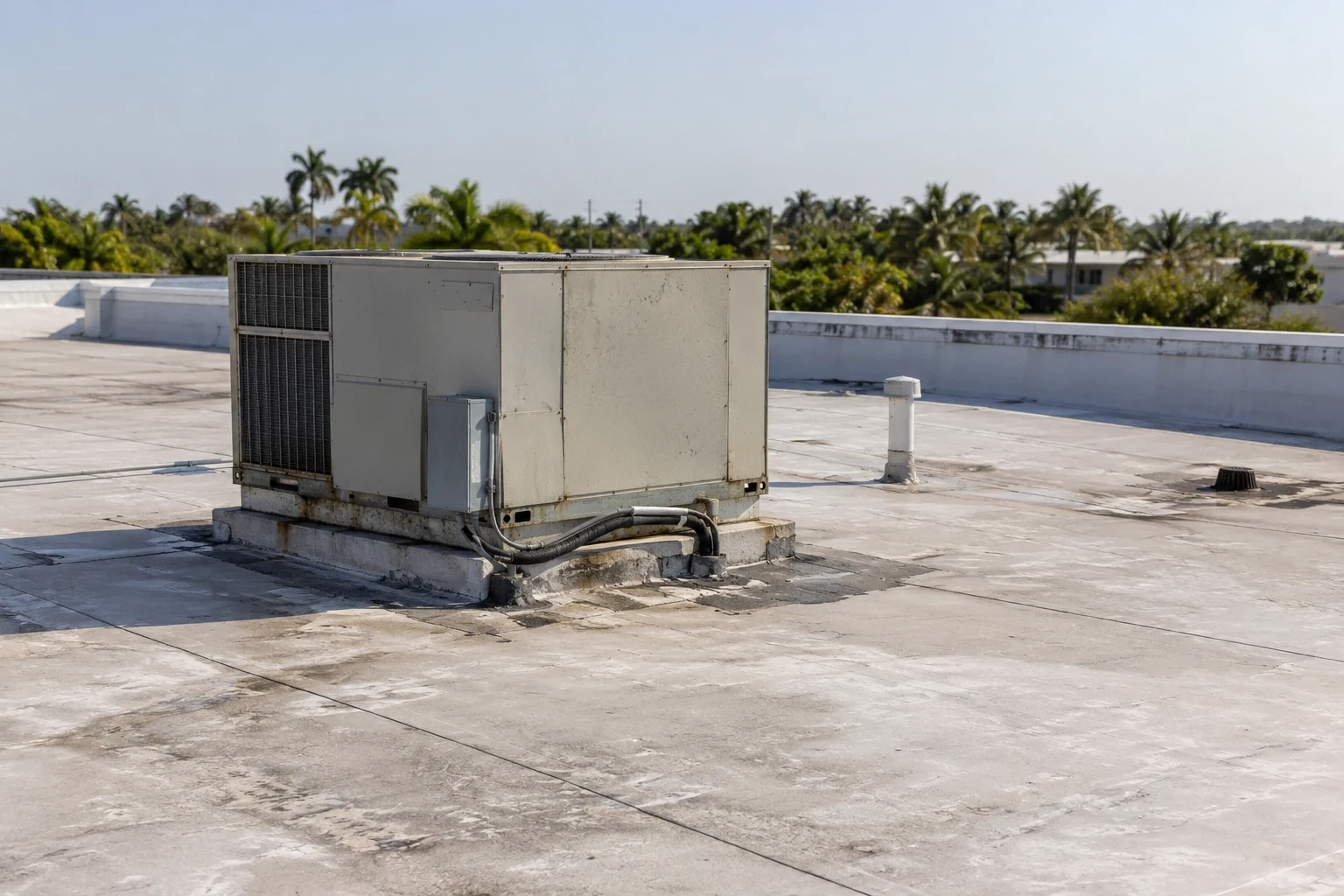
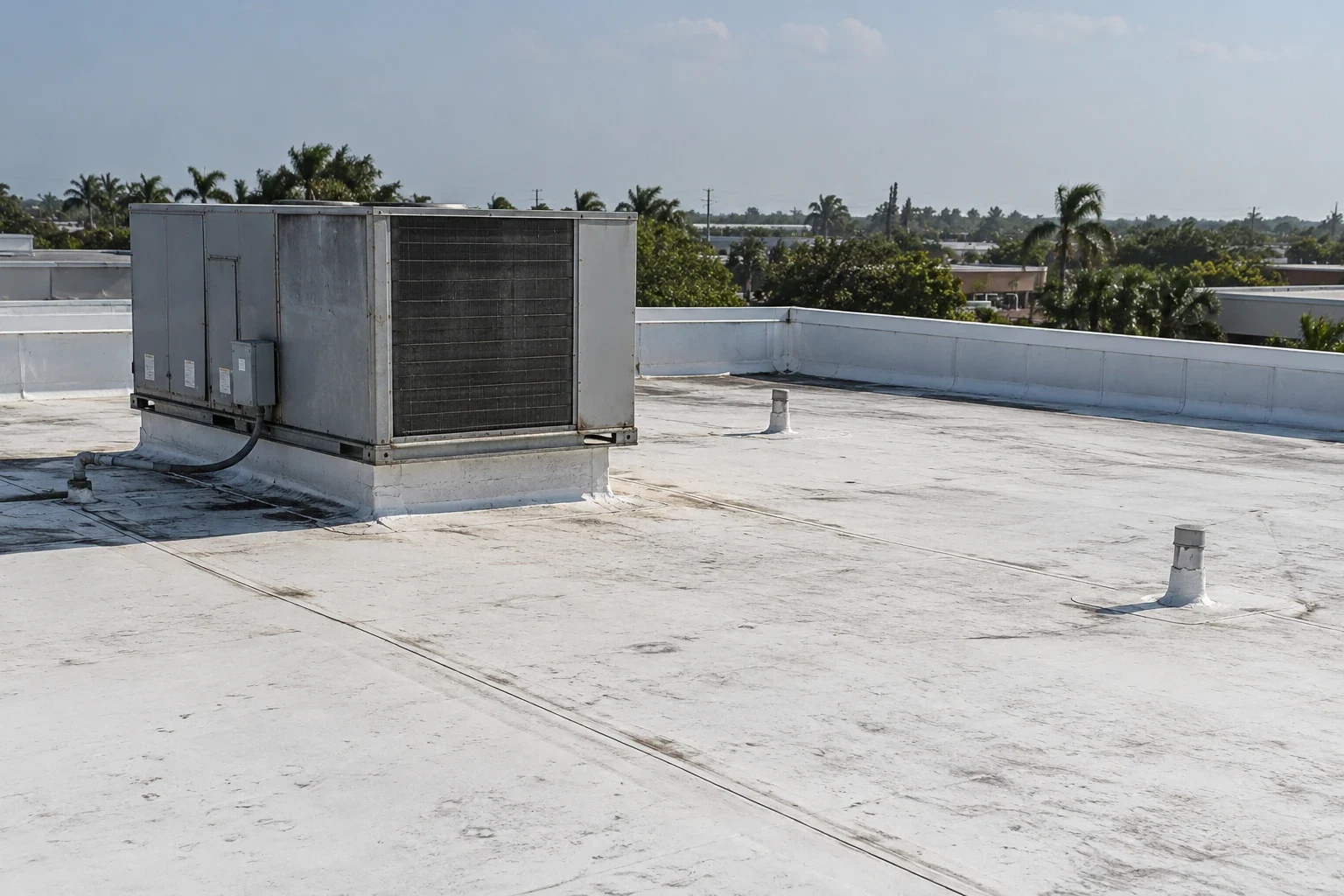
Repeated leaks, wet insulation, widespread seam failure or damaged deck can move the decision beyond a local fix. We map findings by roof zone and compare repair with recover evaluation or replacement. A recover requires review of retained layers, moisture, attachment and drainage. If a new roof is needed, the phased plan should coordinate tear-off, lift routes, inventory protection and daily dry-in.
Brownsville adopted the 2018 International Building Code; commercial plans receive City review. The design team confirms the applicable criteria, permits and approved assembly for the facility. We identify materials, insulation, attachment, edge details and equipment transitions in the submittal. Concealed conditions and operational changes are handled through the approved change process rather than assumed in the base quantity.
A distribution center and a warehouse may share storage and loading functions, but conveyor density and parcel flow differ by operator. A cold-storage facility adds vapor-control and temperature considerations. We verify what the building actually operates before setting the roof sequence and scope.
Closeout: Give operations a phase record
Daily notes identify completed sections, temporary cover, drains protected, routes reopened and unresolved items. Final closeout documents materials, repaired details, tagged photos and exclusions. We note any remaining roof areas that need inspection and identify whether dock, lift or tenant routes return to their usual arrangement. The facility can use that record to schedule maintenance without guessing which bays were in the project area.
Send the Brownsville address, process schedule, dock window, roof plan, leak reports and access contact. We will identify the first inspection area, define controls for freight movement and return a work scope with a clear handoff. Every record remains tied to the building rather than a generic distribution template.
Related Roofing Work
Other roofing services and buildings we handle across Brownsville.
Questions About Commercial Distribution Center Roofing
Can roof replacement happen while a distribution center stays active?
It can when work phases, dock access, lift routes, interior protection and weather cover are coordinated. The operating team identifies restricted zones and peak hours; we document the daily roof boundary and required closures before starting.
How do you protect conveyor systems during roofing?
We map equipment below the work, confirm shutdown or isolation requirements with facility staff and identify protection for sensitive lines. Roofing does not include conveyor disconnection unless the approved scope assigns it.
What if a leak is over stored goods?
We document the interior location, protect product as directed by the facility and trace the roof above it. The repair scope identifies temporary cover, affected materials and any additional test needed before permanent work.
Do 48 dock doors mean the roof has a certain size?
No. The published door count describes one industrial building and does not establish roof area. We measure the property and roof sections directly before setting quantities.
What makes a distribution roof proposal change after approval?
Test findings, concealed layers, deck condition, revised operating hours, lift access and added protection can change quantities or sequence. We document the condition and request approval before extending the work boundary.