
Commercial Built-Up Roofing in Brownsville, TX
Confirm the built-up layers before pricing
Loose aggregate at a drain can expose more than a maintenance issue. We record the surface, inspect the surrounding plies and check where water is moving before recommending repair. Brownsville's long warm season affects roof access and material handling. The Port of Brownsville Business Park and North Brownsville Industrial Park are separate industrial settings; we confirm the roof layers and access needs at the property before setting a scope.
Send the Brownsville address, roof records, leak locations and site contact. We will inspect surfacing and details, then document repair or replacement options. Call 555-555-5555 or use the form.
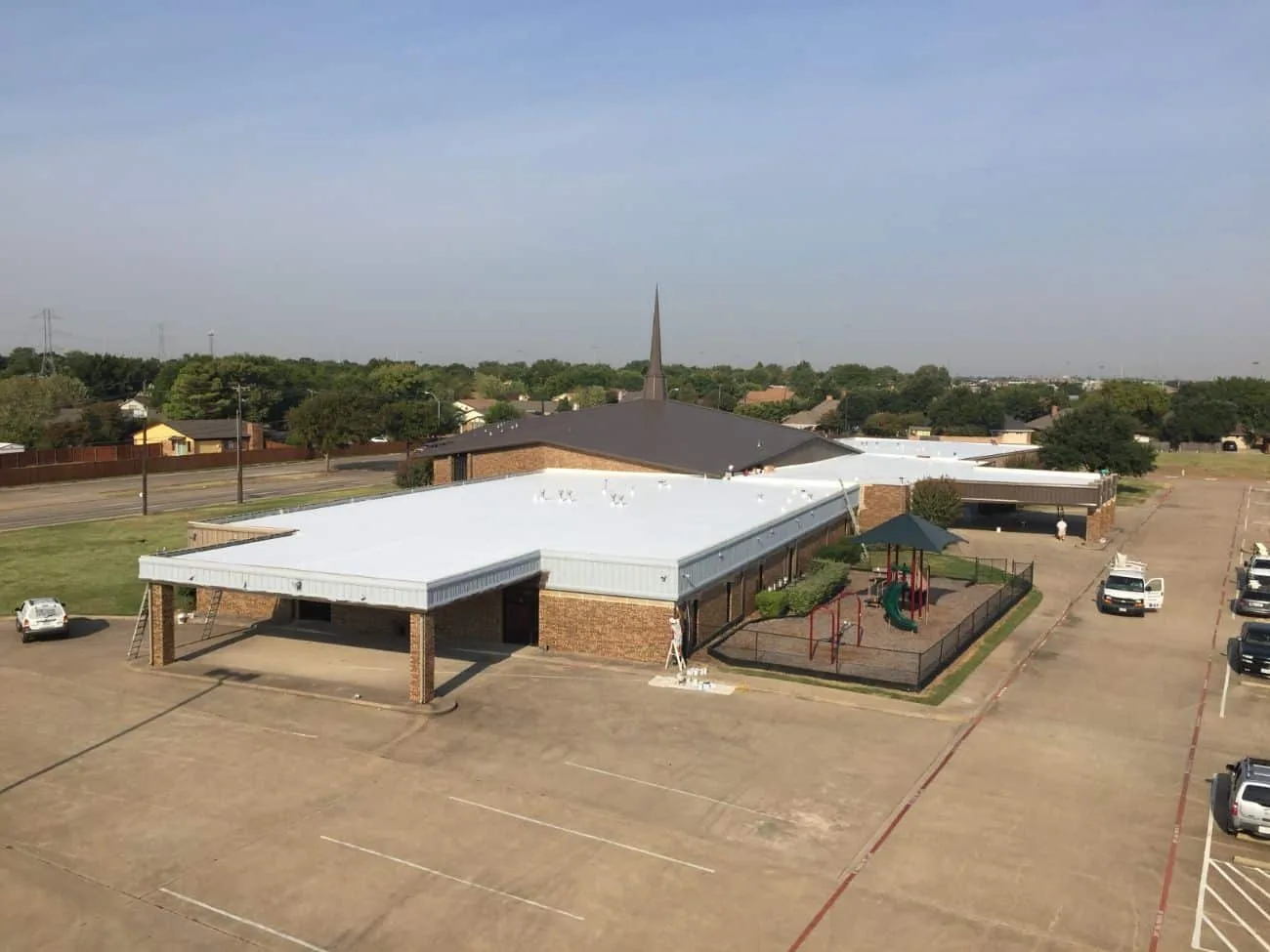
Inspect: Identify surfacing and ply condition
Built-up roofing uses multiple layers of reinforcing fabric and bitumen, often finished with aggregate or a cap sheet. We identify the roof makeup from plans and accessible observations. A test opening may be needed to confirm ply count, insulation, cover board and deck. We document the point sampled and do not apply that result to untouched sections without evidence.
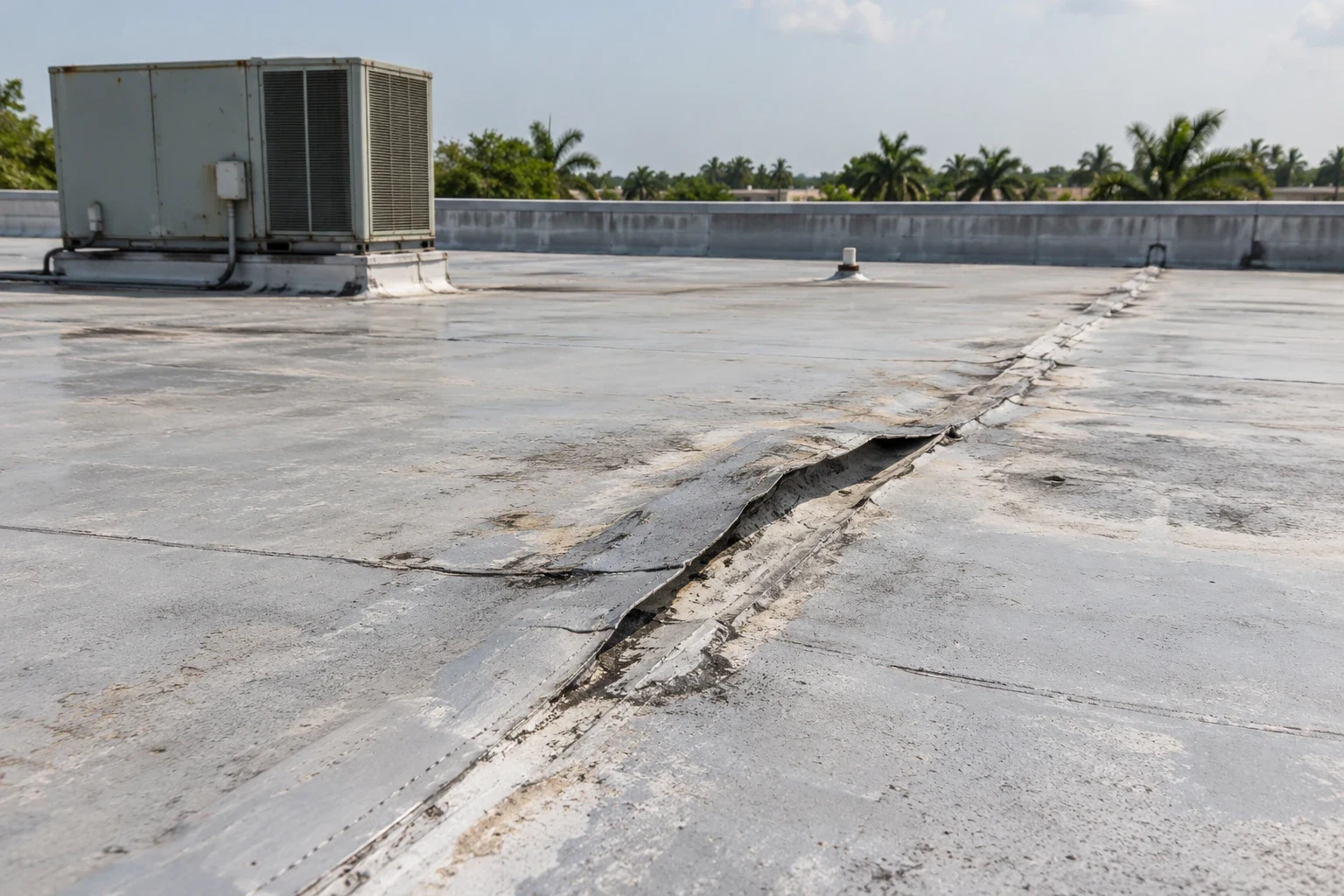
At the surface, we check aggregate coverage, exposed bitumen, blisters, splits, ridges and prior repairs. Around parapets, curbs, drains and penetrations, we inspect flashing and termination details. Water can move beneath surfacing or through multiple layers before reaching an interior ceiling. We compare an interior stain with nearby seams, drains and penetrations, then mark the entry path when roof evidence supports it. A commercial roof inspection can map conditions, tagged photos and limits for the owner.
Drainage review includes outlets, scuppers, strainers, overflow routes and low areas. Aggregate that has shifted may restrict an inlet. Persistent water can add stress to laps and flashing. If a drain or scupper detail needs correction, we can coordinate a drainage repair with the roof work rather than cover the surrounding surface first.
Repair: Rebuild the affected layers
A repair may require removing aggregate, cutting back loose or split plies, drying the area and installing compatible reinforcement and bitumen. We secure the tie-in, replace surfacing as specified and check the surrounding field for separation. The repair boundary includes enough sound material for a reliable connection. Applying surface coating over a wet blister or loose ply does not restore the underlying assembly.
Heat-applied work requires approved procedures and protection. The building contact confirms hot-work restrictions, fire watch, extinguisher placement and nearby combustibles before application. Other methods may be specified where site rules or product details call for them. Brownsville's summer temperatures affect crew exposure and application conditions, so work timing follows product instructions and safety controls.
When the opening exposes wet insulation or damaged deck, we photograph the layers and pause at the approved scope boundary. The owner or authorized representative decides whether additional removal proceeds. That process keeps quantities and responsibility clear while the roof is open. A repair proposal identifies material, preparation, fire controls, temporary cover and return work when applicable. Emergency response can provide temporary protection at any hour, including holidays, for active entry.
Compare recover and tear-off
Built-up roofs can carry substantial material depth, so recover design requires accurate layer information and a review of deck, drainage, attachment and project constraints. Before adding another layer, we review the existing plies, moisture, attachment, drainage and deck; an authorized test opening can confirm concealed conditions. If moisture or unstable plies are widespread, removal may be necessary. Where the retained assembly is suitable, an owner can compare a recover assessment with a replacement.
Built-up roof inspections also check aggregate depth at drains, condition around equipment bases and the transition from field plies to wall flashing. We record bare asphalt, loose gravel, ridges and cracks separately. If repairs recur where the roof meets a wall or curb, movement and water entry may involve multiple layers. A close inspection can distinguish a small surfaced defect from a location that needs an opening to determine how far damage extends. We identify where test cuts are approved and describe what they show, without assuming the same stack-up across the whole building.
Other low-slope systems use different construction. Modified bitumen is a rolled asphalt system with defined plies and surfacing, while TPO is a single-ply membrane with welded seams. We compare assembly, drainage, edges, penetrations and maintenance needs before recommending a material. The product schedule, attachment and wind criteria come from the project design and approvals.
Commercial roof plans go through Brownsville's municipal permit review. The design and permitting team confirms the adopted code edition and project requirements before installation. Cost changes with number of existing layers, aggregate handling, deck repairs, insulation, edge metal, access and hot-work controls. We state removal assumptions and how concealed conditions will be reviewed.
Record the section and the remaining work
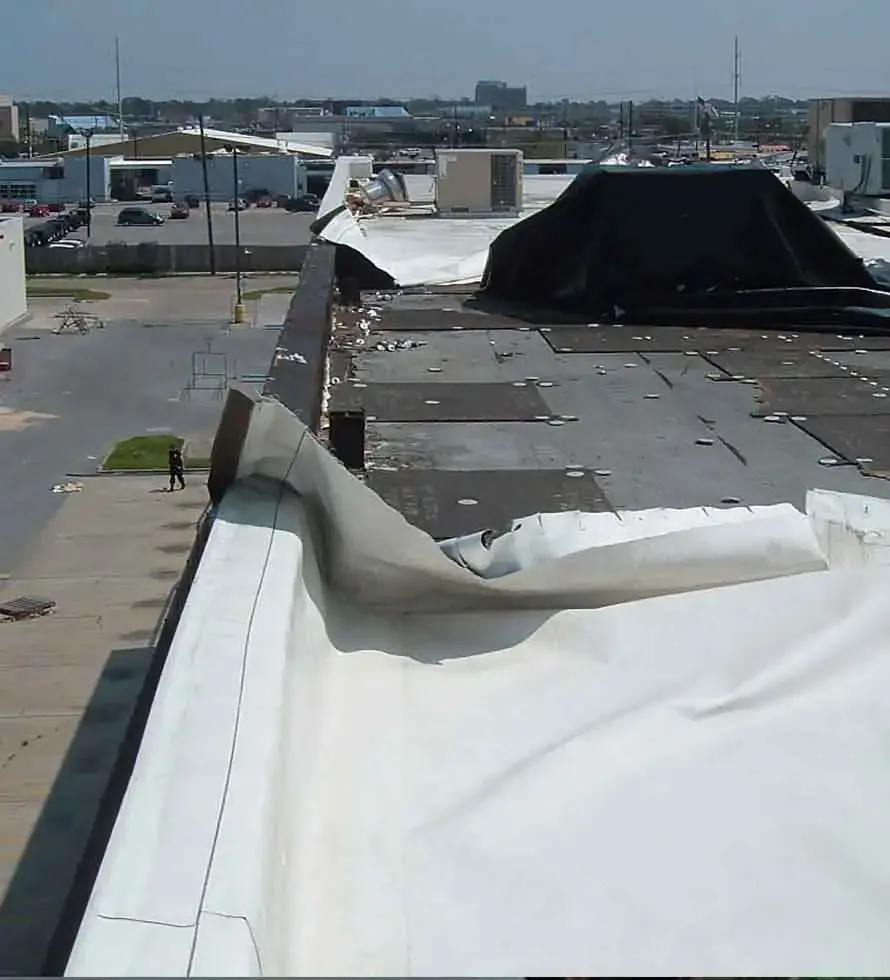
Replacement sequencing can be affected by aggregate removal, disposal, fire-watch staffing, equipment access and the ability to keep each open section dry. We identify those constraints with the building contact and show how each phase terminates at a secure boundary. A phased plan also helps the owner keep receiving doors, critical equipment and access routes available. Where the work crosses multiple roof sections, the field record identifies which areas are new and which remain in the existing assembly.
Closeout identifies areas repaired or removed, layers observed, materials installed, photos and any future inspection item. The property record should state which roof sections remain untested or outside scope. That keeps a later capital decision from treating an isolated repair as a full condition assessment.
The Port's business park has rail and trade-corridor connections; North Brownsville Industrial Park includes listed industrial lots and utilities. For a building near the port park or North Brownsville Industrial Park, delivery and laydown rules come from the property contact. We document access assumptions along with the roof. Send the address, repair history, leak report, available plans and approval contact. We will confirm the system and return a scope with a defined boundary.
Related Roofing Work
Other roofing services and buildings we handle across Brownsville.
Questions About Commercial Built-Up Roofing
Can you add a new layer over built-up roofing?
A recover is considered after reviewing layer count, moisture, deck, attachment, drainage and project requirements. A test opening may be needed to verify concealed construction. The proposal states what can remain and what must be removed.
Why is aggregate moved during a repair?
Aggregate can be cleared to inspect and prepare the repair area or to expose a drain. We record how much surfacing is removed and restore it as specified. If an outlet remains blocked, that drainage condition receives a separate scope.
How do you locate a leak through several roof layers?
We compare interior reports with roof details, low areas, drains and previous patches. Targeted openings can help identify wet materials and the actual entry path. The report distinguishes field observations from concealed conditions not tested.
Will built-up roofing work involve a torch?
The method depends on the assembly, product and site controls. We confirm hot-work approval, fire watch and protection before using heat. If another specified application method fits better, the proposal names that method and its preparation.
What can change a built-up roof replacement price?
Layer count, aggregate removal, deck and insulation condition, drainage, roof access, perimeter metal and fire controls affect quantities and labor. We state which items are confirmed and how hidden conditions will be approved.