
Grocery Store Roofing in Brownsville, TX
Coordinate a grocery roof repair
Water beside a walk-in cooler needs a room report, a roof location and a refrigeration contact. We inspect the area above the report, document curbs and drains, and define who approves the next step. Brownsville's retail geography includes Sunrise Mall on North Expressway and Downtown Brownsville's historic commercial district. A grocery building has its own receiving schedule, refrigeration layout and customer flow. The scope begins with those operating details.
Send the Brownsville store address, affected room, refrigeration contact, loading schedule, roof plans and approval details. We will document the finding and work boundary. Call 555-555-5555 or use the form.
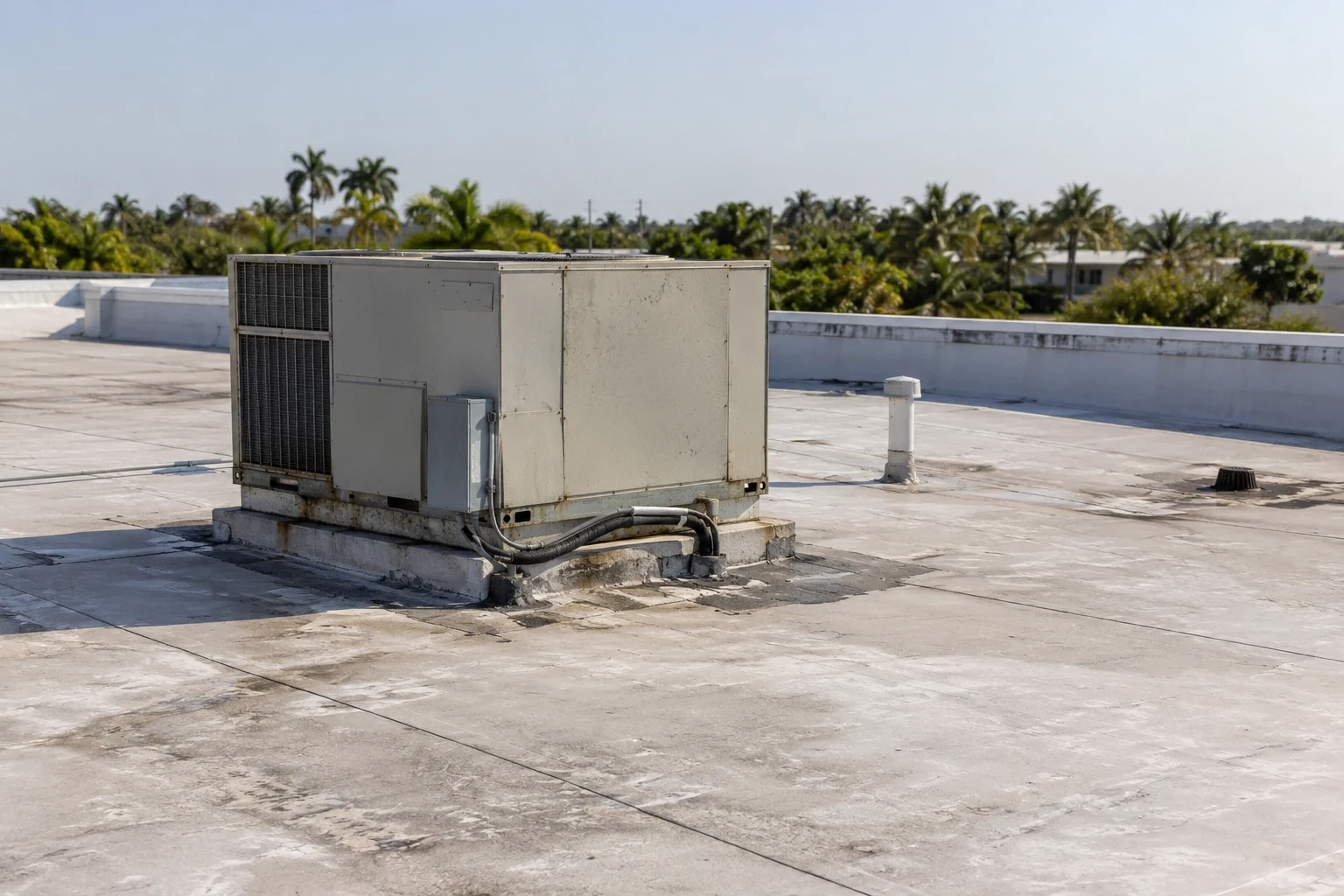
Inspect: Trace moisture around equipment
We record where the water appeared, when it started and whether nearby equipment was recently serviced. The roof review checks seams, penetrations, curb flashing, drains, scuppers and wall transitions. Condensation, a failed roof detail or a drain problem can produce similar interior signs. We compare the report with what is visible and identify any test needed before a repair boundary is set.
Refrigeration lines and rooftop condensers can restrict access or cross a roof seam. We note unit tags and service clearances, then coordinate with the store's mechanical contact before any work that could affect operation. A curb and equipment review can identify where roof flashing meets a mechanical assembly. Roof staff do not shut down, disconnect or adjust refrigeration equipment unless that work is assigned to a qualified trade.
Brownsville averages about 140 days annually when temperatures reach 90 degrees or higher. That heat makes refrigeration reliability and roof access planning important during exposed work. We plan around safe work windows, store deliveries and the facility's operating requirements. The local climate informs the sequence; inspection results establish the condition of the store's actual roof.
Protect: Coordinate cold rooms and receiving
Before work starts, the store contact identifies cold-storage zones, inventory sensitivities, temperature alarms, loading hours, food-safety procedures and customer entrances. Roofing may require noise or odor controls and temporary barriers below the active section. We confirm where materials and debris can move without crossing food receiving or customer routes. The plan names the facility contact who can pause work if operating conditions change.
Sunrise Mall and North Expressway form one retail setting; Downtown Brownsville's commercial district has different street access and building constraints. Those locations help frame Brownsville's varied retail context, but a specific grocery site has to be walked and its own truck and customer paths verified. A North Expressway area property still requires store-level access planning. If the grocery is part of a multi-tenant center, a shopping-center roof plan can also track separate tenant notices and shared staging.
For an occupied roof, we limit the open area to the section that can be closed or protected within the agreed shift. We record temporary cover and the person checking it. The store controls product movement, sanitation, refrigeration monitoring and any area closure. A phased occupied-building reroof can separate work by zone when the roof layout and operation allow it.
Repair: Separate temporary cover from permanent work
A localized repair may address a failed curb, seam, drain or penetration. The scope identifies preparation, materials, flashing tie-in and the roof section included. If removal finds wet insulation, the crew photographs the layer and pauses at the approved boundary. The store owner reviews added removal and any impact to refrigeration coordination before work continues.
Brownsville weather records include a tornado near the city during Hanna in 2020; an inspection at the store still determines whether its roof was affected. After severe weather, a store can check roof edges, drains, curbs and equipment penetrations against a current roof record. We document actual conditions and identify areas needing temporary protection. A storm in the region informs preparedness; it does not locate damage at an individual grocery property.
A leak above a cooler aisle can be reported after hours; we first document the opening and protect stock, then return with a permanent repair scope. The field file lists the temporary weather closure apart from work that permanently repairs the detail. If the roof cannot be safely opened during the initial call, we identify what is protected and when the detail can be revisited. Interior cleanup, refrigeration service and product disposition remain with the store or assigned specialists unless the approved roofing scope expressly includes them. A leak repair scope names that boundary.
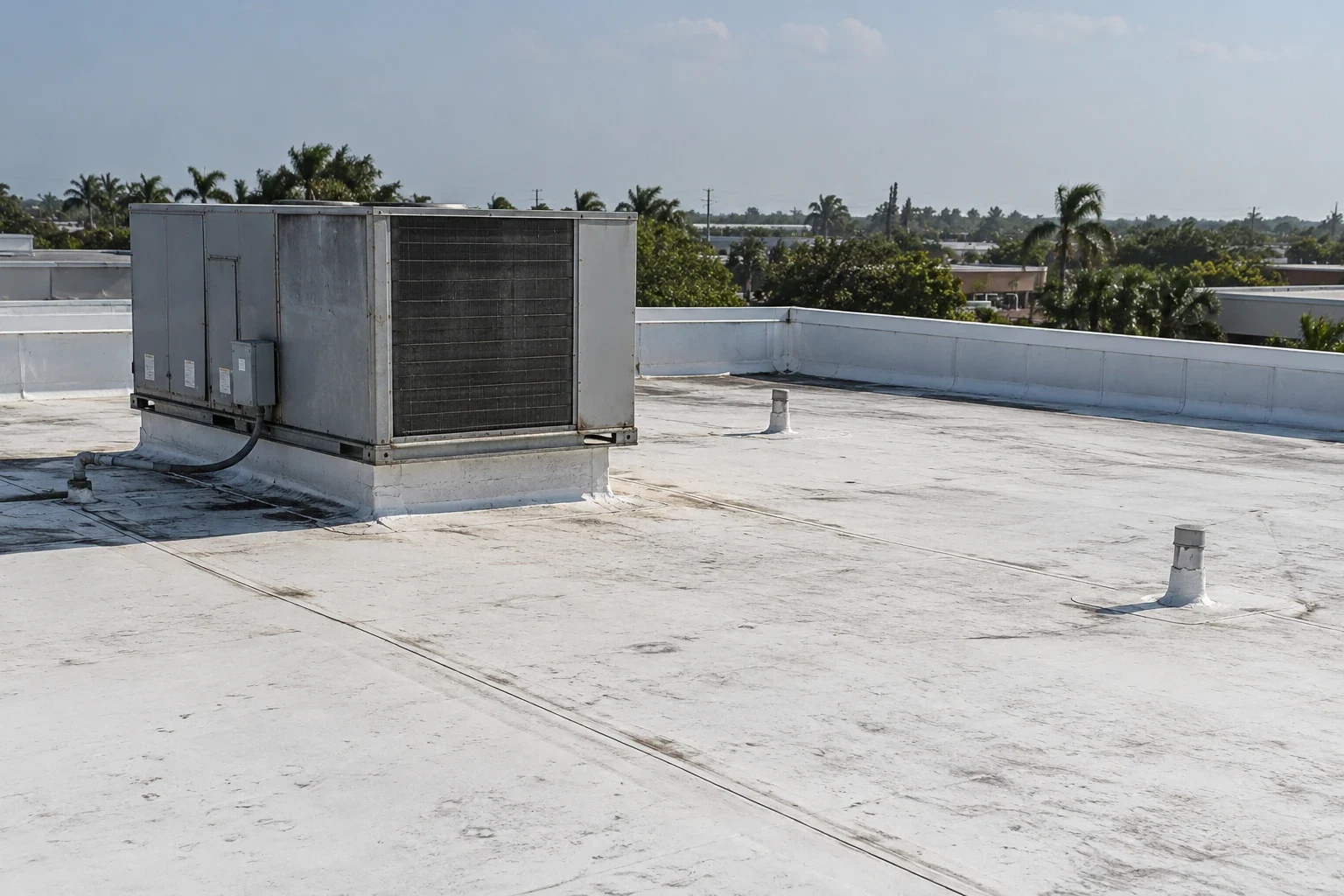
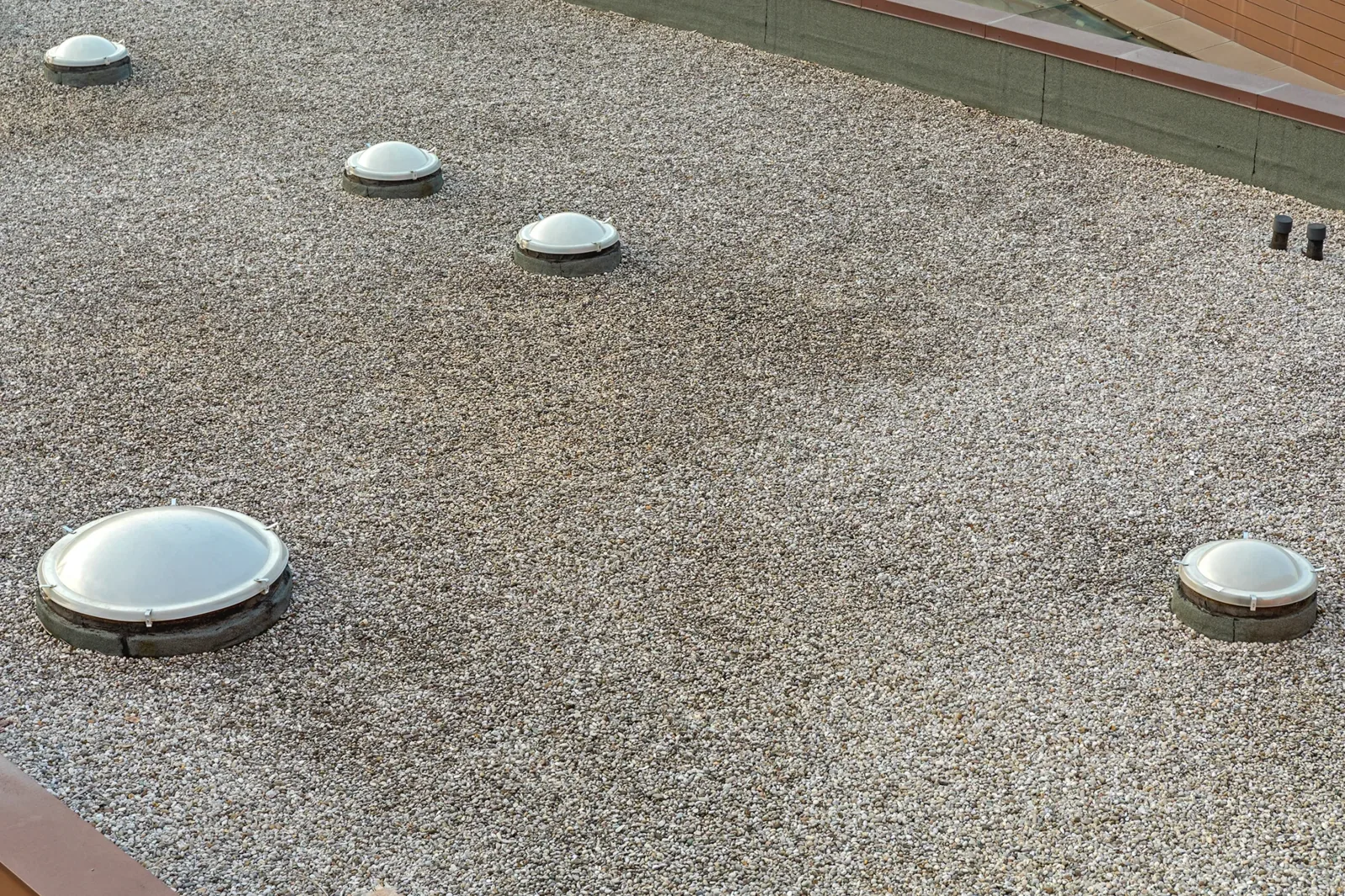
Options: Correct the detail or address the system
A single failed flashing may be repaired without changing the full roof. Repeated leaks, widespread wet insulation, deteriorated seams or drainage problems may support a broader project. We compare inspection findings, roof layers and the store's operation before preparing a recover assessment or replacement. Existing moisture and assembly details determine whether a recover can be considered.
Brownsville's adopted building-code base is the 2018 IBC. The store's permit submittal should identify the assembly and detail changes for review. The project designer confirms code, wind and permit requirements for the building. Refrigeration equipment, kitchen exhaust, fire systems, signs and electrical service may involve other trades. The roof proposal describes each interface and the coordination needed before a curb is opened or equipment is moved.
Price and timing depend on staging, access, store hours, deliveries, wet layers, equipment moves, selected assembly and material supply. A grocery project may require work zones that preserve cold-room monitoring and keep an approved receiving route available. We state assumptions and exclusions, then request approval if concealed conditions change the repair quantity. That keeps the roof scope tied to a specific decision rather than an unpriced expansion.
A restaurant roof may have similar exhaust interfaces, but a grocery store adds receiving and inventory zones that need their own coordination. The site contact confirms which of those conditions apply.
Closeout: Tie roof findings to store records
Closeout photos show completed details, replaced materials, drainage conditions and any area left under temporary protection. We list roof sections not accessed and the work assigned to refrigeration or interior trades. Store facilities staff can attach the record to the service call and maintenance file, then compare a future report with the documented curb, seam or drain.
Send the Brownsville address, affected department, report timing, roof plan, refrigeration contact, receiving hours and approval authority. Include food-safety limits, alarm requirements and routes that need to remain open. We will define the roof work area and identify testing or trade coordination that requires separate approval. The written scope names the contact for changes and the point at which the store must review additional removal.
After a repair, the store may schedule a return visit to inspect the closed detail and nearby drainage. The record states what was visible on that date and any recommended follow-up. A new interior report can then be checked against the roof map rather than presumed to be the same leak. Store operations, roof observations and approvals remain separate entries tied to the property.
Related Roofing Work
Other roofing services and buildings we handle across Brownsville.
Questions About Grocery Store Roofing
Can refrigeration stay on during roof repairs?
The store's refrigeration contact decides operating status and monitoring requirements. We plan the roof sequence around those instructions and identify any work that depends on a unit being isolated or moved. Mechanical work is assigned separately unless included in the agreement.
How do you tell a roof leak from cooler condensation?
We compare the room report, equipment activity, roof penetrations and accessible assembly details. Similar moisture patterns can have different causes. If the inspection cannot confirm the source without testing, we identify the test and request approval before opening the roof.
Will the receiving dock remain open during roofing?
The store contact identifies truck schedules, dock access and customer routes. We plan staging and material removal around those requirements. Any temporary closure is listed in the approved sequence for store coordination.
What happens if the roof opening finds more wet material?
We photograph the exposed layer and stop at the quantity already approved. The owner reviews the added area, tie-in and schedule impact before removal continues. Product handling and interior restoration are outside the roofing scope unless assigned.
Can emergency repairs happen overnight?
An active leak can be reported around the clock, including holidays. We record the affected aisle, roof zone and temporary protection before the repair is approved. We coordinate access with the store contact, record temporary protection and return to complete a permanent repair when conditions allow inspection and preparation.