
Commercial Roof Leak Repair in Brownsville, TX
Document the leak location
A ceiling stain beside a light fixture needs a location record before anyone cuts the roof. In Brownsville, TX, we note where water appeared, when it was reported and what roof details sit above and around that area. Then we follow the accessible surface for open seams, flashing gaps, punctures and drainage trouble. The leak report separates the room where water showed from the roof condition we can confirm.
That distinction matters in a commercial building with equipment, tenants and multiple roof sections. The inspection record can tie interior observations to roof photographs and a marked location, giving the owner a clear basis for a repair scope.
Provide the Brownsville address, affected room and facility contact. We will trace the roof detail, document findings and scope the repair boundary. Call 555-555-5555 or use the form.
Trace: Connect the report to the roof
We ask when the leak appears, which rooms are affected and whether water continues after rain stops. The facility contact can share ceiling photos, maintenance notes or prior repair records. Those details narrow the search, but the roof still needs to be inspected. Water can travel along a deck, insulation joint or framing before it becomes visible indoors. The reported point is a useful reference, not automatic proof of the entry location.
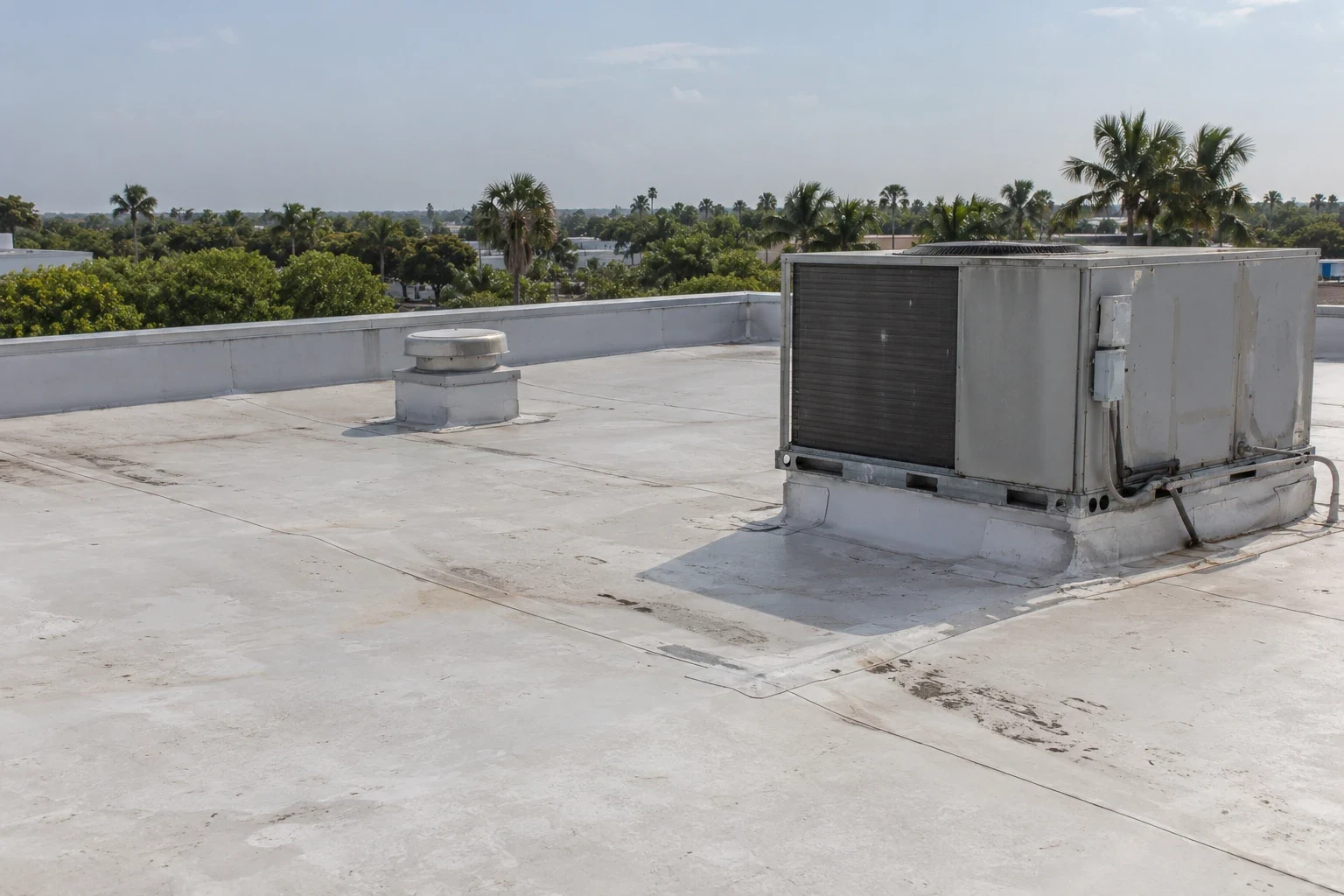
On the roof, we inspect nearby seams, penetrations, curbs, parapets and edge transitions. We check whether drains and scuppers are open and whether water is collecting at a low point. Loose sealant, a puncture or a failed flashing may be clear. Other conditions require closer review or a test opening. We photograph each finding and identify which observation is confirmed, which is a likely path and which remains concealed.
For a medical office near Valley Regional Medical Center or a retail property along the Boca Chica Boulevard corridor, we confirm the building address, facility contact and reported room before tracing a leak path. This lets the inspection plan account for occupied areas, access controls and the roof sections above the report. If access to a mechanical area is restricted, the report states which surface we could not examine.
Weather: Preserve the conditions around the leak
Brownsville averages roughly 140 annual days above 90°F. For leak work, the crew records roof-surface and ambient conditions before handling repair materials and schedules permanent repairs when the substrate and system requirements allow. Heavy rain can also make a roof unsafe to inspect or prevent a permanent repair until the surface dries. We record the conditions at the time of the visit and distinguish temporary protection from completed repair.
Hurricane Hanna brought heavy rain and damaging winds across the Rio Grande Valley in 2020, and a small tornado was documented near Brownsville. For a leak reported after a storm, record the date, affected rooms and current roof changes, then inspect the suspected entry detail before setting the repair scope.
If active water is entering, temporary cover may reduce exposure while the roof is made safe for permanent work. The facility contact should identify sensitive equipment, occupied rooms and any area where water must be contained. We record where the temporary protection was placed, what it covers and whether a return visit is needed. Permanent flashing or membrane repair is scoped separately when it requires dry conditions or additional approval.
Repair: Match the fix to the entry detail
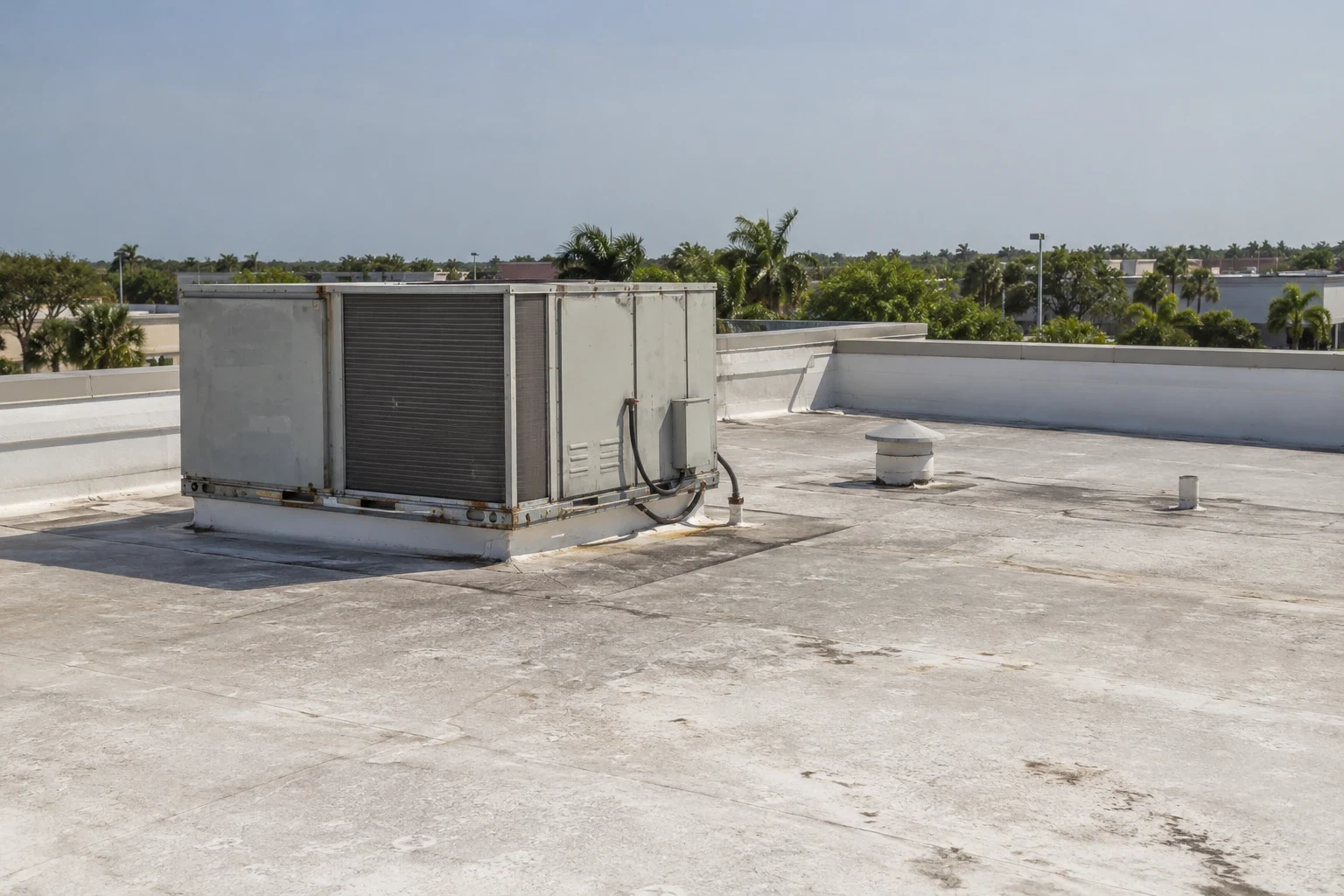
A membrane puncture needs compatible patch material and a prepared surface. A separated lap needs the correct seam repair for that roof system. A curb or pipe leak may require new flashing that carries water back onto the field membrane. We document the detail as a flashing failure repair when the transition is the confirmed source. A clogged drain needs service at the outlet, not a patch across the roof surface. We name the detail and the repair method in the proposed scope.
Preparation is documented too. We remove loose or failed material only within the approved boundary, clean and dry the surface as the system requires, then tie the repair into sound material. If the exposed layer is wet or damaged, we stop and record it. The owner can review the finding before the work expands into insulation or deck repair.
Where several leaks appear, we compare their locations with seams, drains and prior patches. Repeated failure may point to a larger condition, but it does not tell us the full extent until we inspect. A moisture survey can help select test areas when concealed wet insulation is a concern. A drain repair may be necessary where runoff is not leaving the roof as intended.
Record: Keep causes and findings separate
The leak report should show the reported interior location, roof area inspected, observed opening and repair boundary. It should include dated photographs, notes on materials and any access limit. If a core cut or other test was not approved, the report should say that concealed insulation was not verified. This is more useful than a broad statement that the roof is fixed when only one detail was repaired.
Brownsville adopted the 2018 International Building Code. The City reviews commercial remodeling and new-construction plans. If leak repair involves changes that may require permitting, we confirm project requirements with the local authority. The code edition alone does not determine whether a particular repair needs a permit.
For a leak affecting inventory or business hours, we can describe the temporary measure, permanent repair and owner decision as separate steps. The closeout record notes when the roof detail was completed and whether a return visit remains. A condition report can collect repeat leak locations across a property for budget planning. If multiple areas have failed, an assembly review can compare repair with replacement.
Closeout: Confirm what the repair covers
After work, we photograph the finished detail and nearby roof surface. We note the material used, repair location and any adjacent condition left outside the scope. The manager can compare that record with a later report if water returns. A new wet mark should be inspected on its own evidence rather than assumed to be the same opening.
Leaks deserve a prompt, ordered response: document the report, inspect the roof, protect the interior if needed, approve the permanent work and keep the closeout photos with the facility record. Share the Brownsville address, room location and time of the leak so we can start with the right building and contact.
Related Roofing Work
Other roofing services and buildings we handle across Brownsville.
Questions About Commercial Roof Leak Repair
Does the ceiling stain show exactly where the roof is open?
No. Water may move along roof layers or building framing before it reaches the interior. We use the stain as a search reference, then inspect nearby seams, curbs, penetrations and drains. The report marks the visible interior condition separately from the roof opening we can verify.
What should we do while water is still entering?
Protect people and equipment first, then notify the facility contact and document the affected rooms. We can assess whether temporary cover is safe and suitable while conditions permit. The record notes the covered area and any permanent repair still awaiting dry conditions, materials or approval.
Can a roof leak be repaired during the same visit?
A small, accessible defect may be repairable during the inspection if the surface is safe, dry and the needed material is available. A concealed condition, wet roof or complex flashing detail may need a separate scope. We state what was completed and what remains open rather than treating a temporary measure as permanent work.
How do you determine whether there is wet insulation?
We review visible signs and may recommend infrared imaging or a core sample where permitted. A thermal pattern is an indicator, not confirmation by itself. The report records each test location and result, so the owner knows what the inspection did and did not establish.