
Commercial PVC Roofing in Brownsville, TX
Document the PVC assembly before approving work
Grease exhaust near a roof can change how a membrane should be inspected and maintained. Brownsville has food processing among its industrial sectors, but that fact does not establish what any facility uses overhead. We identify the installed PVC assembly, check seams and penetrations, and record surface conditions before recommending repair or replacement. The roof section and reported issue set the boundary, not the industry label.
Send the Brownsville address, leak history, roof plans, prior repairs and building contact. We will inspect seams and transitions and return a scope with a clear boundary. Call 555-555-5555 or use the form.
Identify the PVC sheet and its details
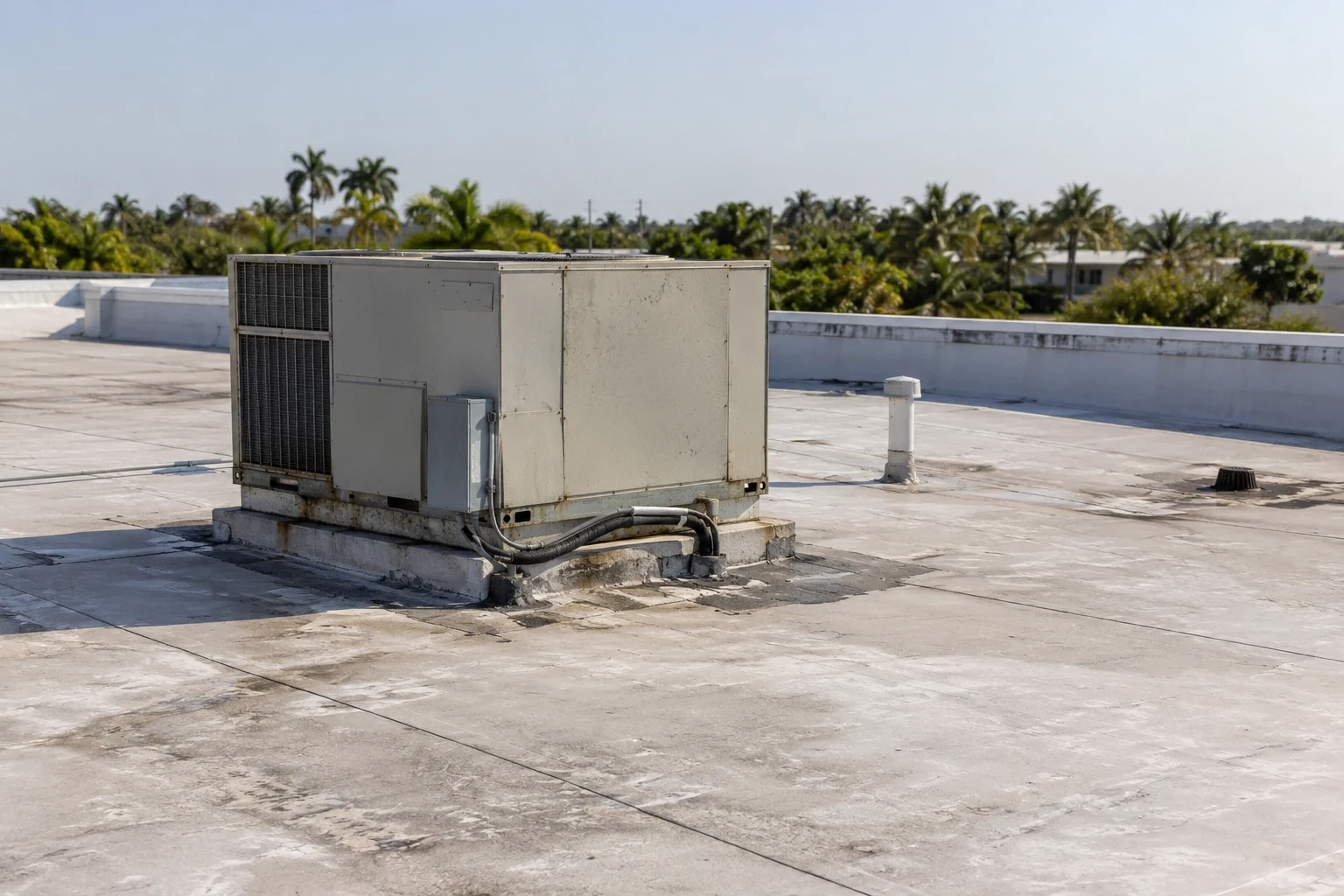
PVC is a thermoplastic single-ply membrane with heat-welded laps and fabricated or field-formed flashing details. We verify what is installed through records and accessible markings, then inspect sheet condition, seam continuity, attachment, insulation, cover board and terminations. Rooftop exhaust, oils, cleaning products or process residue may require closer review of the surface and manufacturer requirements. We do not infer chemical exposure from the property's business category; the facility contact supplies the operating context.
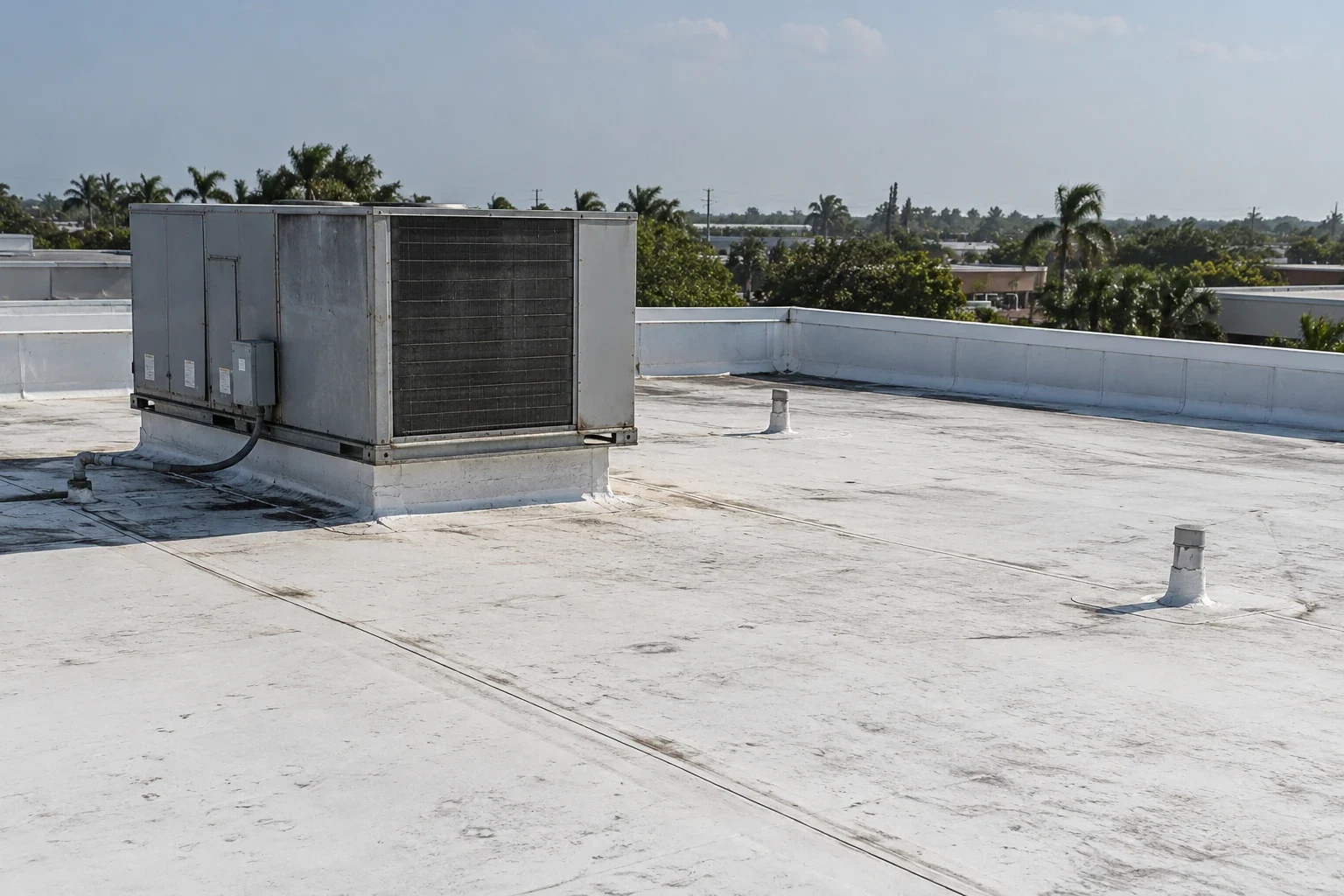
At a curb, pipe or parapet, we check corner transitions, metal edges, sealant, welds and movement. A leak may track from another detail, so we compare the interior report with nearby seams and the drainage path. If the assembly hides wet insulation, we state what test opening or moisture survey could resolve that question. A roof inspection documents accessible conditions, limits and tagged photographs before an owner approves a larger scope.
Drainage cannot be separated from membrane performance. We identify drains, scuppers, strainers and overflow routes. If outlets are obstructed or damaged, drainage repair may need to be scheduled with the PVC work. A membrane patch will not correct a blocked path or a low area that requires further review.
Prepare the sheet before welding
Thermoplastic seams rely on clean, compatible material and proper heat. We remove contaminants as allowed, prepare the surface and weld the patch or new flashing to sound membrane. A test weld can help confirm the tool setting and surface response under the conditions at the job. We inspect the finished seam and record where the work ends. If the membrane is brittle, contaminated or layered with an incompatible coating, a standard weld may not be appropriate.
Brownsville's summer heat is a practical variable. The crew monitors safe work conditions and follows product instructions for surface preparation and welding. Rain, wind, dust and moisture can also interfere with a dependable detail. We protect exposed layers while work is underway and define a temporary cover if the permanent repair cannot be completed safely that visit. Emergency response is available after hours and holidays for active water entry; the record distinguishes temporary protection from the permanent repair.
When a failure repeats at the same curb or lap, we compare tagged photos and repair history. Recurrence may indicate movement, poor attachment, wet substrate or a larger area of degradation. The scope should identify whether additional testing or removal is needed. A repair proposal lists the surface preparation, compatible materials, flashing work and exclusions, allowing the owner to approve a specific repair boundary.
Compare PVC with other assemblies
PVC and TPO both use heat-welded seams, but product formulation, compatibility and service requirements differ. A KEE system is another PVC-related membrane option, with details governed by its product and assembly documents. We identify the exact system proposed and do not treat the acronyms as interchangeable. The roof plan should state attachment, insulation, cover board, edge metal and flashing.
Replacement scope considers deck, existing layers, moisture, drainage, parapets, curbs and project approvals. Brownsville adopted the 2018 International Building Code, and its building division reviews commercial plans. The design team confirms project code, wind criteria, product approvals and details. We prepare submittals for the selected assembly and record deviations for approval before field installation. If the roof is suitable for a recover, the retained layers and attachment still need to meet project requirements.
On a recover, new attachment must pass through or engage the existing assembly as designed, and the retained roof must be suitable to remain. Test cuts can reveal layers and moisture, but a few openings only describe their sampled locations. We mark test points and explain what was not opened. If the owner is comparing two systems, the submittal should show how each handles edges, drains and penetrations rather than comparing membrane rolls alone. We can coordinate the roof scope with a consultant when the project requires engineered details or independent testing.
Cost depends on removal, test results, rooftop equipment, penetrations, access and the number of transitions. A roof with exhaust equipment or frequent service traffic may need additional detail work. We state assumptions and avoid pricing concealed material as if its condition were confirmed. The owner receives a comparison that separates base work from authorized changes.
Plan around Brownsville operations
Port-region industries include food processing, shipbuilding, steel fabrication and heavy manufacturing. The Port of Brownsville Business Park links to freight corridors and three Class I railroads. A separate listed industrial site at Paredes Line Road has dock and drive-in doors. These details point to scheduling questions, not a roof condition. We confirm loading periods, staging and access with the facility contact for the actual address.
Closeout records the completed PVC detail, material information provided, weather conditions if required, and any remaining inspection item. The field record should identify which seams were repaired and what remained outside scope. Send the address, roof plan, leak history, process context, prior repairs and approval contact. We will document the PVC assembly and return a scope tied to the building.
Related Roofing Work
Other roofing services and buildings we handle across Brownsville.
Questions About Commercial PVC Roofing
Does a PVC roof always suit a food processing building?
No system is selected from business type alone. We review actual exposure, assembly, exhaust location, surface condition and manufacturer requirements. The facility contact can explain operating conditions that may affect material selection.
Can you weld a PVC patch over an old repair?
That depends on the old material, surface cleanliness, membrane condition and whether a compatible weld is possible. We map accessible conditions first, then identify where an approved test would resolve an unknown layer. If the surface is contaminated or unstable, preparation or removal may be required before a new detail is installed.
How do you decide between PVC and KEE?
We compare the specific products, assembly design, exposure, attachment, details and project requirements. Product documents govern compatibility and installation. We identify the selected material in the submittal rather than treating a generic label as a complete specification.
What can cause PVC seams to separate?
Surface contamination, poor preparation, movement, incompatible prior work or field conditions can affect a weld. We inspect the seam, adjacent sheet and attachment, then document whether the issue is isolated or appears in other roof sections.
What records should I keep after PVC repair?
Retain tagged photos, repair date and location, materials, warranty documents and the written scope. Those items help the next inspection compare the repaired detail with new conditions and identify any area left outside the approved work.