
Emergency Commercial Roof Repair in Brownsville, TX
Report an urgent roof condition
A wind-lifted edge can leave a roof open before the next rain reaches the building. In Brownsville, TX, emergency roof repair starts with the reported location, immediate safety concerns and a record of what is exposed. We respond around the clock, including nights, weekends and holidays. The first visit identifies a safe temporary measure and the permanent repair that needs an owner-approved scope.
Tell us which rooms, equipment or operations are affected and provide a site contact who can coordinate access. A leak repair inspection can trace the reported water path and identify whether the opening involves a seam, curb, flashing or drain.
Call with the Brownsville property address, access contact and active exposure. We will record the condition, identify immediate protection and outline the permanent work for approval. Call 555-555-5555 or use the form.
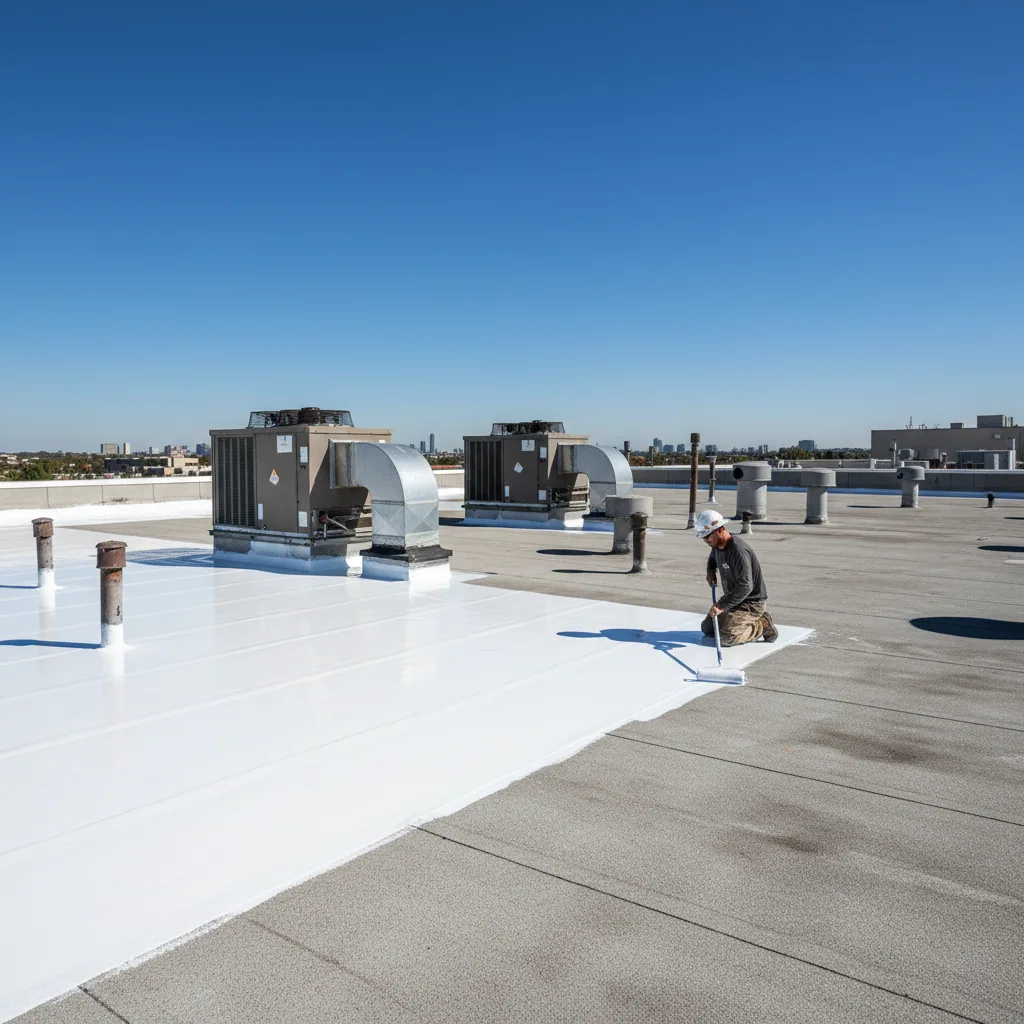
Triage: Identify the immediate exposure
Before roof work begins, the facility contact should keep people away from wet ceilings, electrical hazards, unstable materials and any area below a suspected failure. We need the building address, access point and the condition reported. If water is entering, note when it began, whether it is still active and which assets need protection. Those facts help define the initial inspection area.
At the roof, we check for displaced membrane, loose edge metal, punctures, damaged flashing, blocked drainage and debris. We photograph what is visible and mark the affected section. Storm debris or a fallen branch may hide additional damage. The emergency visit is focused on immediate exposure, so the report notes surfaces that could not be reached or inspected safely.
Brownsville's port and airport support freight and industrial activity across the region. A facility tied to the Port of Brownsville or Brownsville/South Padre Island International Airport may have access, loading or equipment controls that shape how emergency work is staged. The names of nearby facilities do not establish that a specific property is connected to them. The site contact confirms working areas, escort needs and operational limits for the actual address.
Stabilize: Limit water entry safely
Temporary protection can reduce exposure while the permanent repair is prepared. Depending on roof condition and weather, that may involve securing a loose section, covering an opening or directing water away from sensitive interior areas. We first consider whether the surface and access are safe. A temporary cover is documented by location, attachment method and visible limit, so the owner knows what it protects.
Protection is not a substitute for correcting the roof detail. A tarp over an area may not stop water moving below the membrane or through a separate penetration. We identify what remains unresolved and whether another inspection or test is needed. If conditions make the roof unsafe, we do not present an incomplete inspection as confirmation that the full system is stable. The facility manager receives the observed condition and the next action for review.
Brownsville heat affects material handling and safe work periods. Rain or high winds can change what temporary work is appropriate. We check current site conditions and secure materials before leaving. If temporary protection cannot be installed safely, we tell the contact what remains exposed and note the decision in the visit record.
Dry-in: Separate temporary work from repair
A dry-in can protect the building while a permanent repair is scoped. The record states whether the roof was covered, what portion remains open and whether a return visit is required. We identify the material and method used. That distinction is important when an owner later compares the temporary measure with the approved permanent work.
For membrane damage, the permanent repair may require compatible material, a clean and dry surface, and a patch tied into sound membrane. A separated curb flashing or perimeter edge may need its own detail. Drains and scuppers need clear outlets and properly connected membranes. The emergency report does not assume those repairs are included in the temporary cover. We send each proposed permanent task for approval.
Hurricane Hanna brought damaging winds, heavy rain and roof damage to the Rio Grande Valley in 2020, and a small tornado occurred near Brownsville during that event. Local storm history makes it useful to preserve the date, roof condition and temporary protection record after severe weather. The post-event inspection documents the damage visible at the particular building. The cause and scope follow observed evidence at the property.
If several roof areas are affected, a full inspection can map conditions beyond the immediate opening. For wind reports, we can also document affected edges through a wind damage review.
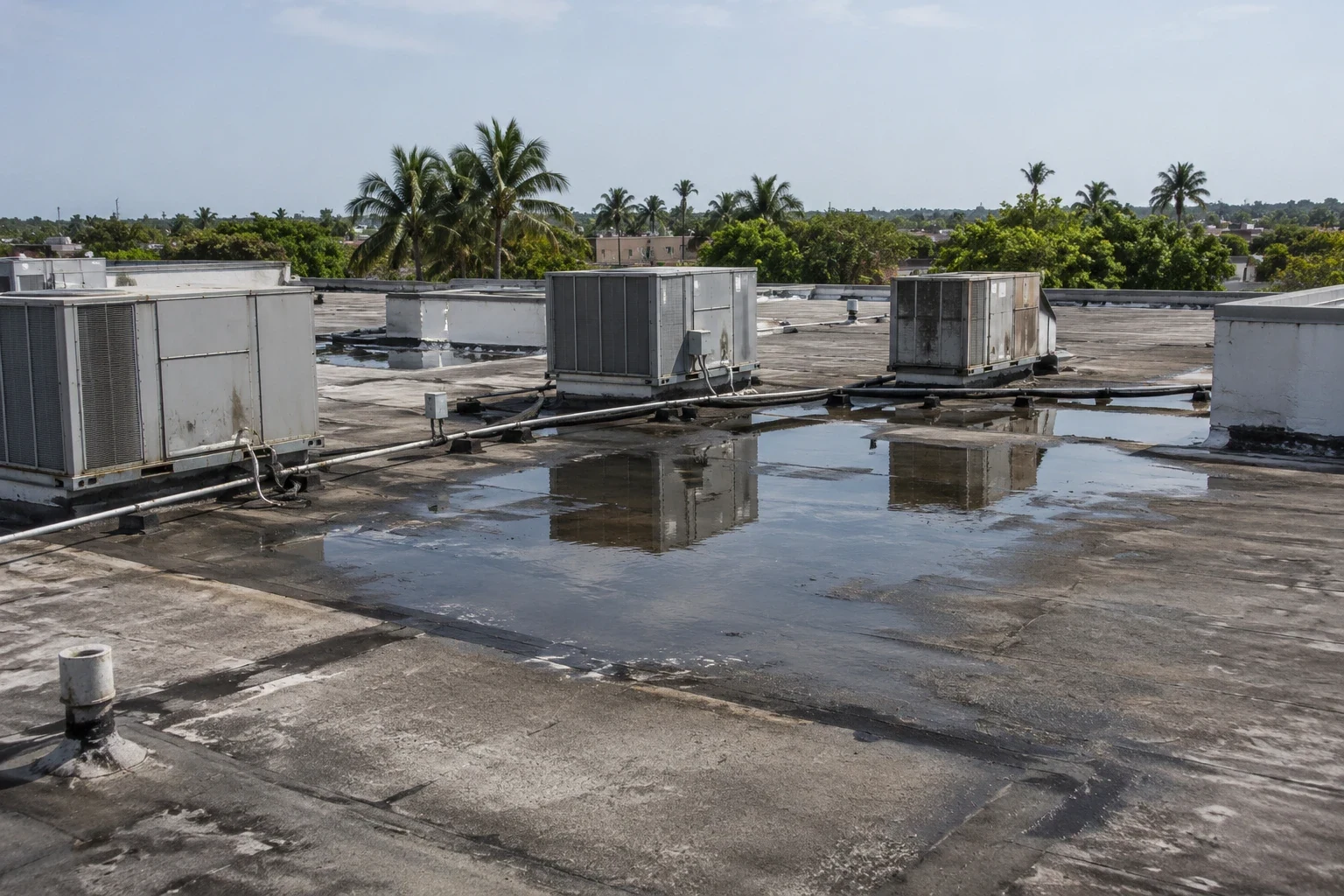
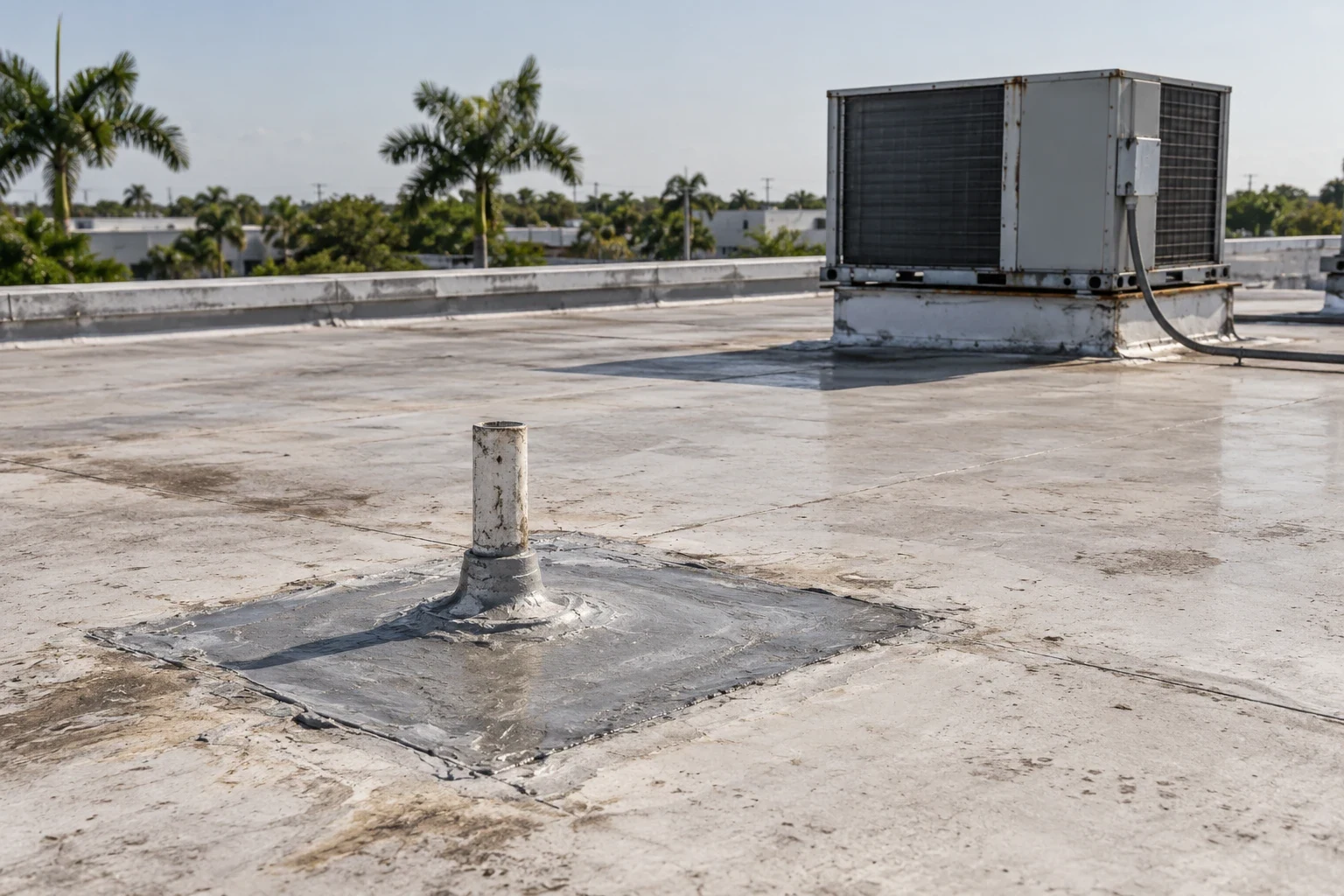
Scope: Approve permanent work
The permanent scope identifies the repair location, preparation, materials, flashing or membrane work and any access needs. It lists what remains excluded. If removal exposes wet insulation, damaged deck or another roof layer, we pause at the approved boundary, photograph the finding and request direction. Emergency status does not remove the need to distinguish visible work from concealed conditions.
Where water has affected a ceiling or stored property, interior mitigation may be separate from roofing work. We record our exterior findings and state where another trade or facility response is needed. We do not imply that roof work alone restores damaged contents, electrical equipment or finishes. This keeps responsibilities clear for the owner coordinating the response.
Brownsville adopted the 2018 International Building Code. If permanent work changes a roof assembly or requires a permit review, the project requirements should be checked with the City and applicable authority. The project designer or authority having jurisdiction confirms whether the specific emergency repair needs a permit.
A planned repair scope can set the lasting detail after the roof is stable. If damage is widespread, a replacement assessment can compare the affected assembly with a broader solution.
Handoff: Keep the record with the property
The visit record should return to the facility contact with photos, the temporary protection boundary, any completed permanent repair and items awaiting approval. We note whether the roof needs a follow-up inspection after weather clears. The owner can then assign the next action without relying on a verbal handoff.
For a property in Brownsville, share the building address, on-site contact, reported exposure and any access restrictions. We will document the immediate condition and identify the work that needs approval. Around-the-clock response gives the owner a way to report urgent roof conditions at any hour, with permanent work tied to a clear written scope.
Related Roofing Work
Other roofing services and buildings we handle across Brownsville.
Questions About Emergency Commercial Roof Repair
Is Brownsville emergency protection available overnight and on holidays?
Yes. We can dispatch at any hour to assess active water entry, then record what the crew could inspect safely and whether temporary protection or a return visit is needed. Provide the property address, a reachable contact and a clear description of what is exposed. The visit record will identify what could be inspected safely and what immediate protection or follow-up the condition requires.
Will a temporary cover permanently repair the roof?
A temporary cover is intended to limit exposure until the permanent detail can be completed. The report identifies its area and limits. A membrane seam, curb flashing or edge failure may still need compatible materials and dry conditions. We scope that lasting repair separately for owner approval.
What should I send before the crew comes?
Send the address, access instructions, site contact, affected rooms and any safety or operating limits. Photos from the interior can help identify where to inspect. Do not enter a wet or unsafe room to take them. The facility contact can share prior roof reports if available.
Can you confirm the storm caused the leak?
We document the conditions visible at the property and compare them with the reported timing. A regional storm history alone cannot establish a particular roof's damage or cause. If the inspection finds displaced material or a fresh opening, the report records that evidence and the repair boundary for review.