
Fitness Center Roofing in Brownsville, TX
Schedule roof work around facility hours
A water report above a weight room needs the room, class schedule and roof zone before repair starts. We inspect nearby drains, curbs, seams and penetrations, then record the access and approval boundary. Downtown Brownsville is a historic commercial district, and Sunrise Mall is on the North Expressway corridor. Fitness properties may sit in varied retail or standalone settings, each with different routes and operating hours. The facility's actual layout controls the plan.
Send the Brownsville address, reported room, class and pool schedule, roof plans, equipment notes and approval contact. We will document access and repair limits. Call 555-555-5555 or use the form.
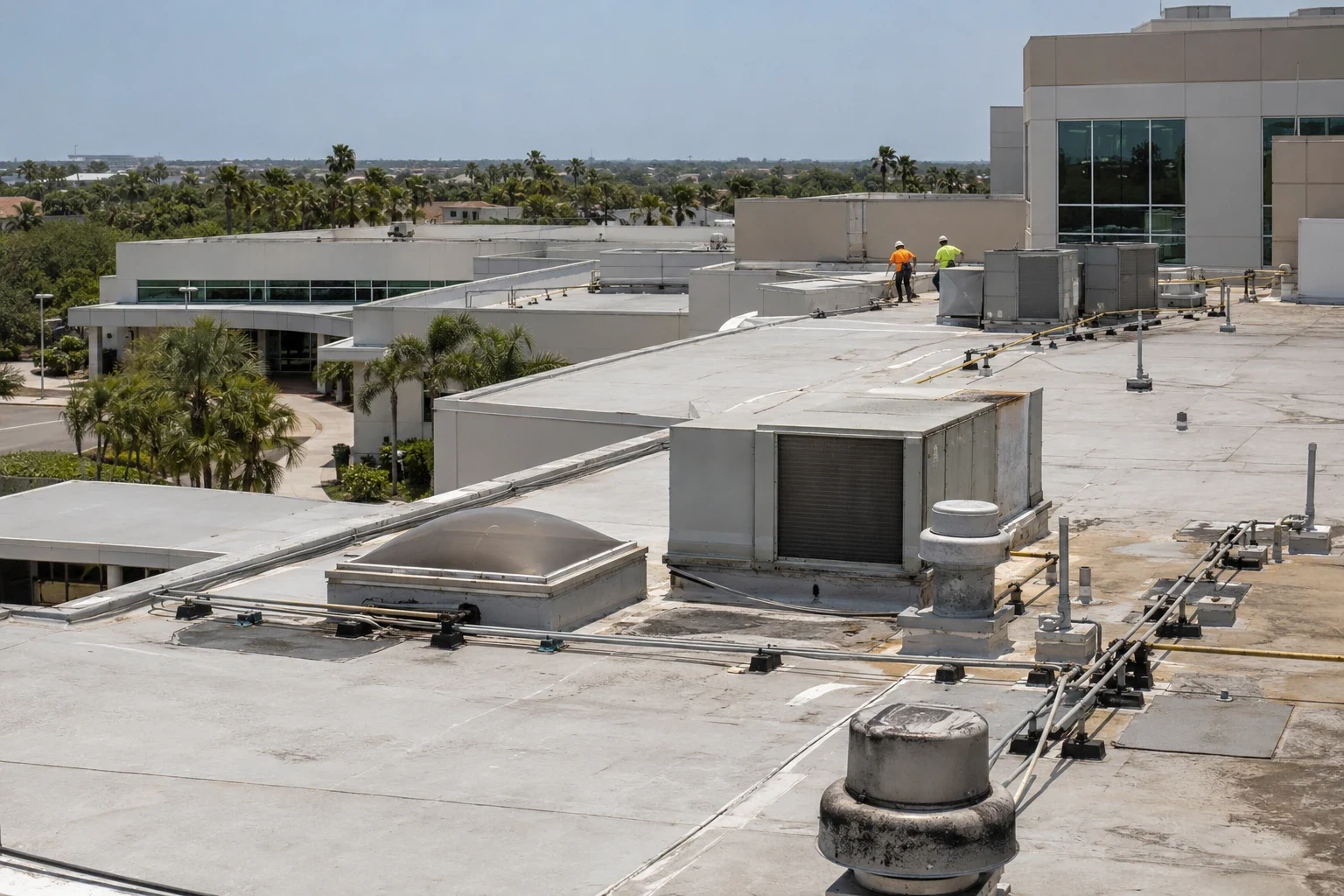
Inspect: Check wet areas above occupied rooms
We compare a report from a studio, locker room, pool area or office with the roof features above it. Inspection covers membrane seams, drains, skylights, equipment curbs and wall transitions. Humidity, plumbing and roof entry can leave similar interior marks, so we identify the conditions observed and any test needed to establish the source. The record names the area checked and limits of access.
Fitness buildings can have exhaust, HVAC, pool controls, lighting and rooftop service paths. We note any unit or penetration that another trade must handle before flashing can be repaired. A commercial roof inspection returns photographs by roof section. If temperature patterns suggest concealed moisture, an infrared survey can help select follow-up areas, with confirmation before replacement quantity is determined.
Brownsville averages about 140 days a year when daytime highs reach 90 degrees or higher. Heat affects work on an exposed roof, while indoor exercise and pool areas may need continuous cooling. The facility identifies critical operating windows before we schedule. Climate history informs the work period, but inspection findings determine which roof detail needs repair.
Access: Set the class and equipment schedule
Management identifies class times, member entry, childcare, locker rooms, pool hours, deliveries and spaces where noise could interrupt instruction. We coordinate lift location, barriers and debris routes before the roof opens. If a member entrance must stay active, the plan establishes a safe route away from materials and overhead work. The facility gives staff a contact for notices and changes.
A Downtown Brownsville property may face street-front staging limits, while a facility near Sunrise Mall or North Expressway may have other vehicle and lot paths. Those are different local contexts, not a substitute for checking the fitness center's own entrances and service lanes. We confirm how patrons reach the building, where equipment can be staged and which hours can support a lift or delivery.
We limit exposed roofing to a section that can be protected and closed within the approved work period. A temporary cover is recorded with the location and person responsible for checking it. If a pool or studio must close for a shift, management controls the notice and reopening decision. A phased occupied-building reroof can move between roof zones when the building layout allows members to use other spaces.
Repair: Keep water away from equipment and finishes
A localized repair may correct a seam, drain, curb or penetration. We state preparation, materials and the tie-in detail. If opening the roof reveals wet insulation or a damaged deck, we photograph the exposed layer and stop at the authorized boundary. The owner reviews the added quantity and timing before removal expands. Fitness equipment relocation, flooring and interior drying are assigned separately unless included in the scope.
NWS's Hanna report notes damaging winds, intense rainfall, flooding and a tornado near Brownsville during the 2020 event. A facility can use current roof photos to check edges, rooftop supports and drains after severe weather. We document actual findings and temporary measures. Regional storm history does not identify which area of a particular gym needs repair; the roof walk supplies that evidence.
Emergency response is available at any hour, including weekends and holidays, for active water entry. Temporary protection can limit exposure until a permanent repair is practical. The report states where it was placed, what remains open and when a return visit is needed. If a leak affects electrical equipment, pool controls or member spaces, facility staff coordinate the appropriate specialist. A storm-damage roof assessment separates stabilization from the approved permanent work.
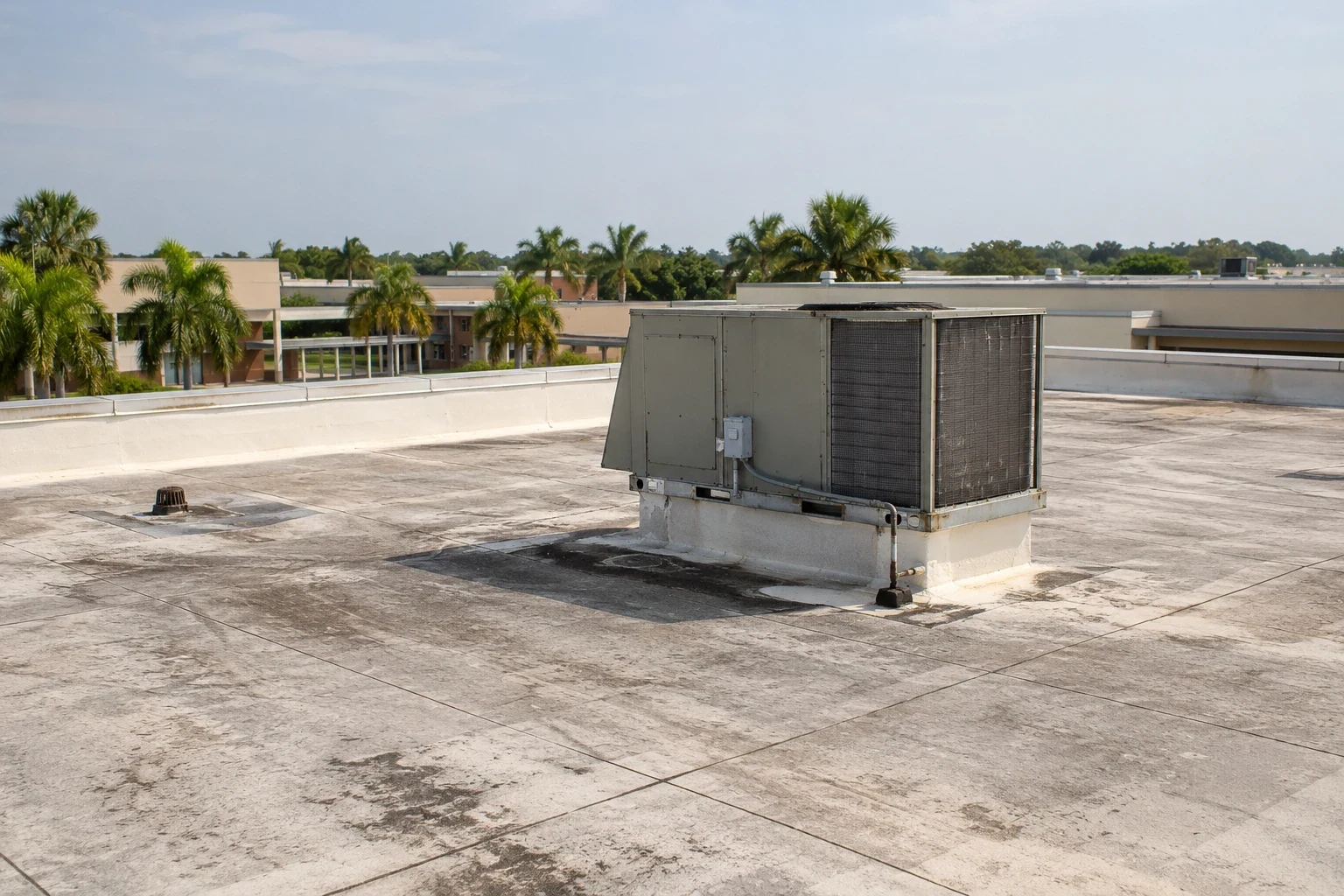
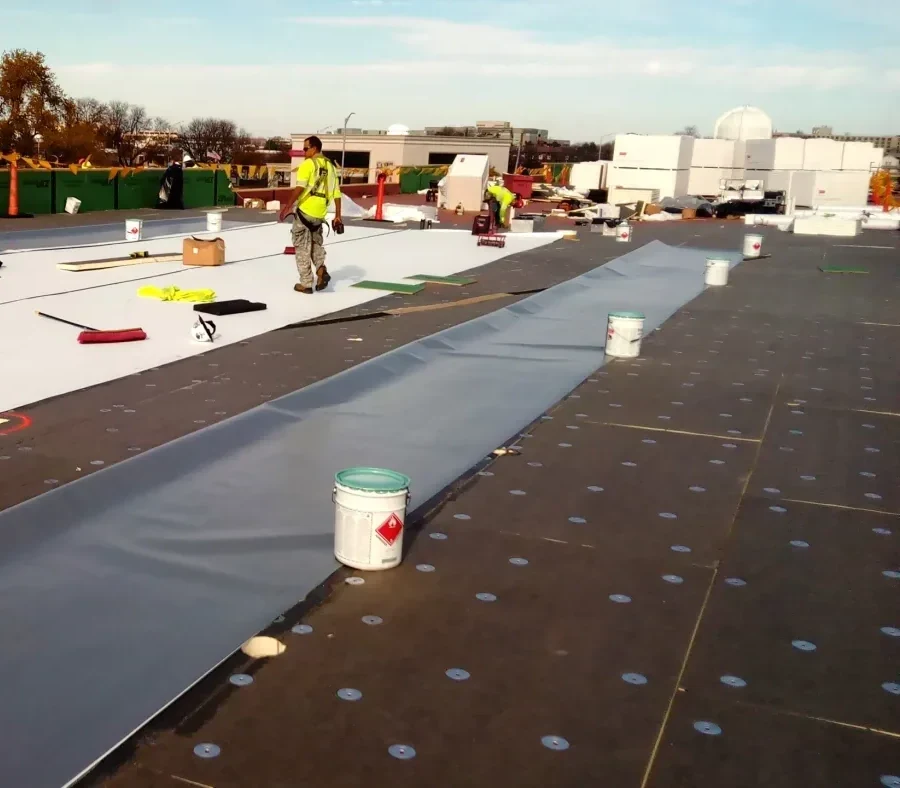
Options: Compare repair with a planned roof project
One leak at a curb or drain may be repaired locally. Repeated reports, widespread moisture, failed attachment or deteriorated seams can prompt a broader review. We compare test results, roof layers and drainage before proposing a recover assessment or replacement. A recover depends on substrate and moisture findings, not the building's use or footprint alone.
Brownsville's permits team applies the locally adopted 2018 building-code edition and reviews project submittals. The project designer confirms assembly, wind and permit requirements for the specific address. Pool equipment, exhaust, electrical systems and rooftop units may need separate trades. We identify those interfaces and distinguish roof flashing from mechanical repairs or interior restoration.
Cost and schedule depend on roof height, access, class calendar, pool hours, equipment, staging, wet layers and material lead time. A center with multiple studios may need separate notices and zones. The proposal lists assumptions, quantities and exclusions. If inspection exposes conditions that change the boundary, the owner receives photographs and a written request before work exceeds approval.
A hotel roof project may require guest-route controls, while a school roof scope follows student and testing schedules. A fitness center identifies its own class timetable and member access rules.
Closeout: File the repair by roof and room
Closeout records repaired section, photographs, materials, drainage condition, temporary cover and remaining tasks. It identifies any roof area not accessed and work assigned to another trade. Facility staff can match the record to the room or studio where moisture was reported. A later call can then be compared with the same roof location rather than treated as a continuation without inspection.
Send the Brownsville address, affected studio or room, class and pool schedule, roof plans, equipment contacts, access procedures and approval authority. Note entrances that must remain open and service routes that cannot close. We will define the work area, barriers, test needs and trade coordination before scheduling.
A post-repair check can review the completed seam or curb and nearby drainage. We state the date and visible condition. If a future report concerns a different room, the facility can match it against the separate roof map. Repair, interior restoration and equipment service remain traceable to their assigned scopes.
Related Roofing Work
Other roofing services and buildings we handle across Brownsville.
Questions About Fitness Center Roofing
Can classes continue while the roof is being repaired?
Management identifies class times, member paths and rooms that cannot close. We phase the roof area and coordinate noise, barriers and deliveries around the approved schedule. The plan states any room or entrance affected during each shift.
How do you assess a leak above a pool or locker room?
We log the room and timing, then inspect nearby roof details, drains and equipment interfaces. Indoor moisture conditions can complicate the report, so we separate observed roof evidence from any test needed to confirm the source.
Will you move gym or pool equipment?
Facility staff or a qualified equipment trade handles relocation, isolation and restart. We identify roof access and flashing work that depends on that action. The proposal lists equipment work separately when it is included.
What if a repair opening finds wet insulation?
We photograph the exposed material and stop at the approved limit. The owner reviews the added removal and repair tie-in before work continues. Any interior floor, equipment or finish repair is coordinated separately.
What details help schedule an inspection?
Provide the address, class calendar, pool hours, access rules, roof plans, leak locations, equipment contacts and approval authority. Identify delivery or member routes that should remain open during the visit.