
Commercial Roof Flashing Failure Repair in Brownsville, TX
Document the failed Brownsville flashing
A water mark near a wall or rooftop unit can begin where two roof details meet. We inspect the transition, photograph the exposed edge and trace the flashing into the surrounding membrane before assigning a repair boundary. In Brownsville, heavy rain and wind have affected the Rio Grande Valley during named storms. A local repair still depends on the detail at the building, including what is loose, cracked or concealed behind the termination.
Send the address, reported leak area, roof plan and equipment access details. We will record the transition and define the repair boundary before work proceeds. Call 555-555-5555 or use the form.
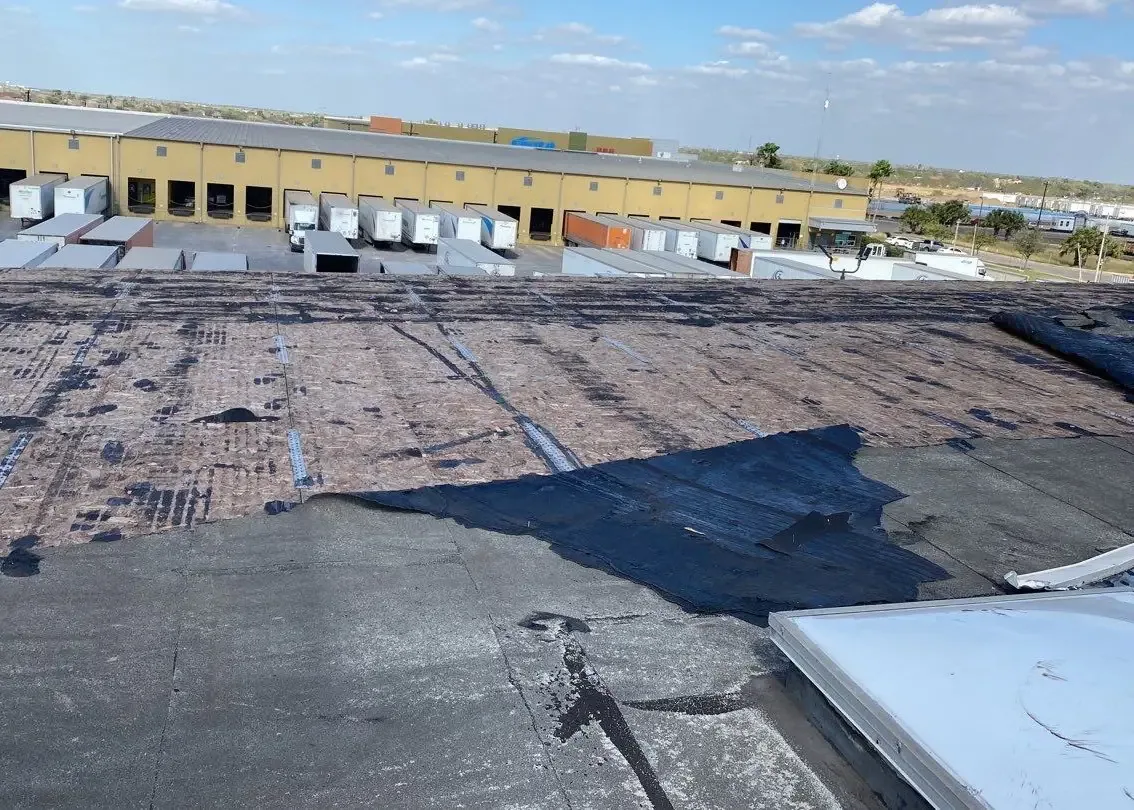
Inspect: Follow the transition to sound material
Flashing checks cover curbs, pipes, skylights, walls, drains, expansion joints, parapets and edge metal. We look for separated laps, cracked sealant, open corners, loose counterflashing, corrosion or movement at a termination. The inspection also checks whether water can pass behind the visible edge or travel under an adjacent membrane. A penetration flashing inspection can define curb and pipe conditions, while an edge metal and coping check records perimeter transitions.
Brownsville's industrial building stock includes shipbuilding, steel fabrication, food processing and energy uses across the port region. Rooftop process equipment, exhaust and service penetrations can create several flashing interfaces, each tied to the equipment's footprint and maintenance access. The Port of Brownsville works across marine and rail-linked industrial operations. A site plan and facility contact help identify which equipment can be approached during the inspection.
Hurricane Hanna affected the broader Rio Grande Valley with wind, heavy rain and flooding during 2020; flashing repair still begins with the property's inspected entry point. After a storm, we inspect exposed corners and penetrations as well as the reported leak area. We note which side of a curb or wall shows separation and whether adjacent seams remain intact. That level of detail lets the owner review a localized flashing repair separately from larger roof work.
Record: Show the detail that failed
Photographs need enough context to show the roof zone, transition and nearby surface. We include a close view of the opening and a wider view that locates it relative to equipment or a wall. The written record notes material where confirmed, existing sealant condition, exposed fasteners and any temporary patch. If metal or membrane continues behind another component, the report identifies the concealed portion that needs approval before removal.
Normal highs in Brownsville reach 94 degrees in June and 96.3 degrees in August, conditions that make exposed flashing work timing worth planning. Heat can affect safe access and material handling while sealants and roof surfaces experience repeated exposure. The repair proposal identifies preparation and compatible flashing material rather than relying on a bead of sealant over a moving joint. A roof condition report preserves the observed detail for an owner, manager or restoration contact.
If water appears inside, we record that room separately from the roof opening. Water can travel along a deck or insulation layer before it reaches a ceiling. A roof walk may show the likely entry point, but concealed travel remains unconfirmed unless testing or an authorized opening exposes it. The field record distinguishes the visible flashing failure from any additional area proposed for investigation.
Compare: Patch the joint or rebuild the flashing
A small, stable split in compatible flashing may allow a localized repair. Loose metal, failed corners, deteriorated membrane, incompatible sealant or an assembly with repeated openings may require a broader replacement detail. We explain the preparation, removal limit, new flashing and tie-in required. Surface aging from prolonged exposure may need a heat and UV damage assessment as well. If a seam opening or membrane puncture is also present, the proposal lists each defect separately so one repair does not hide another.
City review of Brownsville commercial plans and permits follows the locally adopted 2018 International Building Code, which can affect a repair that expands into a reroof. The designer confirms which details or permit steps apply to a specific project. We install the accepted roofing detail and identify any conflict between field conditions and the project documents before closing a transition. Structural or equipment changes stay with the authorized trade and design team.
Work near active equipment requires coordination. The building contact identifies shutdown windows, service clearances and who can move or disconnect an obstruction. We mark work that depends on mechanical or electrical access and avoid sealing around equipment before its final position is confirmed. The scope states whether temporary protection is included and how the open area will be secured between shifts.
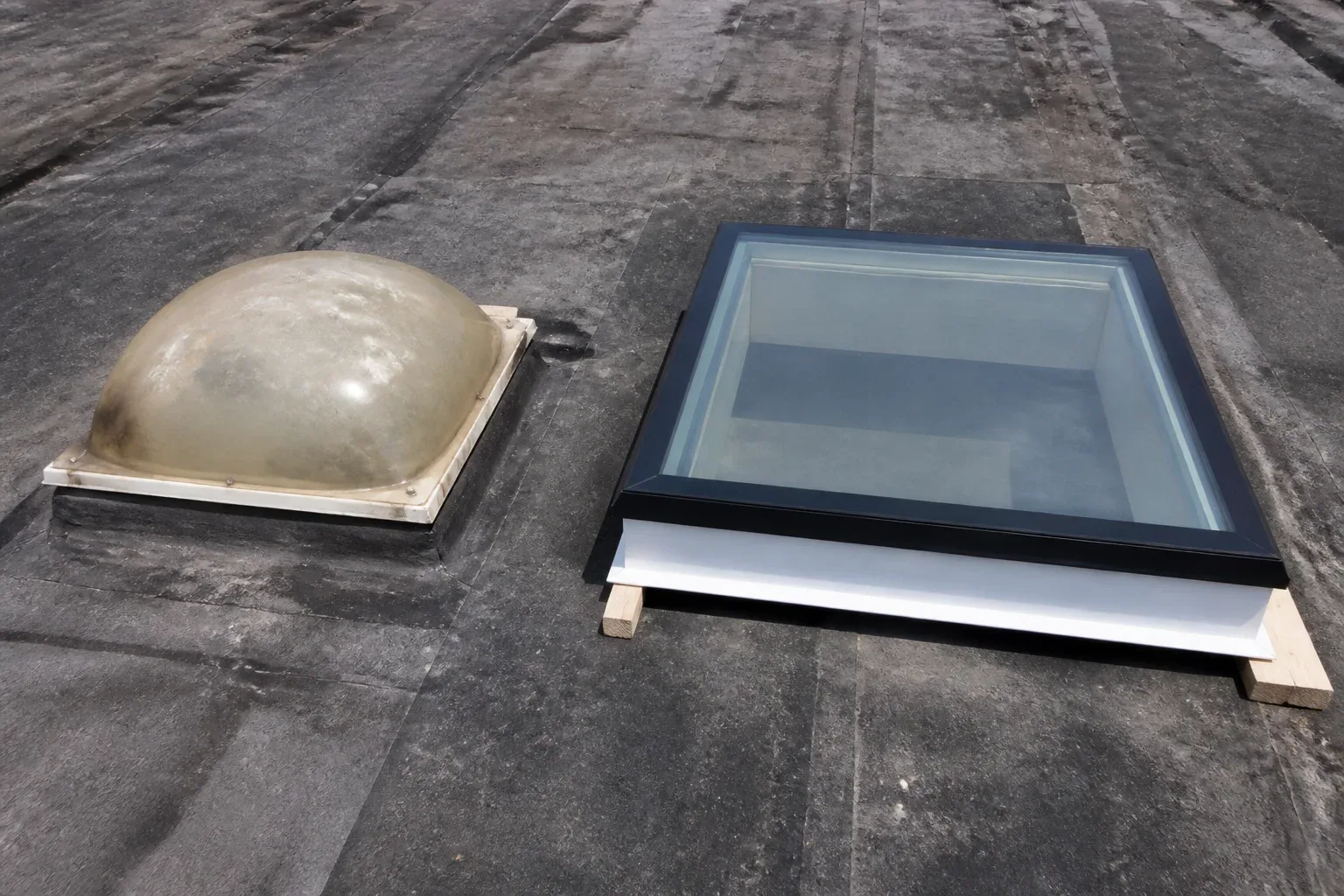
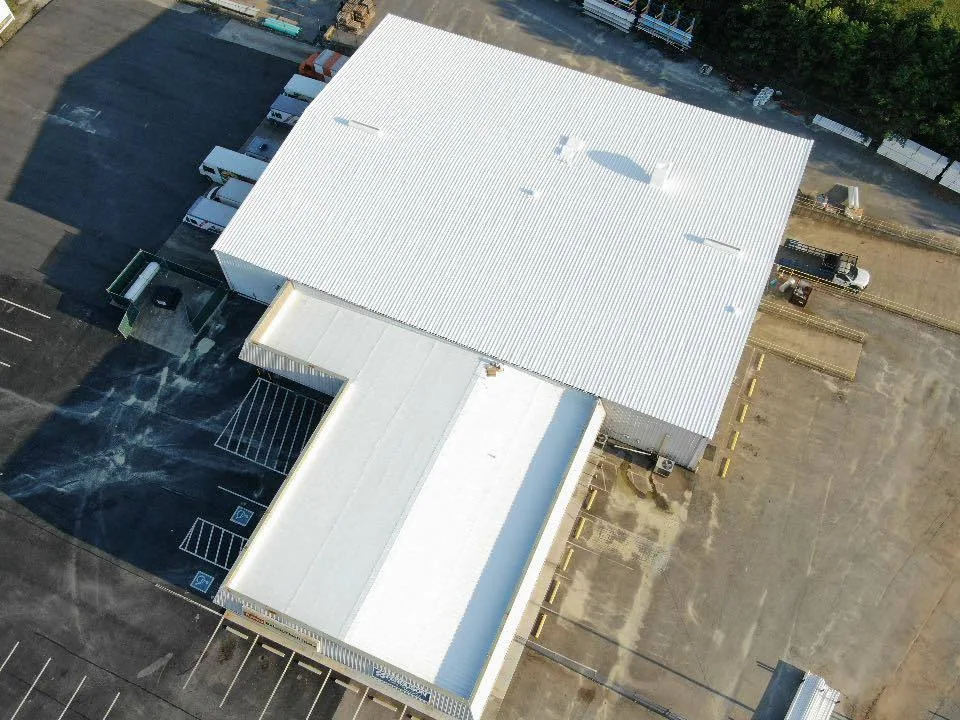
Repair: Rebuild a watertight transition
Repair begins by removing failed material to a sound, clean substrate. Depending on the assembly, the work may replace a boot, curb flashing, wall membrane, metal counterflashing or a compatible sealant joint. We set the lap, fastener and termination requirements in the approved scope. If removal exposes wet insulation, damaged deck or another membrane layer, we stop at the boundary, photograph the condition and seek direction before increasing the work area.
Brownsville's storm events make a temporary cover useful when an opening cannot be permanently closed during the first visit. We can respond around the clock for active entry, including holidays and weekends. The record identifies the protected location and remaining exposure. Permanent flashing work follows after the substrate, access and approved detail are ready; those steps are listed separately so emergency stabilization is not mistaken for completed restoration.
When several transitions sit together, the inspection maps each one before repairs begin. A curb, adjacent seam and parapet may require different materials and tie-ins. We sequence them so new work sheds water across the next detail rather than trapping it at an edge. The final review checks the installed termination and records any condition still awaiting another trade or return visit.
Closeout: Keep the flashing detail in the record
The closeout file returns photographs, repaired location, material details, approved changes and open items. A later inspection can compare the new termination with the initial condition. If a section behind equipment or wall metal was not accessible, it remains listed as unverified. The record gives facilities staff a usable reference when the penetration changes or a new leak report arrives.
Send the Brownsville address, roof plan, interior leak location, equipment list, access rules and any prior repair photographs. Identify who can authorize removal beyond the visible failure. We will map the transition, state the repair limits and tie closeout images to the same roof area, giving the owner a clear path from the first observation to the installed detail.
Related Roofing Work
Other roofing services and buildings we handle across Brownsville.
Questions About Commercial Roof Flashing Failure Repair
How can I tell if flashing is the source of a roof leak?
We inspect the transition, adjacent membrane and interior report, then document the visible opening. If water may be traveling through concealed layers, the report identifies a test or opening needed to confirm its path.
Can a bead of sealant fix a loose curb flashing?
Sealant may be appropriate for a stable, compatible joint. Loose metal, movement, poor substrate or failed membrane needs a detail matched to the roof assembly. We identify preparation and tie-in before repair.
What happens if the flashing is hidden behind equipment?
We record the accessible edge and identify the obstruction. The facility contact coordinates safe access or equipment work, and the scope holds the concealed portion for review before removal or final pricing.
Do you repair flashing during emergency response?
We can stabilize active water entry around the clock, including weekends and holidays. Temporary cover and permanent flashing reconstruction are documented as separate work with their own limits and approvals.
What should be included in a flashing repair record?
Include the roof area, transition type, close and wide photographs, material where confirmed, repair boundary, installed detail and remaining access limits. We return those items with approved changes and closeout notes.