Commercial Roofing at the Port of Brownsville, TX
Request a Port of Brownsville roof assessment
A roof opening beside port freight needs two records: the condition above and the route below. The Port of Brownsville is a deepwater seaport on the U.S.-Mexico border and an industrial and logistics hub. Its facilities connect to rail and an overweight corridor, and the business park links to a turning basin served by ocean-going vessels. We inspect the specific facility, define the roof repair boundary and coordinate access with the operator before material or equipment is moved.
Provide the facility address, access contact, operating schedule and reported roof issue. We will return measurements and next steps tied to the building. Call 555-555-5555 or use the form.
Coordinate: Protect a working port route
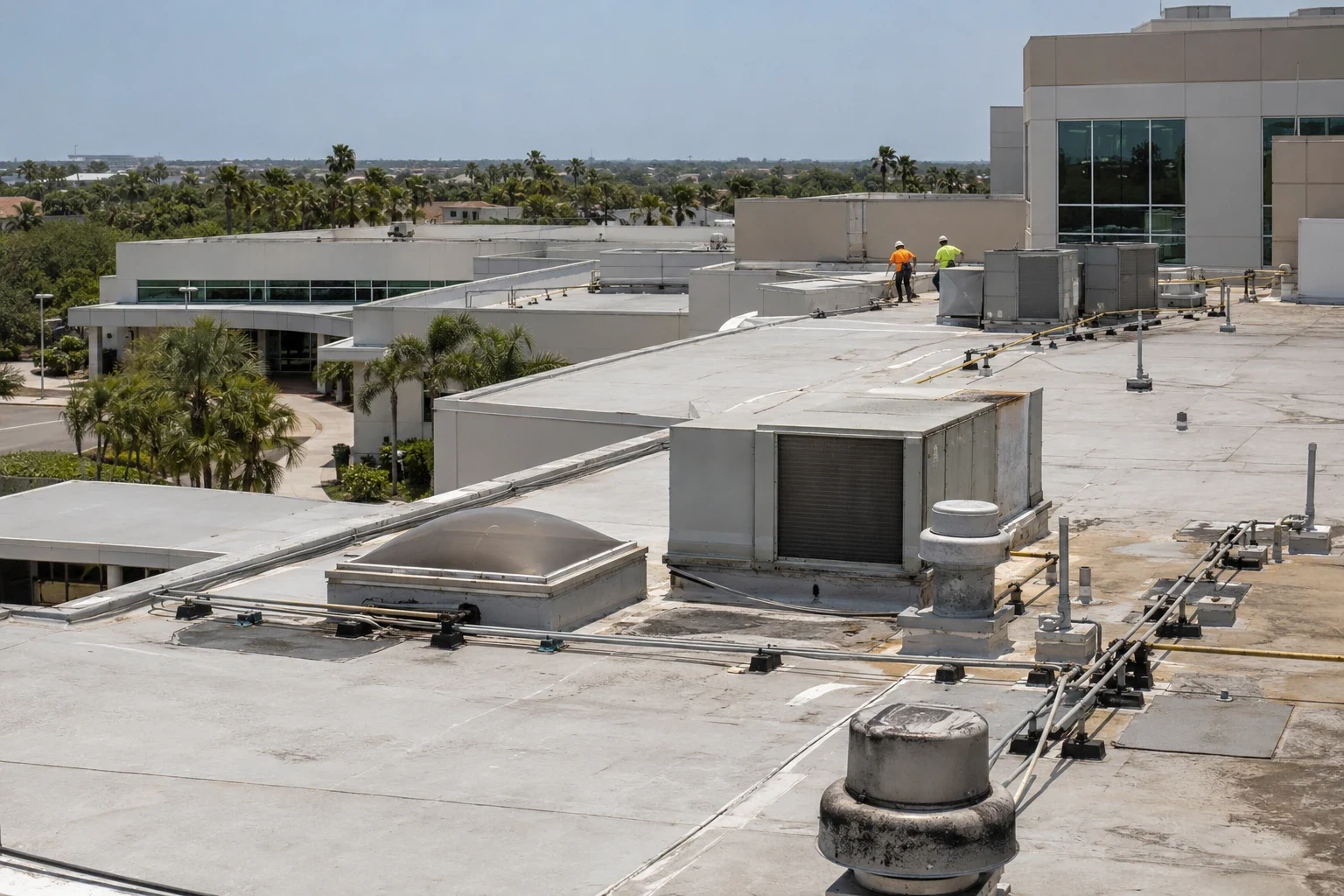
Rail sidings, truck lanes, vessel-side operations and plant access have different controls. The port facility contact confirms which routes apply to the building, when deliveries can arrive and where a lift or debris container can stand. We record those constraints before estimating because they affect setup, labor and the size of the work section. The facility contact confirms roof access and staging for the specific building.
We plan one daily section that can be opened, repaired and protected before the shift ends. If a cargo movement or rail operation changes access, the supervisor revises the sequence with the facility contact. Equipment lifts, penetrations and mechanical work receive a named handoff. The roofing scope states when a curb or opening must remain protected and which trade must complete its work before flashing is closed.
At the Port of Brownsville Business Park, the site facts include 118 acres, 17 serviced lots and ocean-going vessel and barge service. The broader port also connects to rail and the overweight corridor. For a nearby trade facility, FINSA Industrial Park at Los Indios has separate property facts and its own roof access plan.
Inspect: Confirm how the assembly sheds water
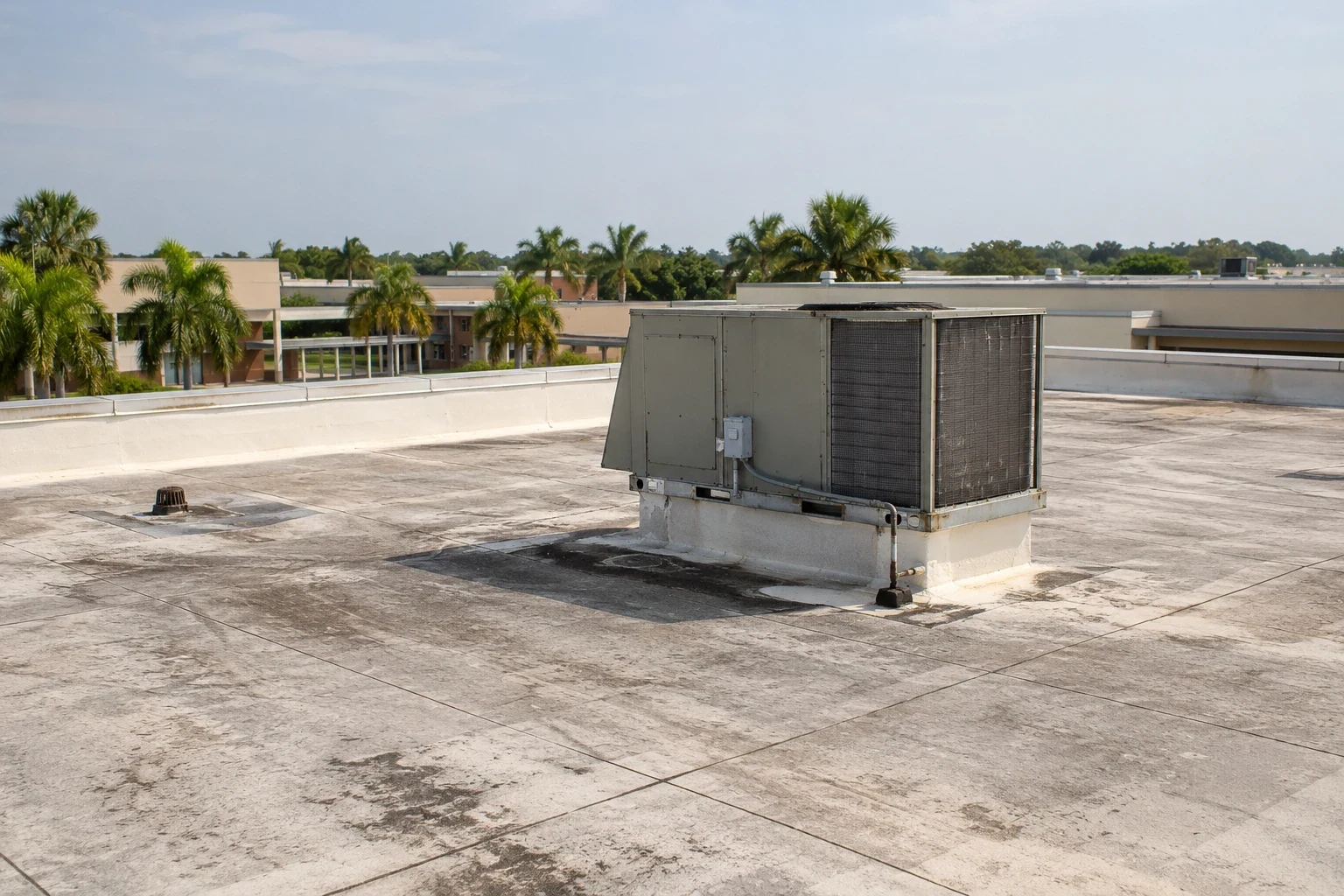
On the roof, we check seams, edge metal, flashings, drains, curbs, penetrations and previous repairs. A commercial roof inspection labels each image by area and notes details blocked by equipment or unsafe access. The port role does not establish a roof system. We use accessible details and available drawings to identify membrane, metal panel, deck and drainage before choosing a compatible repair or replacement assembly.
Port-side roof planning accounts for hot work surfaces and identifies the sections that can be sealed before the daily closeout. Normal August highs reach 96.3 degrees. Heat affects inspection timing and installation conditions for adhesives and coatings. The field record notes weather, surface preparation and any condition that prevents work from proceeding. A planned section stays small enough to protect exposed layers before the crew leaves; the estimate accounts for cure time and a weather-ready close.
Port operations can involve vibration, equipment movement or repeated access near roof edges, but the facility manager identifies what occurs at this address. We compare the reported leak or damage with nearby laps, transitions and attachment, then mark any investigation still needed. A drone inspection can assist with a broad overview where permitted; hands-on checks confirm close details.
Record: Keep damage, exposure and freight distinct
Every condition has a location, photograph, measurement and next action. We note a puncture or seam separation with a close view and a wider reference image, then connect it to an interior report if the water path is established. If not, we record the report as a separate clue. A roof condition report shows which areas were inspected, which remain inaccessible and whether a test cut or moisture survey is recommended.
The port's turning basin serves ocean-going vessels and barges. This fact informs the logistics setting, not the roof assembly. For the subject property, the operator confirms whether vessel schedules or freight activity constrain crew access. We capture that schedule in the work plan, while the roof report remains focused on measured conditions. Separate records prevent a temporary operating delay from being mistaken for a completed repair item.
The Valley has recorded major hurricane impacts, so port facilities benefit from keeping roof inspections and post-event photographs with the property file. A post-storm visit inspects the actual facility for displaced edges, open seams, flashing failure and water entry. A storm damage repair scope ties recommendations to current observations and owner approvals.
Options: Compare immediate repair with capital work
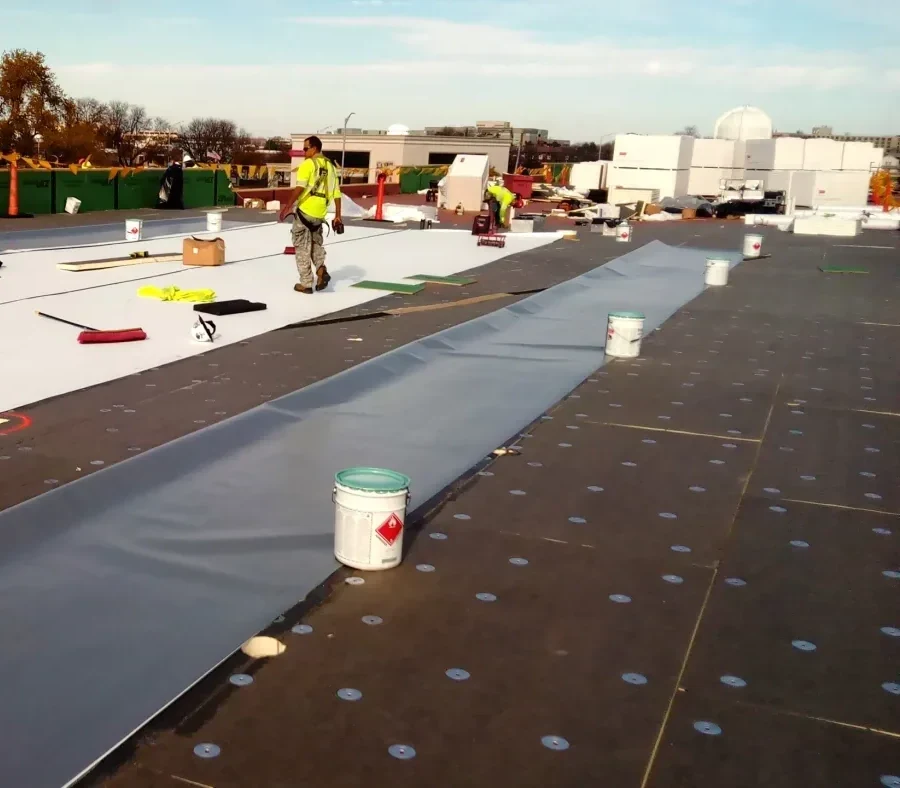
A focused repair may address one seam, penetration or edge detail. If multiple roof areas show failure, moisture testing or a larger replacement scope may be more appropriate. We state the measured repair limits and identify the layer to remove, tie-in detail and any uncertain quantity. If opening the roof reveals concealed damage, the foreman records the location and seeks an approved scope change before proceeding.
A recover assessment checks the existing assembly, attachment and moisture before considering a new layer. Replacement planning identifies tear-off, insulation, deck review, drainage corrections and daily dry-in limits. Costs and timing also reflect crane or lift access, material staging, freight windows and coordination with equipment trades. Brownsville adopted the 2018 International Building Code, and its commercial plan-review staff enforce adopted codes; the designer determines applicable requirements for the project.
For a port operator maintaining several properties, a multi-site roof plan can sequence inspections and carry open items between visits. Each property keeps its own map, measurements, approvals and closeout.
Protect: Control exposure before the next shift
Port operators can report an active roof leak at any hour; we confirm the building contact and access route before dispatch. We document active water entry and install authorized temporary cover where the roof and weather allow it. Permanent repair follows after the system is identified and the route to a sound tie-in is confirmed. If the work crosses a terminal, production or rail constraint, the contact approves the time window before the temporary detail is removed.
At the end of a shift, the field record identifies the completed roof zone, material installed, remaining opening and protection left in place. We confirm whether a mechanical contractor or facility worker must return before the next roofing step. A new freight restriction or delayed delivery is recorded with the revised date, so the operator can see which section is complete and what still requires access.
If a storm raises a claim question, we photograph current damage and organize repair quantities for the owner. A claim documentation visit can provide a dated condition record and scope support. The report states observed conditions, temporary work and requested permanent repairs.
Closeout: Tie completed work to the facility
The final file lists inspected areas, repairs completed, materials used, approved changes, photographs and unresolved conditions. It states whether temporary cover was removed and whether a follow-up test or other trade remains. Facility teams can use the roof-zone labels when reporting a new leak or planning maintenance, even if the freight schedule or building contact changes.
Send the port facility address, roof plan, reported condition, operating contact and any rail, truck or vessel-related access restriction. Include delivery hours and the person authorized to approve added work. We will inspect reachable areas, measure the proposed repair and return a sequence that keeps roof tasks connected to the correct property and operating window.
Related Roofing Work
Other roofing services and buildings we handle across Brownsville.
Questions About Port of Brownsville
Do port rail and vessel connections determine the roof work plan?
They inform logistics, but the facility contact confirms the routes, access permissions and timing for a specific building. We use the approved details to plan staging, deliveries and the daily work boundary.
How do you inspect a roof when equipment blocks part of it?
We document the accessible surface and mark the area that could not be examined. A drone overview may help where allowed, while close inspection or a later access window may be needed to confirm seams and flashing beneath equipment.
What belongs in a port storm damage record?
The record includes dated photographs, roof-zone location, visible damage, temporary protection, measurements and any recommended test. It separates current building conditions from the regional storm history and identifies any area that remains uninspected.
Can the crew work around vessel or freight activity?
The operator sets restricted routes, delivery windows and work hours. We schedule staging and debris movement around those instructions and revise the sequence if port activity closes the planned access path.
What information helps compare repair and recover options?
The existing roof system, moisture evidence, attachment, deck condition, drainage and project requirements matter. We inspect accessible details and state testing needs before recommending a repair, recover or replacement scope.