
Commercial Roofing at Brownsville/South Padre Island International Airport, TX
Schedule an airport-area roof inspection
A roof plan beside Brownsville/South Padre Island International Airport begins with the property address and the authorized path to the building. Cameron County reports a 7,399-foot runway, and the airport master plan includes a 277-acre aerospace industrial park for aerospace, air cargo and logistics. Those airport facts frame the operating environment; we inspect each facility's roof assembly and confirm its own access, staging and work limits before setting a scope.
Provide the property address, access requirements, facility contact and reported roof condition. We will tie findings and work approvals to the building inspected. Call 555-555-5555 or use the form.
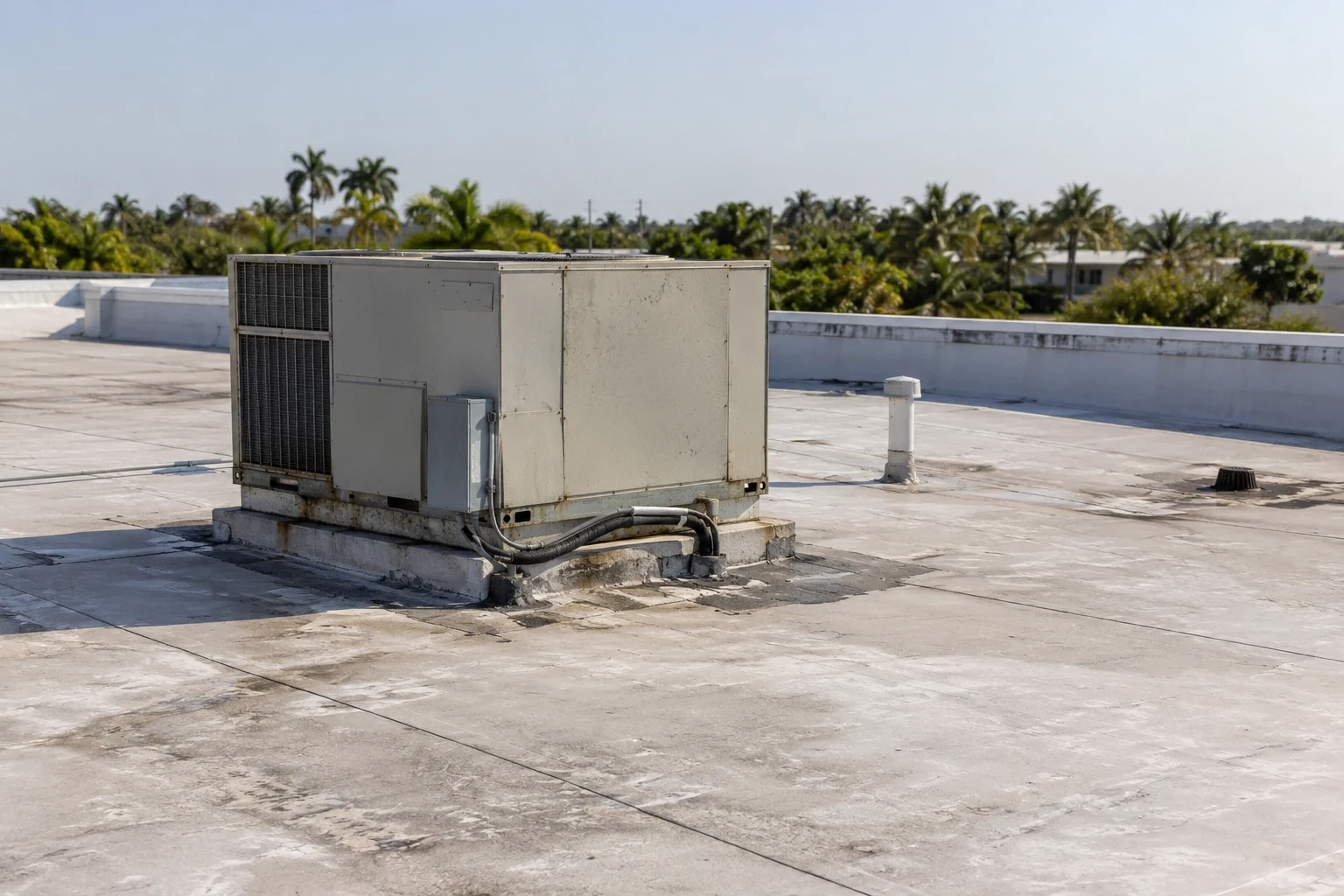
Inspect: Identify the property and roof system
We check accessible seams, edge details, penetrations, drains, curbs and previous repairs. A commercial roof inspection uses tagged images and a roof sketch to connect each finding to a location. An airport runway length does not identify any neighboring building's roof dimensions or materials. We confirm membrane, metal, deck and drainage details from plans and the field before selecting repair material or removal limits.
Airport-area work may involve cargo or aerospace operations, but the facility manager establishes which apply to the building under review. We confirm entry authorization, check-in, escort or work-hour rules; delivery routes and lift staging come from the site contact. If the crew needs a return after restricted access opens, the estimate names that visit and the condition it will resolve rather than leaving it hidden in a general allowance.
Brownsville averages about 140 days per year when temperatures reach at least 90 degrees, and summer highs normally rise above 94. Heat changes the work window for surface preparation, coatings and some adhesives. We note surface condition and forecast when setting each daily limit. Any section opened must be able to receive a temporary cover or permanent tie-in before the crew leaves.
Coordinate: Keep building operations in the work sequence
Before a lift or material delivery arrives, the operator confirms the gate, route, check-in point, staging area and loading restrictions. The site contact also identifies rooftop equipment that cannot be shut down and any interior area that needs protection. For a flashing replacement near a unit, we coordinate the responsible mechanical trade and note when it must isolate, move or restore equipment.
The adjacent Airport Industrial Park is described for industrial and aerospace uses, including air cargo and logistics. A separate Brownsville Aerospace Industrial Park includes runway and tarmac access in its site facts. Those locations have their own routes and operating contacts. We do not transfer a security or staging assumption from one address to another.
When a facility has an active leak, emergency response is available at any hour, including weekends and holidays. The initial airport-area visit records the affected roof zone and applies an approved cover when access and weather permit. Permanent work follows after the existing assembly and tie-in are confirmed. If safe access or weather prevents a repair, the record explains what remains exposed and what next visit is required.
Record: Make each roof observation traceable
A photograph needs a roof-zone label, a close view and enough context to locate the detail later. We record loose edge metal, seam separation, punctures, flashing gaps and drainage concerns, then compare them with reported interior water. A stained ceiling alone does not prove the path. If more evidence is needed, a moisture survey or controlled test opening can be proposed with method limits and restoration steps stated in advance.
Storm-related work near the airport starts with an address-specific roof survey; the report notes the condition and the affected assembly. After a weather event, we record the conditions present at the inspected facility, including any displaced edge, opening or water path. A roof condition report preserves the date, affected zones, temporary work and remaining tests so the operator can make a repair decision based on the building itself.
For roof changes at a commercial property, Brownsville plan review and permit requirements are confirmed for that project. The project designer determines applicable requirements for a roof alteration. Our scope supplies roof measurements, proposed details and material transitions for that review, then records the approved boundary before removal starts.
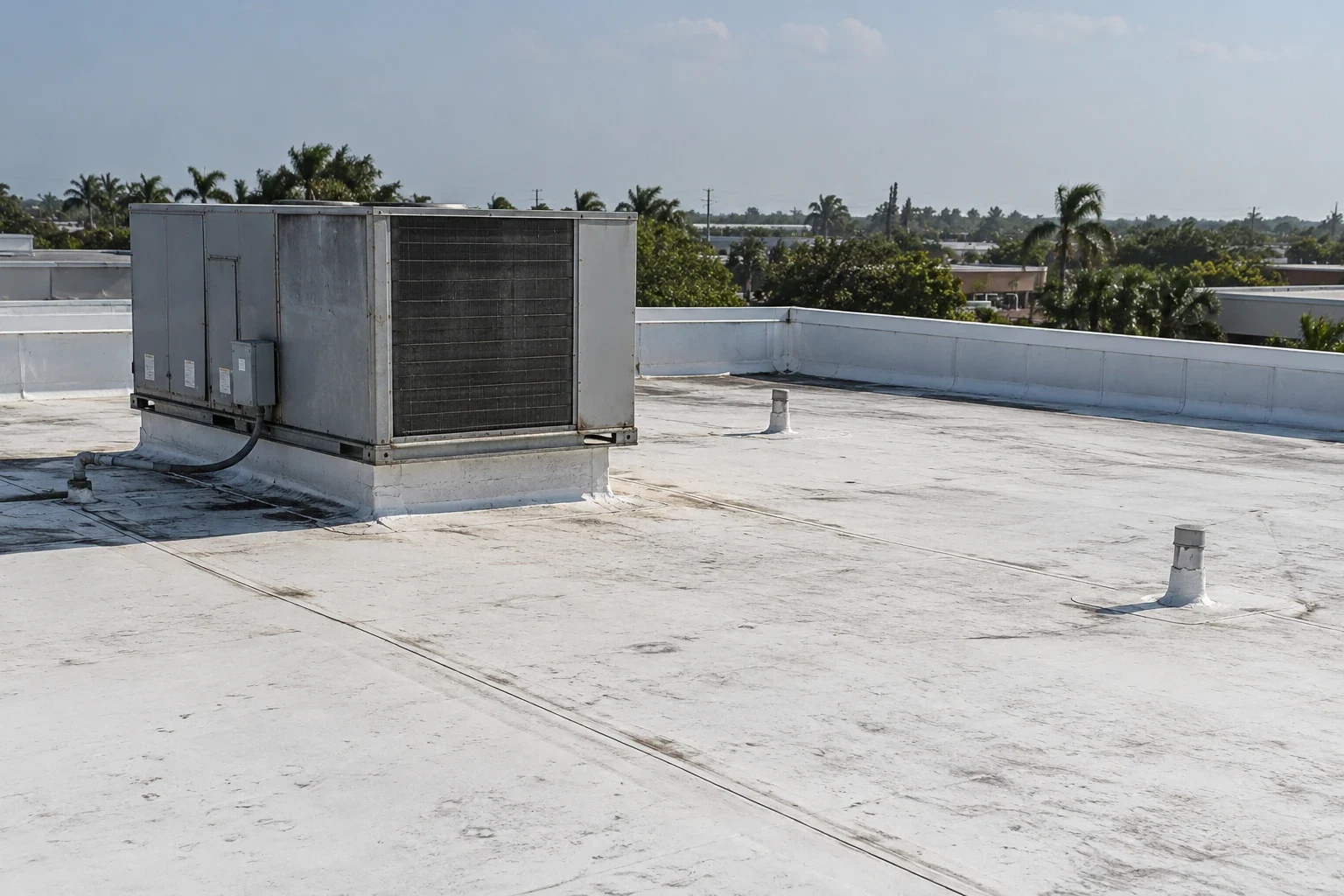
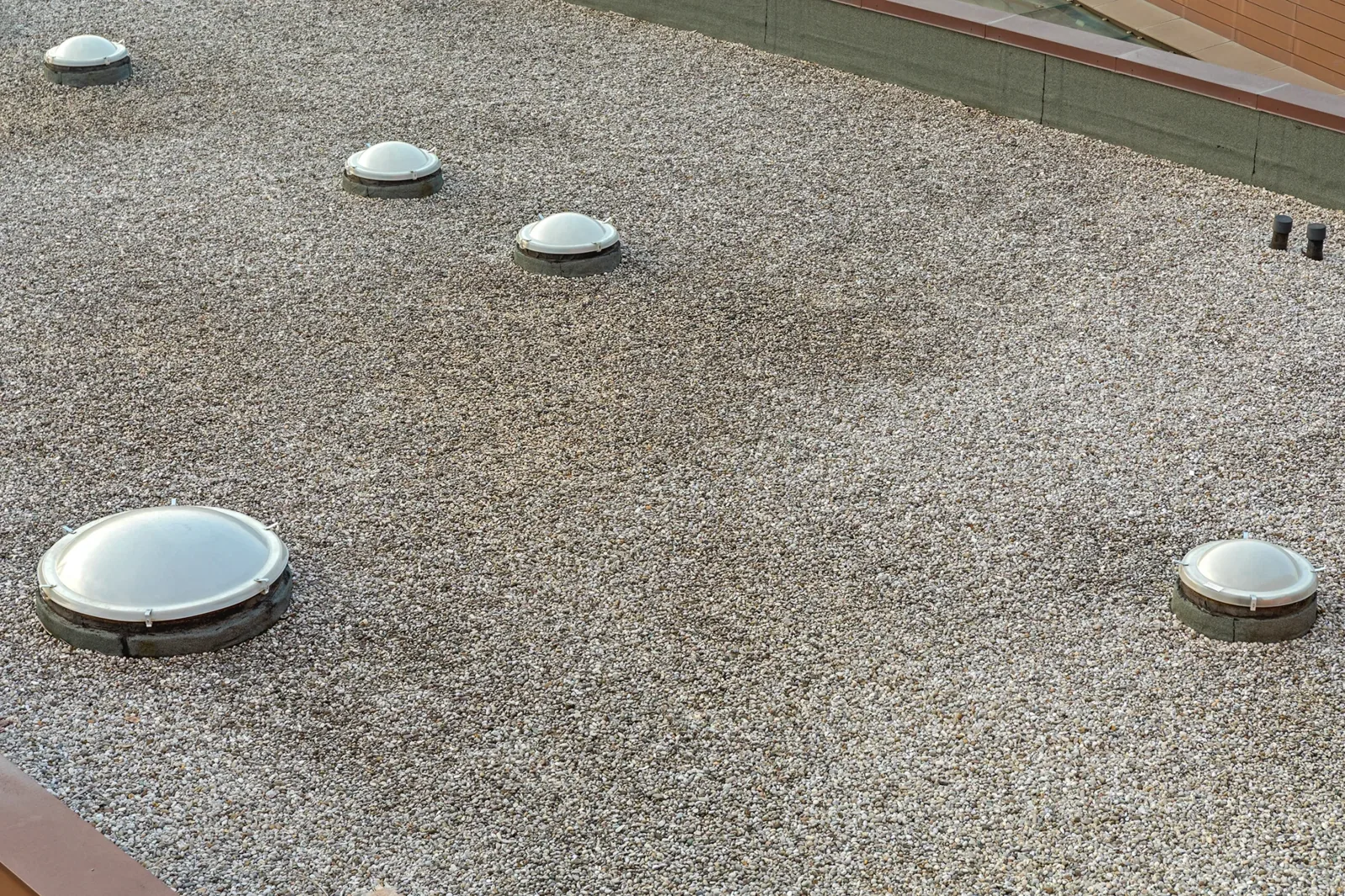
Options: Compare the roof work supported by evidence
A localized opening may need a repair at a seam, penetration or edge. Repeated failures, widespread moisture, loose attachment or damaged deck can require a broader scope. We state the measured repair limit, removal depth, tie-in, known exclusions and uncertain quantities. If removal exposes a second layer or hidden damage, the crew pauses, photographs the condition and sends the added work for approval before continuing.
A recover evaluation considers the existing system, attachment, moisture and design constraints before a new roof layer is proposed. A renewal estimate identifies removal depth, substrate review, insulation transition details and the sequence for closing each section. Cost and timing reflect roof area measured in the field, material compatibility, access windows, lift placement, weather and any airport-area check-in requirements supplied by the facility. We list material lead times and weather protection separately, then identify a decision date that keeps the owner from authorizing removal before the replacement detail and delivery sequence are ready.
For owners coordinating several facilities, a multi-site roof program can group inspections and track open work. Each address still needs its own roof sketch, conditions and approval record. A shared calendar helps sequence mobilization; it does not merge the roof scopes.
Closeout: Return the building's next-action record
Closeout identifies the zones inspected, repairs completed, material installed, tagged photographs and items still open. It notes any temporary cover removed, trade handoff pending or area not reached. Airport or cargo contacts receive a clear status for scheduling, and future service can use the same labels rather than relying on a general site description.
Send the property address, roof plan if available, facility contact, access process, reported condition and delivery or operating restrictions. We will confirm the visit and return measurements, a repair boundary and any testing needed before larger work can be priced.
Related Roofing Work
Other roofing services and buildings we handle across Brownsville.
Questions About Brownsville/South Padre Island International Airport
Does the airport's runway length determine my building's roof scope?
No. The runway measurement is an airport fact, while the roof scope comes from building plans and field measurements. We inspect the actual assembly, mark the affected zones and state any area that remains inaccessible.
How do you prepare for airport-area access requirements?
The property contact confirms authorization, check-in, any escort, work hours and delivery routes. We include those steps in the schedule before assigning crew, lift or material arrival.
Can a roof inspection include a neighboring aerospace facility?
Only with access approval for each address. We prepare separate condition records, measurements and work options so one building's roof findings do not carry over to another.
What happens when rain or wind damage is reported?
We inspect accessible roof edges, seams, penetrations and flashings, photograph present conditions and install authorized temporary protection where possible. The permanent repair scope follows after the system and tie-in are confirmed.
When should I consider testing before a replacement estimate?
Testing helps when moisture or deck condition cannot be determined from the surface. We identify the location, method, limits and opening restoration so the owner can authorize that investigation separately.