
Commercial Roofing at Airport Industrial Park, Brownsville, TX
Schedule an Airport Industrial Park roof inspection
A roof scope beside an active airport begins with the building entrance, the roof access point and the work boundary. Airport Industrial Park covers about 400 acres and adjoins Brownsville/South Padre Island International Airport. Its industrial and aerospace zoning supports target activities that include aerospace manufacturing, air cargo and logistics. We inspect the actual building, mark the roof areas that need attention and confirm the site contact's operating rules before setting a repair or replacement sequence.
Send the property address, site contact, entry requirements and reported roof condition. We will tie field findings and approvals to the correct facility. Call 555-555-5555 or use the form.
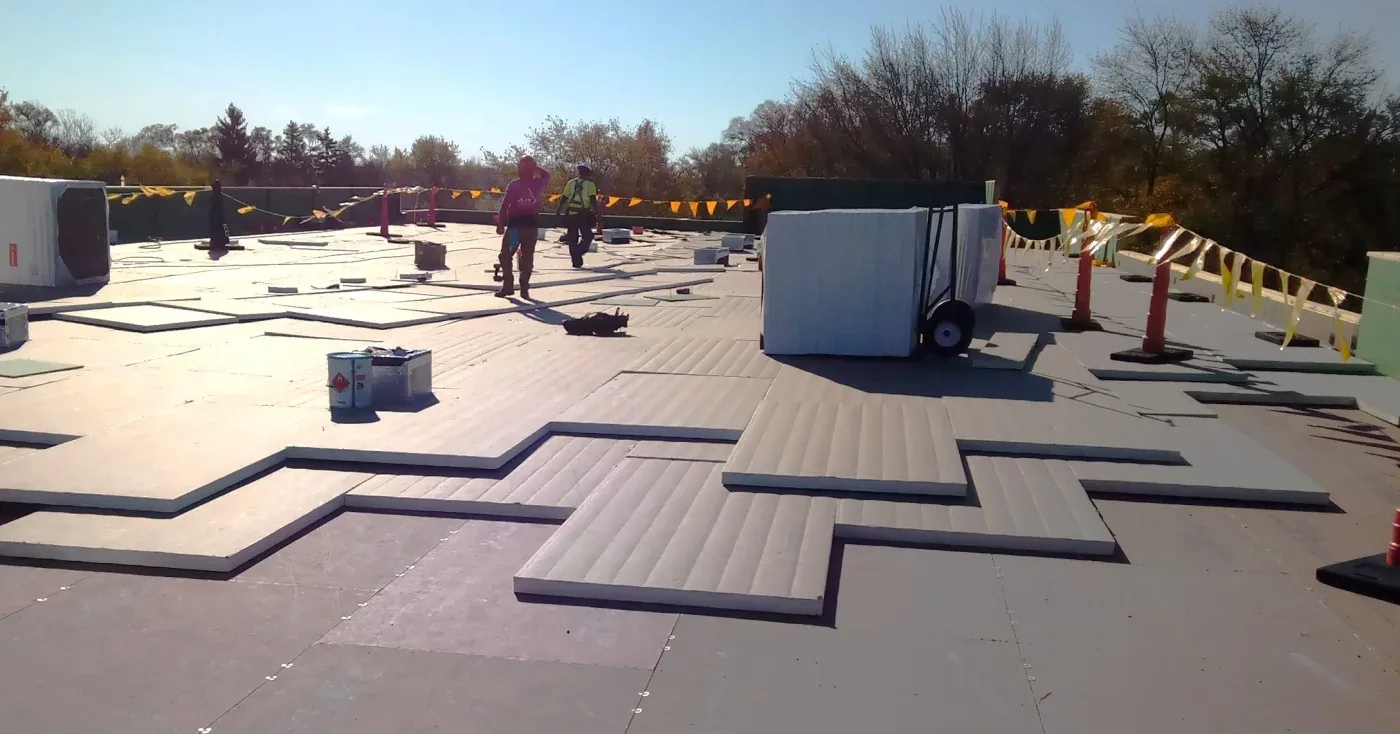
Inspect: Identify the assembly before choosing a detail
We record the roof system where visible, then check seams, perimeter attachment, penetrations, curbs, drains and previous repairs. A commercial inspection marks each observation on the roof sketch and distinguishes a confirmed defect from an area that needs testing. Airport adjacency does not establish roof type, age or condition. Plans and field observations determine whether the work involves membrane, metal, insulation, flashing or a combination.
Aerospace manufacturing, air cargo and logistics are target uses. The building operator sets the actual restrictions for deliveries, lift placement, vehicle movement, noise and work hours. We ask for the route from check-in to staging and from staging to roof access, then confirm which area can be closed during the work. If airport procedures affect entry, the facility contact identifies the required process before crew and material scheduling.
Brownsville heat can affect work windows on an exposed deck, so the daily plan tracks how much area can be sealed. Heat changes the useful work window for roof preparation, adhesives and coatings. We break work into daily sections, check substrate and product conditions, and keep exposed material within a weather-ready area. If an installation limit is not met, the report names the hold and the condition that must be confirmed before the next step.
Coordinate: Confirm air cargo and facility access
Logistics activity can depend on predictable receiving windows. Before mobilization, we confirm access authorization, delivery appointment, truck route, lift position and debris removal with the building contact. Direct airport access does not mean a roofing crew can use every airport facility or route. The work plan follows the access permission given for the specific property and records any escort, check-in or timing requirement supplied by the site.
Where rooftop equipment needs isolation, the operator identifies the responsible mechanical trade and its schedule. We map each curb or penetration before lifting flashing. Any unit move, duct change or electrical disconnect stays assigned to the authorized trade. The roofing scope then states the handoff point, the opening left protected and the date needed to return. This keeps an airport-related operation from reopening a roof before the flashing detail is ready.
For an owner reviewing other local industrial sites, Greater Brownsville Tech District fronts SH 550 and has its own site layout. A separate Brownsville Aerospace Industrial Park page reflects airport master-plan acreage and runway access facts. We plan each roof from its address and operator instructions.
Record: Tie each finding to a marked roof zone
A tagged photograph should answer three questions: where the condition sits, what is visible and what decision follows. We capture a close image of a split seam, loose edge, failed penetration or ponded area, then a wider image that locates it on the building. Interior reports remain separate until inspection or testing traces a route. If no visible roof defect matches the room below, we note the gap and define the next investigation instead of labeling the wrong roof area.
Heat load is a continuing design consideration in Brownsville. The local cooling load makes insulation condition and drainage useful parts of a roof review for this industrial area. A roof condition report can track surface condition, insulation concerns, repairs and remaining tests over successive visits. It helps facilities compare roof zones without treating a visual observation as proof of concealed conditions.
When moisture is suspected below the surface, an infrared moisture survey can help identify areas for follow-up testing, subject to conditions and method limits. We identify the survey area, explain how findings will guide test cuts and include restoration steps for openings. The facility contact can approve that investigation separately from a larger reroof decision.

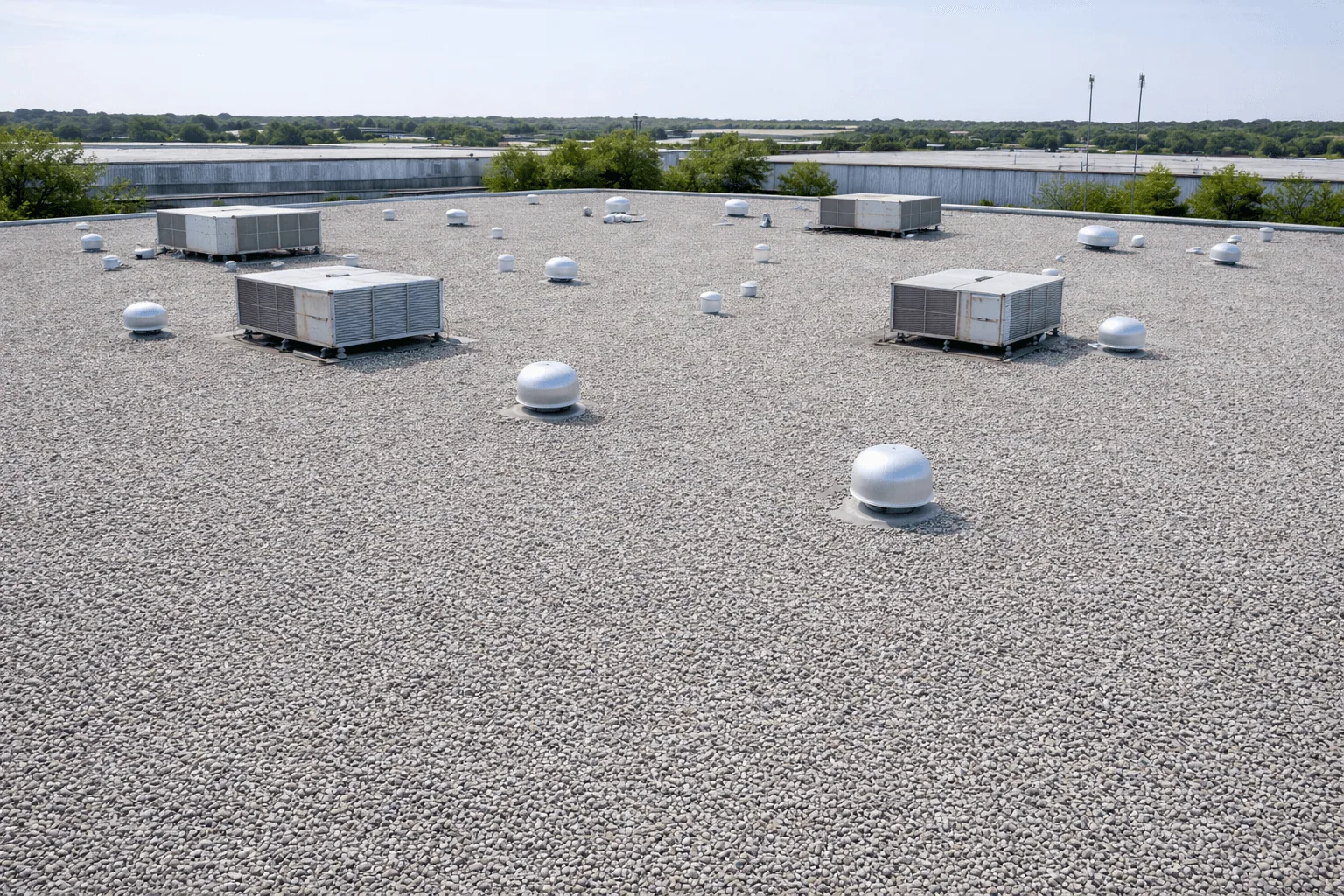
Options: Compare repairs with a larger roof decision
A local flashing failure or open seam may call for a bounded repair. Repeated separation, widespread wet insulation or deck deterioration may require a broader plan. We measure visible conditions, state the repair limit and list uncertain quantities separately. A concealed layer or weak substrate changes the work sequence; we document the opening and wait for an approved scope adjustment before continuing.
A recover assessment weighs the existing roof condition, added assembly and project requirements. Replacement planning accounts for tear-off, substrate review, insulation transitions, daily dry-in limits and coordination with equipment trades. The proposal identifies what can be priced from accessible evidence and what depends on an approved test opening. That gives an asset manager a decision path rather than a single unexplained total.
Brownsville adopted the 2018 International Building Code, and its permit staff review commercial plans and remodeling. The designer confirms which code requirements apply to a specific project. We provide roof details and quantities for that review, coordinate approved penetrations and record any interface that requires another trade's design direction.
Protect: Leave each shift with a secure roof
Temporary cover has a defined role: protect an opening until permanent work can proceed. The crew records where it was installed, how the area was left and who should be contacted if conditions change. For a wind or rain report, we inspect edges, seams, penetrations and drainage, then document the damage visible at this building. Regional storm history informs the inspection checklist; current roof observations set the actual repair scope.
Active water entry can be addressed at any hour, with weekend and holiday response available in Brownsville. We document active water entry, install authorized temporary protection where safe and return with permanent repair options after the assembly is confirmed. A wind damage assessment can record displaced edge metal, lifted membrane or other observed conditions, with separate notes for areas that could not be accessed.
For a larger scope, removal is limited to the area that can be protected before the crew leaves. The daily record lists completed work, open edges, temporary details and the next trade needed. If a cargo or production schedule changes access, the superintendent resets the sequence with the facility contact rather than leaving an exposed roof section without a documented plan.
Closeout: Return the decision record to the operator
Closeout gives the operator a roof-zone list, completed details, tagged photographs, approved changes and any condition still pending. It records temporary cover removal, testing that remains open and trade work that has not returned. Each building gets its own measurements and signoff for future maintenance.
Send the Airport Industrial Park building address, site contact, known access process, roof plan, reported condition and operating window. Identify any check-in, staging, delivery or equipment coordination requirement. We will confirm the visit and return a measured scope that distinguishes immediate protection, permanent roof work and any investigation requiring separate approval.
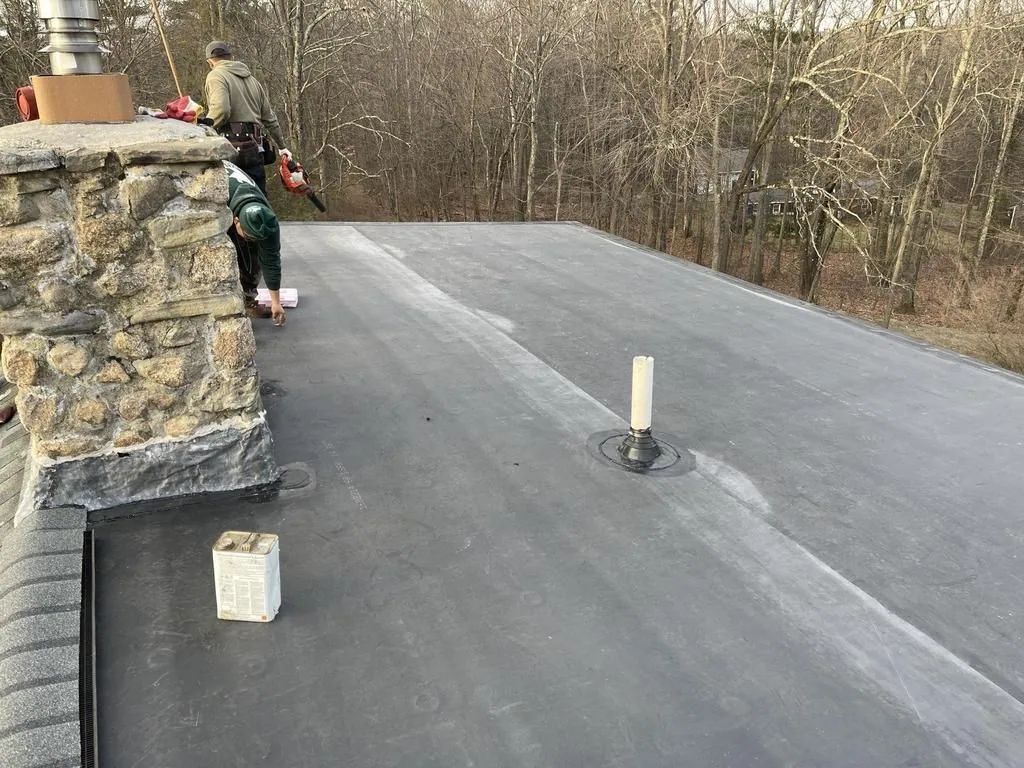
Related Roofing Work
Other roofing services and buildings we handle across Brownsville.
Questions About Airport Industrial Park
Does proximity to the airport change how a roofing crew gets on site?
The building contact confirms the access permission and any check-in or escort procedure for that property. We schedule crew, lift and delivery routes from those instructions and record restrictions in the work plan.
Can airport access confirm the roof construction?
No. Roof plans and accessible field details establish the assembly. We inspect membrane or metal, deck transitions, flashing and drainage before choosing a compatible repair or replacement detail.
How do you keep air cargo or manufacturing activity moving?
The operator sets receiving windows, restricted lanes and acceptable work hours. We coordinate staging and debris removal, then divide the roof into sections that can be secured at the end of each shift.
What happens if a roof opening reveals wet insulation?
We photograph the exposed layer, mark the affected zone and measure the added removal needed. The crew stops at the approved repair boundary while the owner reviews the change and any test or replacement option.
Can a roof inspection happen before a tenant or operator moves in?
Yes, if access is authorized and roof areas can be reached safely. We record visible conditions, identify limitations and return a list of repairs or tests that should be resolved before the space enters service.