
Commercial Roofing for Insurance Restoration in Brownsville, TX
Document the Brownsville roof condition
A wet ceiling after a storm is a location to investigate, not a roof scope by itself. We record the affected room, roof area, exposed layer and active water path before setting a repair boundary. That gives the property contact and restoration team a field record to review before permanent work is approved. Brownsville projects need clear separation between temporary protection, observed roof damage and concealed conditions that remain unopened.
Send the building address, reported leak area, facility contact and current protection details. We will tie findings, approvals and roof work to a clear field record. Call 555-555-5555 or use the form.
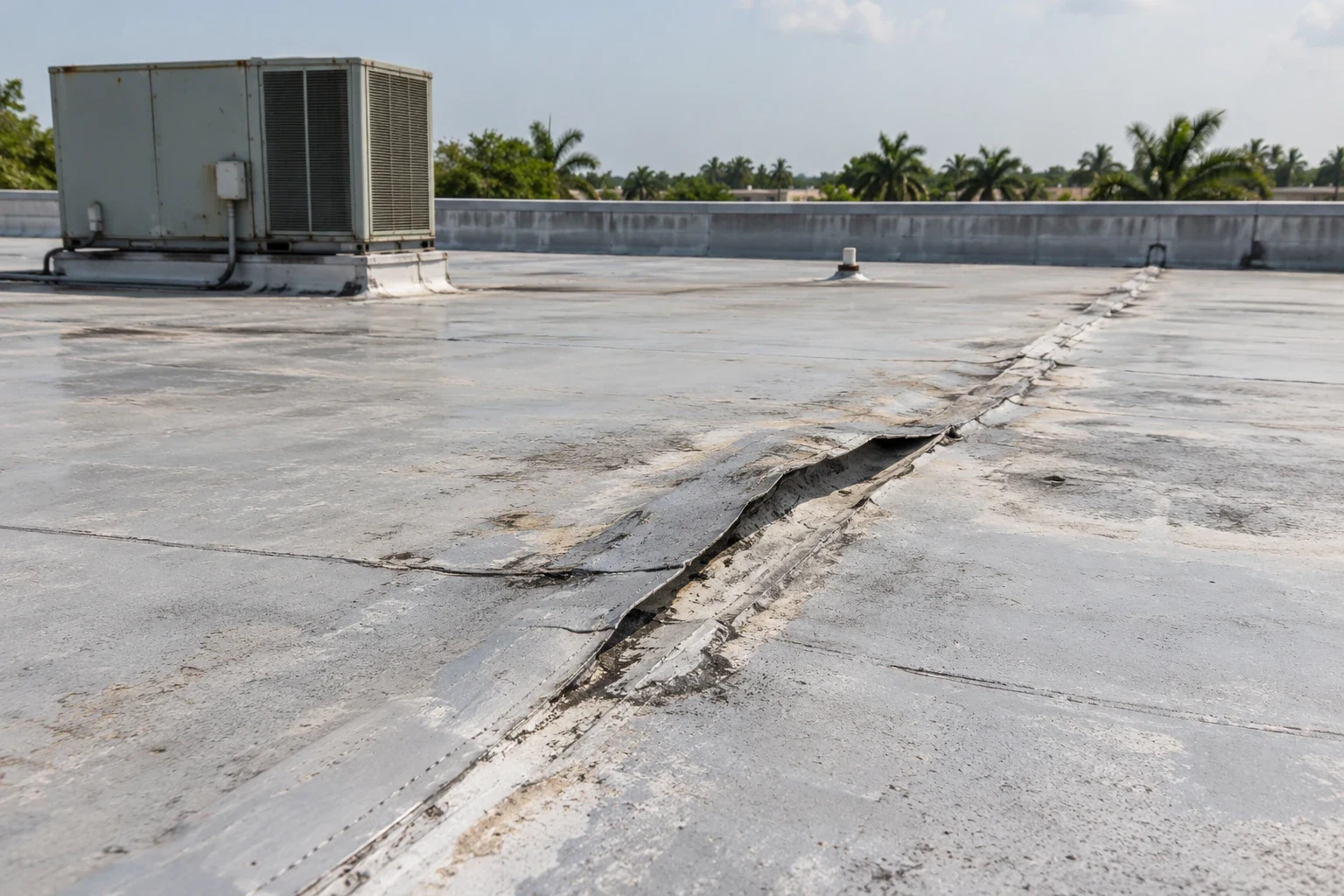
Inspect: Tie each observation to a roof area
We walk accessible roof sections, check seams, flashing, drains, edges, penetrations and rooftop equipment, then connect each finding to a tagged photograph. Interior staining can help locate a path, but water may travel before it appears indoors. The report distinguishes visible damage from a suspected entry route and records whether a closer test or limited opening is needed. That distinction keeps a repair estimate tied to conditions that have actually been inspected.
Hurricane Hanna produced wind, heavy rain, flooding and reported roof damage across the Rio Grande Valley in 2020; a small tornado was documented near Brownsville. The Lower Rio Grande Valley's 2008 Hurricane Dolly record includes broad building and roof impacts, separate from the current loss being documented. In Brownsville, storm response should begin with the building's current condition, the date and area of reported entry, and any change since temporary protection was installed.
The Greater Brownsville Tech District fronts SH 550 near I-69E, where project access and staging still follow the facility's plan. A roof claim at an operating facility may need access arranged around loading, equipment and production. We record the route to the affected section and identify areas that could not be reached during the visit. A commercial roof inspection puts those observations into a roof condition report that can be reviewed alongside the restoration scope.
Record: Keep damage, cause and repair separate
Claim documentation is strongest when the record says what was seen and where. We note membrane openings, displaced edge components, wet insulation exposed during authorized removal, and temporary covers by roof area. We also mark the date, weather observed during the visit, access limits and the person who identified the reported leak. A photograph without a location or scale can be difficult to compare with a later visit, so captions identify the roof zone and detail shown.
The building owner or carrier determines claim coverage and causation. Our role is to describe roof conditions, prepare a proposed repair and complete authorized roofing work. We can provide a property manager's multi-building record with consistent area labels, or coordinate the roofer's boundary with a general contractor's restoration schedule. The file keeps inspection findings distinct from requested work, approved quantities and changes discovered after removal.
A building at Paredes Line Road is listed with 48 dock doors and a 32-foot clear height. For a facility with active shipping, roof access and staging must account for dock activity and the safe movement of materials. Those building details do not tell us its roof assembly; the inspection establishes membrane, metal, flashing and drainage conditions at the affected address.
Protect: Limit exposure while approval is pending
When water is entering, we can respond around the clock, including weekends and holidays. The first work may be a temporary cover or a localized stabilization that limits further exposure. We state what that protection addresses, its location and any condition that could affect it. Temporary work does not close a permanent repair scope; the next visit checks the opening and confirms whether the underlying area is dry, secure and ready for final detail work.
Brownsville averages roughly 140 days at 90 degrees or hotter each year, with normal highs of 94 in June and 96.3 in August. Heat can affect the safe work window, material handling and the time available to complete a roof section. We coordinate a shift plan with the facility contact and document delays that change the sequence. Where heavy rain is forecast, open areas must be limited to what the crew can protect before leaving the roof.
A hurricane damage repair may involve both immediate stabilization and a later permanent detail. We label those tasks separately, including whether a seam, curb, drain or roof edge remains for follow-up. The facility contact receives the current status and the next required access or approval. That record lets the restoration team track protection without treating an unfinished roof area as complete.
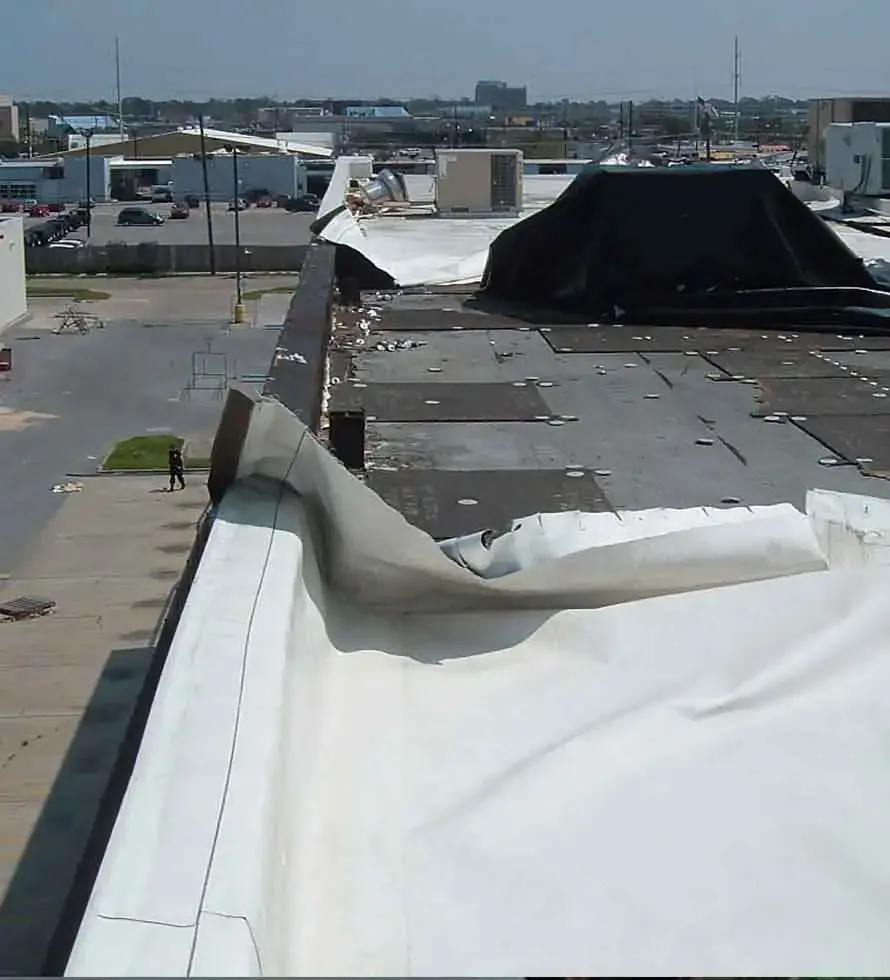
Scope: Price the authorized roof work
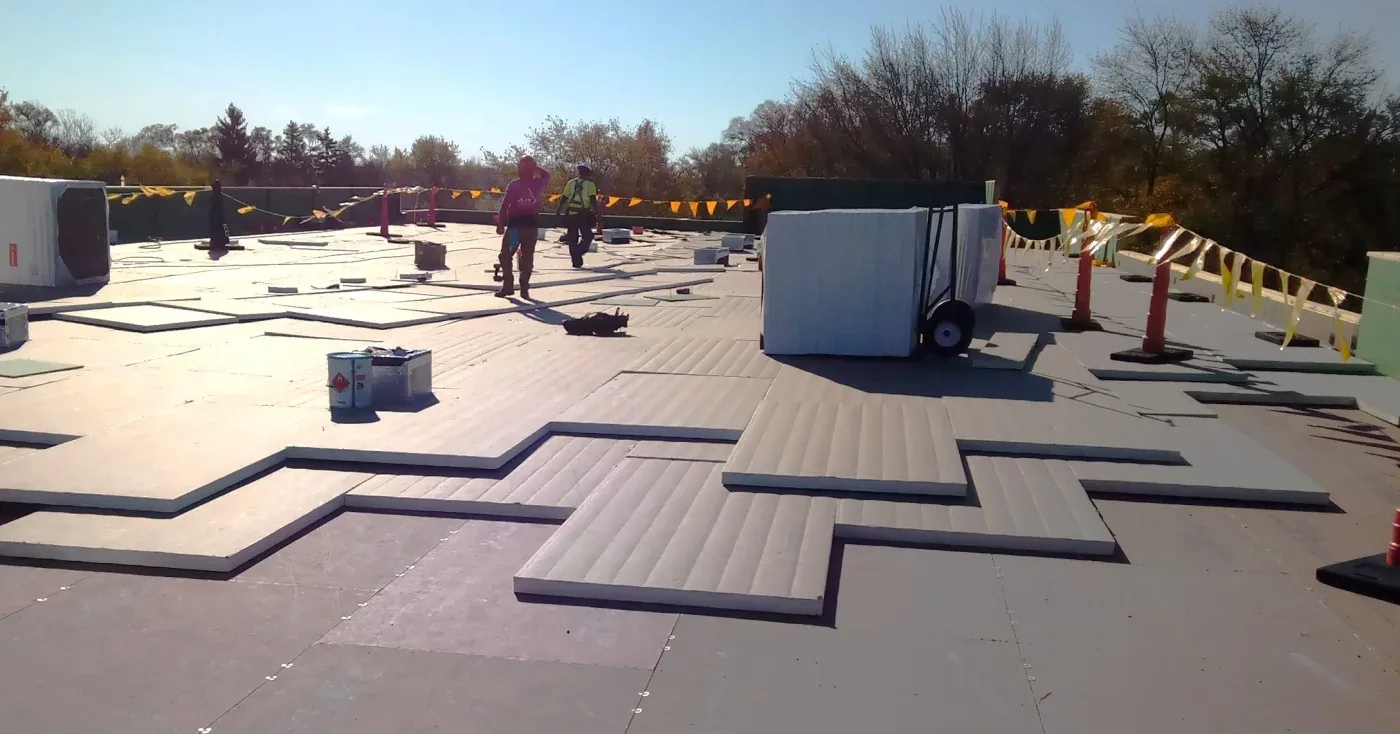
After inspection, the proposal names the roof area, assembly where identified, removal limits, replacement materials, flashing details and closeout records. It states which conditions are included and what requires separate authorization, such as wet insulation beyond the exposed boundary, damaged deck, interior finish work or mechanical repair. Quantities remain tied to the inspected area. If removal exposes a different layer or a wider condition, we photograph it and stop at the approved limit while the change is reviewed.
The City's adopted 2018 International Building Code is the local framework for commercial construction and remodeling review in Brownsville. The project designer and local review determine the requirements that apply to the specific building and repair. We prepare roofing details against the accepted documents and identify a conflict before installing a detail that differs from the approved scope. Permit responsibility and any design direction are recorded with the project contacts.
Restoration timelines depend on access, material availability, inspection hold points, weather and the approval path. A return visit may be needed after temporary protection, testing or removal reveals more of the assembly. We can phase the work when an occupied area or active operation must remain accessible. The schedule should identify who can approve added work and how a written change reaches the roofing crew.
Closeout: Return a usable claim file
Closeout records the completed roof areas, installed details, approved changes, photographs and remaining items. We label repairs by roof zone and describe the tie-in so a future inspection can compare like areas. If a portion remained inaccessible or outside the authorization, the closeout says so directly. The file can include the original condition report, temporary protection notes, accepted scope and completion record in the format agreed at project start.
For a storm-related project, the sequence matters: reported condition, inspection, temporary action, approval, permanent repair and final observation. We keep those dates and roof areas connected. A tagged photograph of a completed curb flashing or edge detail provides a useful reference when another water report arrives. The record helps the owner maintain the building, even when the claim file and facilities file use different systems.
Send the Brownsville address, facility contact, reported entry area, available roof plans and current temporary-protection details. Include the restoration lead, approval route, site access rules and any deadlines for inspection or turnover. We will return a roof condition record and a defined work scope, then document authorized changes before closing the repair area.
Related Roofing Work
Other roofing services and buildings we handle across Brownsville.
Questions About Insurance Restoration
Can your report determine whether a storm caused the leak?
The report records roof conditions, water paths and damage visible during the inspection. The carrier and project decision-makers determine coverage and causation. We identify where further testing or an authorized opening may clarify concealed conditions.
What should be documented before a temporary cover is installed?
Record the reported entry area, visible roof opening, interior location, date and existing protection. We photograph the condition before stabilizing it when safe access allows, then note the cover location and what remains exposed.
How do you handle hidden wet insulation during removal?
We stop at the authorized boundary, photograph the exposed material and note its roof area and quantity. The owner or authorized project contact reviews the finding and directs any change before added removal or replacement proceeds.
Can repairs proceed while a restoration file is under review?
Emergency stabilization can address active water entry. Permanent work follows the authorization provided for the project. We keep the temporary task, proposed repair and approved scope distinct in the field record.
What affects the return visit and repair schedule?
Access, weather, testing, material availability and approval timing can each change the sequence. We identify the next hold point in the scope and record who needs to release it before the crew returns.